

Maddy summary# Summary of Proposed Legislation This comprehensive legislative proposal contains multiple sections addressing election integrity, campaign finance reform, cybersecurity, census operations, and related government functions. Key provisions include: 1. **Campaign Finance Reforms**: - Increased thresholds for political committee reporting requirements - Repeal of requirements for political committees to report donor identification - Exemption of uncompensated internet communications from contribution/expenditure treatment - Protection of donor privacy for tax-exempt organizations through the "Speech Privacy Act of 2023" 2. **Election Security**: - Establishment of a process for testing and monitoring cybersecurity vulnerabilities in election equipment - Requirements for the Secretary of Homeland Security to notify state officials about election cybersecurity incidents - Exclusive authority for the Election Assistance Commission regarding guidelines for voting system certification 3. **Census and Redistricting**: - Establishment of a permanent Census Monitoring Board with bipartisan composition to review census operations - Clarification of state authority over congressional redistricting maps - Provisions regarding the Speaker of the House's authority to join civil actions related to apportionment 4. **Other Key Provisions**: - Termination of the Disinformation Governance Board and prohibition on funding similar entities - Amendments to the Federal Election Campaign Act to increase reporting thresholds and exempt certain communications - Various technical corrections to existing campaign finance law The legislation appears to focus on enhancing election security, reducing regulatory burdens on political organizations, protecting donor privacy, and strengthening oversight of census operations while maintaining constitutional boundaries between federal and state authority.
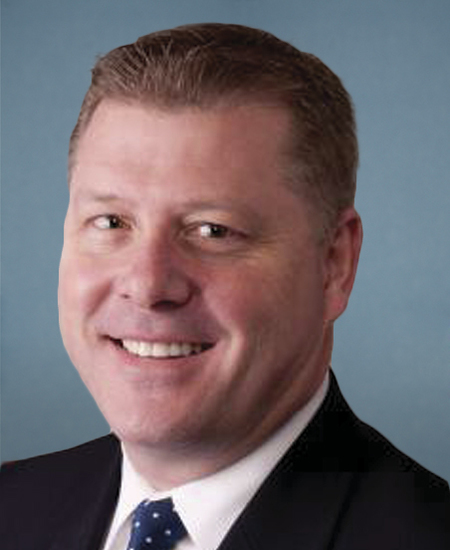
Rep. Eric A. "Rick" Crawford
Sponsored bills
Maddy summaryHR 24, the Federal Reserve Transparency Act of 2025, mandates a comprehensive audit of the Federal Reserve Board and Federal Reserve banks by the Government Accountability Office (GAO) within 12 months of enactment. The bill requires the GAO to submit a detailed report to Congress within 90 days of completing the audit, including findings, conclusions, and recommendations for legislative or administrative action. This audit replaces current limitations on reviewing Federal Reserve operations, particularly regarding entities like special purpose vehicles not previously subject to standard audits. The bill directly affects the Federal Reserve System by increasing congressional oversight of its financial activities and reporting mechanisms.
Maddy summaryThis bill, HR 1097 (Everett Alvarez, Jr. Congressional Gold Medal Act of 2023), authorizes the award of a Congressional Gold Medal to Everett Alvarez, Jr., in recognition of his service as a U.S. Navy pilot and Vietnam War prisoner of war. It directly honors Alvarez, who was the first U.S. pilot shot down in the Vietnam War, spent over 8.5 years in captivity, and later served in the Peace Corps and Veterans Administration. The bill’s key mechanism is directing the U.S. Mint to strike a gold medal bearing his name and image, with bronze duplicates available for sale to cover costs. It does not create new policies or affect any group beyond the honoree.
Maddy summaryThe Conservation Reinvestment Act provides $1.45 billion in 2025 for economic loss coverage to farmers, plus $1 billion for sales-based crops and $450 million for flat-rate crop payments, all funded through the Commodity Credit Corporation. It increases annual conservation funding under the Food Security Act to $700 million by 2031, requiring at least 30% of these funds to support practices that improve soil carbon or reduce emissions. The bill also allocates $10 million for dairy processing cost reporting, establishes a $7 billion contingency fund for 2028, and allows schools to serve organic or non-organic whole milk under lunch programs. These changes directly affect farmers, conservation programs, and school nutrition providers through specific funding mechanisms and updated eligibility rules.
Maddy summaryHR 3316 streamlines environmental reviews for port, pipeline, and airport infrastructure projects by requiring the Transportation Secretary to adopt highway project review procedures (from 23 U.S.C. §139) where feasible. It mandates agencies to maintain public databases tracking projects using "categorical exclusions" (projects not requiring full environmental review) and extends the claim resolution timeframe from 150 days to 2 years specifically for port projects. This affects infrastructure developers seeking federal approvals under the National Environmental Policy Act (NEPA) and federal agencies managing these projects. The bill directly changes how environmental reviews are conducted for major transportation infrastructure, aiming to reduce delays without altering NEPA's core requirements.
Maddy summaryHR 2367, the Truck Parking Safety Improvement Act, creates a federal grant program to address commercial truck parking shortages on highways. It provides competitive grants (totaling $175M-$320M over three years) for projects like building new rest areas, expanding parking at ports or truck stops, or improving safety at existing facilities. The program requires all funded parking to be free, publicly accessible to all truck drivers, and maintained without user fees. This directly affects commercial truck drivers, motor carriers, and highway safety by aiming to improve parking access, reduce traffic congestion, and enhance safety on federal-aid highways.
Maddy summaryThe FOCA Act of 2023 requires federal agencies to stop mandating or banning contractor agreements with labor organizations (like union contracts) in construction project bids and contracts. It directly affects federal contractors, subcontractors, and agencies managing construction projects funded by the government. The bill prohibits favoring or penalizing contractors based on their labor affiliation status, aiming to promote fair competition and reduce costs. It also mandates updates to federal contracting rules within 60 days of enactment to implement these changes.
Maddy summaryThe Essential Caregivers Act of 2024 requires nursing homes and similar facilities to allow residents to designate essential caregivers who provide emotional support or assistance with daily activities. During emergencies when regular visitation is restricted, facilities must permit at least one essential caregiver access to residents daily and cannot deny access without following specific procedures. Facilities may deny access for a maximum of 7 days during emergencies (or 14 days with state approval), and must provide a written explanation and appeal process if access is denied. The bill establishes a 48-hour appeal process for residents and caregivers to challenge denials, with facilities required to prove violations during appeals. This law applies to Medicare skilled nursing facilities, Medicaid nursing facilities, intermediate care facilities, and certain inpatient rehabilitation facilities.
Maddy summaryThis bill would require the U.S. to reimpose tariffs on steel imports from Mexico that were in effect before May 2019. The tariffs must remain in place for at least one year, and the U.S. Trade Representative and Commerce Secretary must certify that Mexico has fixed its trade practices before lifting them. The President may also add import limits to return steel imports from Mexico to pre-2019 trade levels. The bill directly affects Mexican steel exporters and aims to address claims that Mexico violated a 2019 trade agreement.
Maddy summaryThis bill directs the Architect of the Capitol to create a time capsule for the U.S. Semiquincentennial (250th anniversary of independence). Congressional leadership will determine its contents, including representative materials about the Semiquincentennial, copies of key legislative milestones, and a message to future Congress. The capsule will be sealed on the Capitol's West Lawn by July 4, 2026, and remain unopened until July 4, 2276, when it will be presented to the 244th Congress for their consideration. The bill is procedural and does not affect citizens or change existing laws.