

Maddy summaryThe Break the Cycle of Violence Act establishes federal grants to fund community-based violence intervention programs in areas disproportionately affected by gun violence, particularly communities of color. It authorizes $300 million for 2024, increasing to $700 million annually through 2031, for evidence-informed strategies including trauma-responsive care, violence interruption, and economic opportunities for opportunity youth (ages 16-25 not in school or employment). The bill requires grantees to implement culturally competent services targeting individuals at high risk of violence or victimization, with a focus on reducing gun violence without contributing to mass incarceration. It creates a National Community Violence Response Center to coordinate data collection, research, and best practices for community violence prevention. The legislation also includes provisions for job training and workforce development programs through the Department of Labor to connect opportunity youth with in-demand occupations.
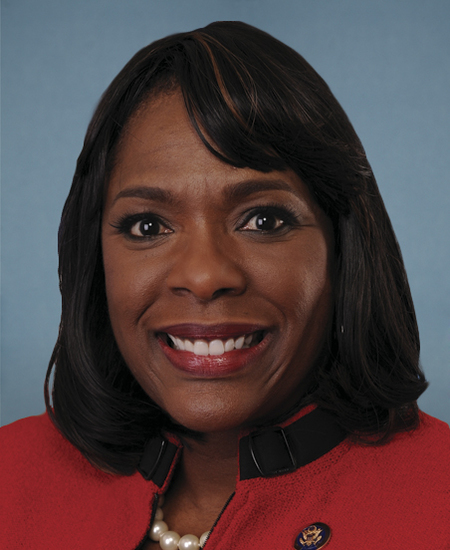
Rep. Terri A. Sewell
Sponsored bills
Maddy summaryHR 4965, the Kimberly Vaughan Firearm Safe Storage Act, requires the Attorney General to create voluntary best practices for safe firearm storage in homes, businesses, vehicles, and other locations within 180 days of enactment, with public input. Starting January 1, 2025, firearm manufacturers must include a "SAFE STORAGE SAVES LIVES" notice with each new handgun, rifle, or shotgun, directing buyers to the public website with these guidelines. The bill also establishes a $10 million annual grant program for states and tribes to fund public programs distributing safe firearm storage devices (like locked containers) and requires grantees to use at least 75% of funds for these programs. It does not mandate storage for individuals but provides resources and information to promote safer practices.
Maddy summaryThis resolution (HRES 618) is a ceremonial recognition of hip-hop's 50th anniversary, marking August 11, 1973, as the date when DJ Kool Herc's Back to School Jam in the Bronx is credited with originating the culture. It acknowledges hip-hop's foundational role in American art, music, fashion, and its $1 billion+ annual economic impact, while highlighting its roots in Black creativity and evolution across regions. The resolution encourages House members to organize commemorative activities and urges local governments to partner with hip-hop entities to celebrate its cultural significance. As a symbolic gesture, it has no legal effect or direct impact on individuals or policy.
Preserving Family Farms Act of 2023 This bill amends the Internal Revenue Code to increase to $13 million (currently, $750,000) the limitation on the special use valuation for farmland or other trades or businesses for estate tax purposes. The increased amount is adjusted for inflation for estates of decedents dying after 2023.
Maddy summaryHR 4942 extends and modifies the Conrad State 30 program, which allows states to sponsor foreign medical graduates to work in medically underserved areas in exchange for a commitment to practice for three years. The bill directly affects foreign medical graduates seeking to work in the U.S., states that sponsor them, and health facilities in underserved communities. Key provisions include creating mechanisms for physicians to change employers or states if they face issues with their current employment, adding requirements for employment agreements (including prohibitions on non-compete clauses), and establishing exceptions to the three-year work requirement under certain circumstances. The bill also creates a process for states to recapture waiver slots when physicians leave their employment and requires annual reporting on the program's usage. These changes aim to improve physician retention in underserved areas by providing more flexibility and protections for foreign medical graduates.
Maddy summaryThis bill expands employee ownership in S corporations by extending tax deferral for selling company stock to employee ownership plans (ESOPs), creating a Treasury Department office to provide education and technical assistance for ESOPs, and amending small business rules to maintain eligibility for government programs after ESOP ownership exceeds 49%. It establishes a new Labor Department "Advocate for Employee Ownership" to coordinate federal efforts, educate stakeholders, and recommend policy improvements. The bill directly affects S corporations using ESOPs, their employees who become owners, and small businesses that might lose government program access due to ESOP acquisitions. Key provisions include tax incentive extensions, new support offices, and updated small business classification rules.
Maddy summaryHR 4889, the Raise the Wage Act of 2023, would gradually increase the federal minimum wage for most workers to $15.50 per hour by 2027, with specific annual targets: $9.50 starting in 2023, rising to $11.00 after one year, $12.50 after two years, and $15.50 after four years. It would also phase out the separate lower minimum wage for tipped employees (starting at $6.00/hour) by aligning their pay with the regular minimum wage by 2028, while requiring employers to let workers keep all tips. The bill includes similar phased increases for workers under 20 and transitions toward fairer wages for workers with disabilities under special certificates, which would sunset after 2028. Future annual increases after 2028 would tie the minimum wage to the median hourly wage of all workers.
Maddy summaryHR 4796, the Reproductive Health Patient Navigator Act of 2023, establishes a federal grant program to fund organizations that help individuals access abortion services. Eligible entities - such as abortion funds, community groups, or local governments - would receive grants to provide services like connecting people to providers, coordinating travel/financing costs, offering culturally appropriate information, and ensuring data confidentiality. The bill includes strong legal protections, prohibiting states from restricting or penalizing navigators for assisting people seeking abortion services, even in states where abortion is illegal. It also allows affected navigators to sue states that violate these protections. The program is funded for fiscal years 2023 through 2027.
Maddy summaryHRES 608 is a non-binding House resolution recognizing the value of diversity, equity, and inclusion (DEI) efforts at colleges and universities. It affirms that DEI initiatives help create supportive learning environments where all students, faculty, and staff thrive, and specifically supports programs like implicit bias training and cultural competence resources. The resolution emphasizes that DEI efforts strengthen institutions’ ability to recruit diverse talent and align with academic freedom principles. It also notes concerns about state-level efforts to restrict DEI programs and states that such restrictions threaten campus inclusivity. As a symbolic resolution, it does not create new laws or funding but expresses congressional support for DEI work in higher education.
Maddy summaryHR 4812, the Food for Thought Act of 2023, provides federal grants to eligible colleges and universities to offer free on-campus meals to low-income students. The bill targets institutions with high Pell Grant enrollment (at least 30% of undergrads), prioritizing community colleges, minority-serving institutions, and those in areas with high need. Participating schools must provide 1-10 free meals weekly to students facing food insecurity, with priority given to those with greatest financial need, and must report on student outcomes like retention and graduation rates. Grants cover meal costs, campus food pantries, and SNAP enrollment support, with funds allocated for 5 years and requiring detailed reporting on program impact.