

Maddy summaryHR 4985, the Expanding Medical Education Act, creates federal grants to help medical schools and osteopathic medicine programs open or expand campuses in areas without existing medical education options, especially in medically underserved communities. It prioritizes funding for schools in regions with no current medical schools or for minority-serving institutions in areas lacking such schools. Grants can be used to recruit students from underrepresented groups (including rural, low-income, and first-generation students), develop curricula focused on underserved care, build facilities, and hire faculty. Institutions must report annually on student demographics and program activities, with detailed congressional reports every five years tracking outcomes like workforce diversity and healthcare access in target areas.
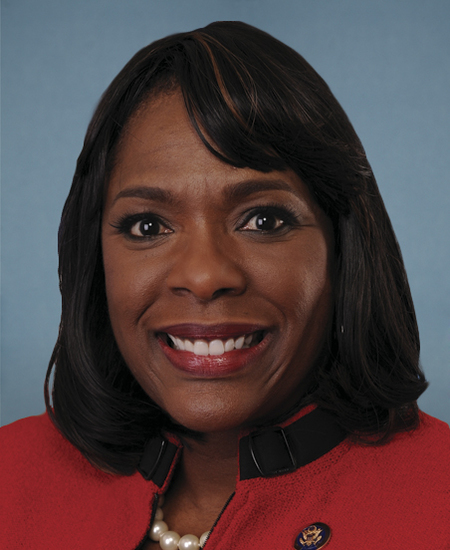
Rep. Terri A. Sewell
Sponsored bills
Maddy summaryThis bill creates a federal loan repayment program to help mental health professionals (like counselors, psychologists, and social workers) repay student loans. It directly affects individuals who have taken out education loans for mental health degrees and agree to work in underserved areas. Key provisions require participants to commit to 3-6 years of full-time service in designated mental health shortage areas or counties with high overdose death rates, with funding increased to $100 million annually for 2023-2032. The program expands eligibility to cover all mental health-related fields, including behavioral health roles.
Feral Swine Eradication Act This bill reauthorizes the feral swine eradication and control pilot program and removes the pilot program designation. This Department of Agriculture (USDA) program responds to the threat feral swine pose to agriculture, native ecosystems, and human and animal health. The bill also directs USDA to require the Animal and Plant Health Inspection Service (APHIS) and the Natural Resources Conservation Service (NRCS) to continue monitoring an area for reoccurrence of feral swine for one year after USDA determines that feral swine has been eradicated from an eligible area. The current even distribution of the program's funds between APHIS and the NRCS is amended to allocate 60% of the funds to APHIS and 40% of the funds to the NRCS. Further, the bill includes new reporting requirements, which direct APHIS and the NRCS to submit a joint report to Congress on the program. This report must be publicly available on USDA's website.
Maddy summaryThe Forest Data Modernization Act of 2023 updates the U.S. Forest Service's national forest inventory program to improve data collection on forest resources, with specific focus on forest carbon. It mandates new surveys of timber products and woodland owners, standardizes definitions for forest data reporting, and requires the Forest Service to develop a strategic plan every five years integrating remote sensing technology and carbon data (including soil carbon). The bill ensures collected data is publicly accessible while protecting the confidentiality of individual landowners' non-aggregated information. These changes aim to enhance the accuracy of forest resource tracking for management and policy decisions across public and private lands.
Maddy summaryHRES 625 is a symbolic House resolution recognizing the essential work of congressional staff and support staff (nearly 15,000 total) who assist Members of Congress. It acknowledges their role in handling constituent services - such as passport renewals, immigration cases, and Social Security benefits - and supporting legislative operations on Capitol Hill and in local offices. The resolution does not create new policies or funding but formally thanks these staff for their contributions to constituent engagement and government functions. It was introduced in the House on July 27, 2023, and referred to the Committee on House Administration.
Maddy summaryHR 5026, the Rural Jobs Act, allocates $500 million annually (for 2023 and 2024) specifically for tax credits to support economic development in rural areas. It directs these funds exclusively to community development organizations focused on creating jobs in designated "Rural Jobs Zones" - areas outside cities over 50,000 people or their adjacent urban areas. At least 25% of these investments must target persistent poverty counties (with 20%+ poverty over 30 years) or high-migration rural counties. The bill modifies tax credit rules to prioritize job creation and retention in underserved rural communities through equity investments.
Maddy summaryHR 4987, the Democracy Restoration Act of 2023, would restore voting rights for people with felony convictions who are living in their communities (not incarcerated), directly affecting approximately 4.6 million disenfranchised Americans. The bill requires states to automatically restore voting rights upon completion of sentences, including probation or parole, without requiring payment of fines or fees. It mandates notification to individuals about their restored voting rights and prohibits states from conditioning voting rights on payment of legal financial obligations. The legislation addresses the disproportionate impact of voting restrictions on racial minorities, particularly Black and Latino communities, who face significantly higher rates of disenfranchisement. This bill would apply to all federal elections held on or after its enactment date.
Maddy summaryHR 5054, the Equal and Uniform Treatment in the Military Act (EQUITY Act), prohibits discrimination in the U.S. military based on race, color, religion, sex, national origin, gender identity, or sexual orientation. It amends Title 10 of the U.S. Code to require that military service, advancement, and evaluations be based solely on an individual’s merit, fitness, capability, and performance. The bill explicitly bans policies that consider protected characteristics in eligibility or treatment, replacing prior frameworks with this clear standard. It directly affects all active-duty service members, reservists, and military personnel across all branches.
Maddy summaryThe Rebuild America's Schools Act of 2023 creates a $20 billion annual federal grant program to fund long-term improvements to public school facilities across the United States. It requires states to prioritize school districts serving high-poverty students (with high percentages of students eligible for free/reduced lunch) and those with deteriorating infrastructure, while mandating that recipient schools develop 10-year facilities master plans. The bill specifies that funds must be used for construction, renovation, and modernization projects that improve energy efficiency, address environmental health hazards (including lead, asbestos, and poor air quality), and ensure school safety, while requiring the use of American-made materials for construction projects.
Maddy summaryThis bill would expand employee ownership opportunities by making it easier for S corporations to adopt Employee Stock Ownership Plans (ESOPs). It extends tax deferral benefits for selling company stock to ESOPs, establishes a Treasury Department office to provide technical assistance for ESOP adoption, and amends small business laws to ensure ESOP-owned businesses remain eligible for small business programs. The bill also creates a new "Advocate for Employee Ownership" position within the Department of Labor to promote employee ownership and assist with related issues. These changes would directly affect S corporations considering or already using ESOPs, as well as employees who would become partial owners of their companies through these plans.