

Maddy summaryThe SIFIA Act establishes a new tax credit for bonds used to finance school infrastructure projects. It allows issuers to claim a credit equal to 25% of the annual credit amount (based on bond face value), with requirements that projects must be for qualified school facilities that meet net-zero energy standards. The Act limits total bond issuance to $10 billion ($2.5 billion annually) with $1 billion reserved for rural areas, and sets requirements for private developers to meet experience and reporting standards. This policy directly affects school districts seeking infrastructure funding, private developers, and the federal government through tax credit provisions.
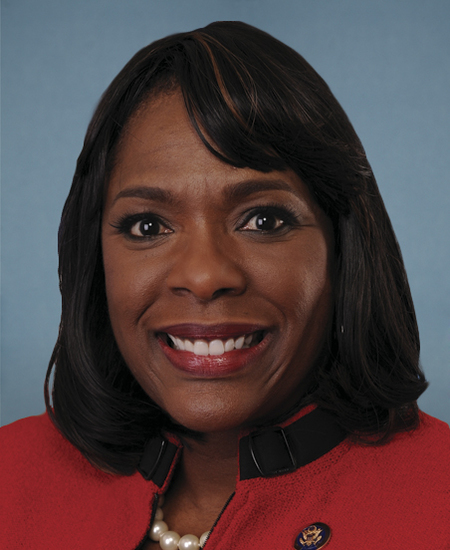
Rep. Terri A. Sewell
Sponsored bills
Maddy summaryHRES 1468 is a non-binding resolution recognizing the significant pay disparity faced by disabled women in the U.S. workforce. It cites data showing disabled women earn, on average, 50 cents for every dollar earned by nondisabled men, with even starker gaps for disabled women of color (e.g., 44 cents for disabled Latinas). The resolution highlights systemic barriers like occupational segregation, the subminimum wage, and lack of support services contributing to these inequities. It does not create new laws or affect any group directly, but formally acknowledges these disparities and reaffirms the House’s commitment to addressing wage gaps. This is a symbolic recognition, not a policy change.
Maddy summaryHR 7208 reauthorizes three existing programs under the Public Health Service Act through 2029, extending current funding periods that previously expired after 2024. It updates the authorization periods for (1) traumatic brain injury prevention efforts, (2) state grants for TBI-related projects, and (3) state grants supporting protection and advocacy services for people with disabilities. The bill directly affects states receiving federal grants under these programs by allowing continued funding for services like TBI care coordination, community support, and legal advocacy. No new policies or funding levels are created - only the timeline for existing programs is extended. This is a procedural reauthorization, not a policy change.
Maddy summaryHR 6033, the SPEAK Act of 2024, creates a task force within the Department of Health and Human Services to address telehealth barriers for patients with limited English proficiency (LEP). The task force - comprising healthcare providers, tech vendors, language services, and patient advocates - will assess current obstacles and develop best practices for improving access to telehealth platforms, video interpretation, and digital patient portals. Within 90 days of each annual report, the Secretary must publish a public website sharing these best practices, including guidance on integrating interpreters and making telehealth instructions accessible. The bill directly affects LEP patients and healthcare providers who serve them, aiming to make digital health tools more usable through concrete, evidence-based recommendations.
Maddy summaryHRES 1461 is a symbolic resolution designating September 2024 as "National Voting Rights Month" to raise awareness about voting access. It encourages all U.S. citizens to uphold voting rights, supports existing voting rights legislation like the Freedom to Vote Act, and recommends schools teach about voting history and current restrictions. The resolution specifically aims to highlight efforts to address historical and ongoing barriers affecting historically marginalized groups, including Black, Latino, and disabled voters. It does not create new laws but promotes educational initiatives and media campaigns about registration deadlines and election access.
Maddy summaryHRES 1436 is a symbolic resolution (not a law) introduced in the U.S. House of Representatives. It recognizes suicide as a preventable public health crisis by citing statistics from the CDC, VA, and SAMHSA showing rising suicide rates across age groups, including veterans and adolescents. The resolution formally supports designating September as "National Suicide Prevention Month" and September 10, 2024, as "World Suicide Prevention Day." It does not create new policies, allocate funding, or directly affect any individuals - its purpose is solely to express congressional support for suicide prevention awareness and efforts.
Maddy summaryThis resolution symbolically designates September 15-21, 2024, as "Telehealth Awareness Week" to raise public awareness about telehealth services. It does not create new laws or change existing policies but urges efforts to promote telehealth access, highlight resources for providers and patients, and collect data on telehealth's impact. The resolution specifically references telehealth's role in healthcare access, especially for Medicare beneficiaries and underserved communities. As a non-binding symbolic measure, it focuses on awareness rather than policy action.
Maddy summaryHR 9376, "Lulu’s Law," requires the Federal Communications Commission (FCC) to update wireless emergency alert regulations within 60 days of enactment. It specifically adds "shark attack" as an event eligible for emergency Alert Messages under FCC rules. This change directly affects how emergency alerts are categorized and transmitted to the public via wireless devices. The bill modifies existing FCC regulations (Title 47, Part 10) to include shark attacks as a triggering event for emergency alerts, without altering other alert types or requirements.
Maddy summaryHR 9253, the National Gun Violence Research Act, repeals longstanding restrictions that blocked federal funding for gun violence research, including the 1996 Dickey Amendment. It establishes a National Gun Violence Research Program to support scientific studies on gun-related injury and death, with $200 million authorized over six years (2025-2030). The program directs agencies like the CDC, NIH, and National Institute of Justice to fund research, train researchers, develop safety standards, and share gun trace data with researchers through new protocols. This bill directly affects federal research institutions and public health agencies by enabling evidence-based study of gun violence causes and prevention strategies.
Maddy summaryHRES 1394 is a non-binding resolution celebrating the U.S.-India partnership based on shared democratic values, religious pluralism, and human rights, while highlighting the contributions of the Indian diaspora in the United States. It specifically recognizes the 50th anniversary of BAPS Swaminarayan Sanstha's community work, including its spiritual centers (mandirs) and volunteer efforts across the country. The resolution does not create legal obligations but formally acknowledges these ties and achievements.