

Maddy summaryThis bill designates the U.S. Postal Service facility at 379 North Oates Street in Dothan, Alabama, as the "LaBruce 'Bruce' Tidwell Post Office Building." It updates all official federal references to the building to reflect this new name. The bill has no funding, regulatory, or policy impacts - it is purely a ceremonial naming action. The change applies only to this specific post office location and its official documentation.
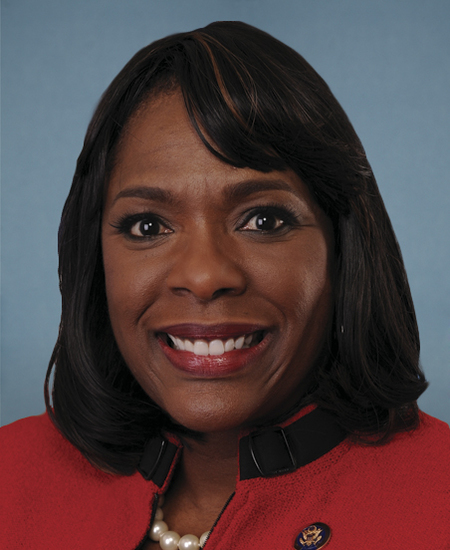
Rep. Terri A. Sewell
Sponsored bills
Maddy summaryThe Treat and Reduce Obesity Act of 2023 expands Medicare coverage for obesity treatment by allowing a wider range of healthcare providers - including nurse practitioners, dietitians, psychologists, and community-based counseling programs - to deliver intensive behavioral therapy for obesity, provided they coordinate with primary care providers. It also adds Medicare Part D coverage for medications used to treat obesity or for weight loss management in overweight individuals with related health conditions like diabetes or high blood pressure. These changes directly affect Medicare beneficiaries, particularly older adults (65+), who face higher obesity rates and associated costs, including $50 billion annually in Medicare spending for obesity-related care. The bill requires annual reports to Congress on implementation to improve coordination of obesity care across federal health programs.
Maddy summaryThis bill creates a 4-year transitional coverage period for Medicare to automatically cover "breakthrough medical devices" - new FDA-prioritized devices approved after March 2021 - as "reasonable and necessary" for treatment. During this period, these devices qualify for additional payments under Medicare's hospital and outpatient payment systems without requiring separate approval. After the 4-year period, Medicare must develop regular coverage based on additional data, with automatic coverage for all approved uses if no action is taken within two years. The bill requires Medicare to assign unique codes for these devices within three months of FDA approval and to update payment systems regularly. It also includes special provisions for "specified breakthrough devices" that lack existing Medicare benefit categories, requiring reports on their impact and cost to Congress.
Maddy summaryThe Autism CARES Act of 2024 reauthorizes and enhances federal programs supporting individuals with autism spectrum disorder. It requires the National Institutes of Health to expand research to include more fields like gerontology and psychiatry, and to ensure research reflects the full range of needs of people with autism, including those with co-occurring conditions. The bill mandates regular reports to Congress on progress, mental health needs, and transition services for young adults with autism, while increasing funding for autism-related programs from fiscal year 2025 through 2029. This legislation directly affects individuals with autism, their families, caregivers, and healthcare providers by improving access to evidence-based services and research.
Maddy summaryThis bill, HR 1097 (Everett Alvarez, Jr. Congressional Gold Medal Act of 2023), authorizes the award of a Congressional Gold Medal to Everett Alvarez, Jr., in recognition of his service as a U.S. Navy pilot and Vietnam War prisoner of war. It directly honors Alvarez, who was the first U.S. pilot shot down in the Vietnam War, spent over 8.5 years in captivity, and later served in the Peace Corps and Veterans Administration. The bill’s key mechanism is directing the U.S. Mint to strike a gold medal bearing his name and image, with bronze duplicates available for sale to cover costs. It does not create new policies or affect any group beyond the honoree.
Maddy summaryHR 7070, the Wildfire Response Improvement Act, updates federal wildfire response and recovery policies. It requires FEMA to make fire management assistance available for emergency stabilization regardless of the declared incident period (Section 2), and to add wildfire-specific recovery guidance to its Public Assistance Guide covering debris removal, water toxicity, and emergency measures (Section 3). The bill also mandates FEMA to review and update cost-effectiveness criteria for wildfire mitigation projects (like defensible space, nature-based infrastructure, and smoke impact reduction) under the Stafford Act, prioritizing projects based on these revised standards (Section 4). These changes directly affect communities recovering from wildfires and FEMA's process for funding recovery and mitigation efforts.
Maddy summaryThis bill, the Protecting Medicare Beneficiaries with Pre-Existing Conditions Act, removes age restrictions for obtaining Medicare supplemental insurance (Medigap) by ensuring all Medicare beneficiaries enrolled in Parts A and B can buy such plans without being denied due to pre-existing health conditions. It specifically eliminates the current requirement that beneficiaries be 65 or older to qualify for guaranteed Medigap coverage. The bill also creates a one-time 6-month enrollment period for individuals previously ineligible due to age but now eligible under the new rules, and extends guaranteed Medigap access to those who disenroll from Medicare Advantage plans. These changes will take effect for new Medigap policies starting January 1, 2025, with full implementation required by 2030.
Maddy summaryThis bill amends the Affordable Care Act to increase cost-sharing reductions for lower-income individuals buying health insurance through marketplaces. For plan years beginning before January 1, 2026, it maintains current silver-level coverage cost-sharing (e.g., 73% government coverage for incomes 200-250% of poverty). Starting in 2026, it shifts to gold-level coverage, raising government cost-sharing to 85% for incomes 300-400% of poverty (up from 70% under current rules). It also updates premium tax credits to use gold-level benchmark plans instead of silver-level plans for 2026 and later, directly benefiting moderate-income households purchasing marketplace plans.
Maddy summaryThis bill creates new Medicare grants to help rural hospitals convert to emergency hospitals and improve services like behavioral health care. It provides funding for State Offices of Rural Health to offer technical assistance, staff training, and support for quality improvement initiatives. The bill also establishes 5-year grants for rural health providers (including clinics and emergency departments) to adopt new care models like telehealth and integrated services. These grants require community support and must demonstrate how proposed changes will better meet local health needs.
Maddy summaryThis bill amends the International Emergency Economic Powers Act to explicitly prohibit the President from using emergency powers to impose import taxes (tariffs), tariff-rate quotas, or other import quotas. It directly affects the President's authority under this law, removing a potential tool for trade restrictions during emergencies. The key provision inserts a new subsection (c) clarifying that the President cannot impose such import barriers through emergency authority. This is a procedural change to existing law, not a new policy affecting specific industries or individuals.