

Maddy summaryThe Retirement Savings for Americans Act of 2025 creates a new retirement savings program called the American Worker Retirement Fund to help workers without access to employer-sponsored retirement plans. It requires businesses to automatically enroll qualifying workers (those without existing retirement plans) at a 3% contribution rate, with the option to opt out. The program includes a government match tax credit that provides up to 5% of a worker's income as matching contributions, phasing out for higher earners. The Fund will be managed by a Board and Executive Director, offering multiple investment options and maintaining accounts until retirement or withdrawal.
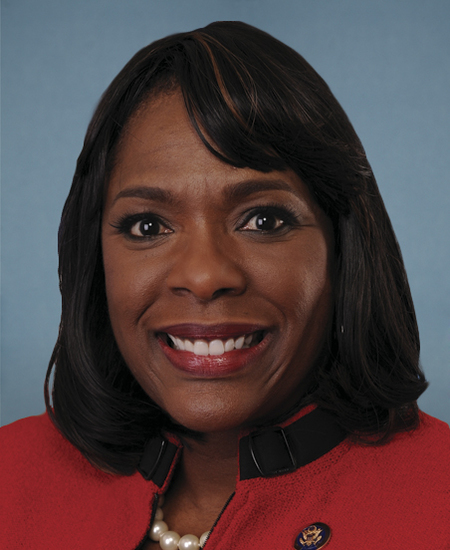
Rep. Terri A. Sewell
Sponsored bills
Maddy summaryThis bill, HR 2102 (Major Richard Star Act), allows veterans with combat-related disabilities to receive both full military retired pay and veterans' disability compensation simultaneously, without the previous offset that reduced retired pay. It directly affects veterans already eligible for both benefits due to combat-related injuries, removing the requirement that their retired pay be reduced by the disability compensation amount. The key provision amends Title 10 and Title 38 to eliminate the offset rule (sections 5304 and 5305 of Title 38) for these veterans. The change applies to payments starting after the bill’s enactment date, effective for all qualifying veterans. This is a policy change to increase financial support for affected veterans, not a new benefit.
Maddy summaryHRES 292 is a non-binding House resolution supporting "Financial Literacy Month" to raise awareness about personal finance education. It references statistics showing widespread financial literacy gaps, including 14.2% of U.S. households being unbanked or underbanked, only 42% of adults budgeting, and just 28 states requiring high school economics courses. The resolution calls on federal, state, local, school, nonprofit, and business entities to observe Financial Literacy Month with programs and activities. It does not create new laws or policies but aims to highlight the importance of financial education for managing money, credit, and debt.
Maddy summaryHRES 289 is a symbolic resolution supporting the designation of April 2025 as "Second Chance Month" to raise awareness about barriers faced by people with criminal records. It does not create new laws or programs but encourages public awareness of "collateral consequences" like employment restrictions, housing barriers, and educational access issues that hinder reentry. The resolution calls for communities, employers, and organizations to promote second chances for individuals who have completed their sentences. It is a non-binding gesture aimed at fostering public dialogue, not a policy change.
Maddy summaryThis bill creates a new Medicare payment model (the "Comprehensive Alternative Response for Emergencies Model") that allows Medicare Part B to cover ground ambulance services provided in response to emergency medical calls *without* a full transport. It directly affects Medicare beneficiaries receiving emergency ambulance care and ambulance providers, ensuring they are paid for services like dispatch and initial response that don't include transport. The model requires payment rates to align with standard transport payments, mandates compliance with state protocols, and operates for a 5-year test period. A report by the Comptroller General will evaluate the model's impact on beneficiary access, outcomes, and regional differences after 4 years.
Workplace Violence Prevention for Health Care and Social Service Workers Act This bill requires the Department of Labor to address workplace violence in health care, social service, and similar sectors. Specifically, Labor must issue an occupational safety and health standard that requires certain employers to take actions to protect workers and other personnel from workplace violence. The standard applies to employers in the health care sector, in the social service sector, and in sectors that conduct activities similar to those in the health care and social service sectors. Among other elements, the standard must require each employer to (1) develop a workplace violence prevention plan, (2) promptly investigate incidents of workplace violence, and (3) provide relevant training and education to employees. The bill requires certain hospitals and skilled nursing facilities to comply with this standard as a condition of Medicare participation.
Maddy summaryThis bill (HR 2532) blocks federal funding for large-scale layoffs at the Department of Health and Human Services (HHS) and its sub-agencies. It prohibits using federal funds to remove 3% or more of all HHS employees, or 3% or more at any single sub-agency, within a 60-day period. This applies to actions like layoffs under federal workforce rules (Title 5) or agency reorganizations. The bill directly affects HHS employees and its operating divisions by preventing rapid, widespread workforce reductions. It does not change HHS policies but restricts how personnel actions can be funded.
Maddy summaryHR 2567 amends tax code rules to prevent certain financial guaranty insurance companies from being classified as passive foreign investment companies (PFICs). It directly affects insurers whose sole business is financial guaranty insurance (e.g., insuring bonds) and meet specific exposure thresholds: at least 15-to-1 financial guaranty exposure or 9-to-1 state/local bond exposure relative to total assets. The bill creates new rules requiring these companies to include unearned premium reserves in insurance liabilities for PFIC calculations, while mandating separate reporting of key financial metrics. This change provides clarity for insurers meeting the defined criteria, avoiding unintended PFIC classification under current tax rules.
Maddy summaryThis bill, titled "Secure Family Futures Act of 2025" but actually focused on tax code changes, primarily affects a specific subset of insurance companies. It amends the Internal Revenue Code to exclude certain debts (like bonds or notes) held by these companies from being counted as capital assets (Section 2), and extends their capital loss carryover period to 10 years for losses from foreign expropriation or losses incurred by these companies (Section 3). The changes apply to debts acquired and losses arising after December 31, 2025. The bill's title is misleading, as it does not relate to family policy but is a technical tax amendment targeting defined insurance industry entities.
Sanctioning Russia Act of 2025 This bill imposes penalties on certain persons (individuals and entities) if the President determines that the Russian government or a person acting at Russia's direction is involved with (1) refusing to negotiate a peace agreement with Ukraine; (2) violating a negotiated peace agreement; (3) initiating another invasion of Ukraine; or (4) overthrowing, dismantling, or seeking to subvert the Ukrainian government. If the President makes such a determination, the bill requires certain actions including the President must impose visa- and property-blocking sanctions on specified persons such as the Russian president, certain Russian military commanders, and any foreign person that knowingly provides defense items to the Russian armed forces; the President must increase the rate of duty on all goods and services imported from Russia into the United States to at least 500% relative to the value of such goods and services; the President must increase the rate of duty on all goods and services imported into the United States from countries that knowingly engage in the exchange of Russian-origin uranium and petroleum products to at least 500% relative to the value of such goods and services; the Department of the Treasury must impose property-blocking sanctions on any financial institution organized under Russian law and owned wholly or partly by Russia, and any financial institution that engages in transactions with those entities; and the Department of Commerce must prohibit the export, reexport, or in-country transfer to or in Russia of any U.S.-produced energy or energy product.