

This resolution recognizes the importance of enhancing trade and investment relations between the Caribbean and the United States. It also urges the President to prioritize trade engagement with the Caribbean region that promotes sustainable and resilient economic development.
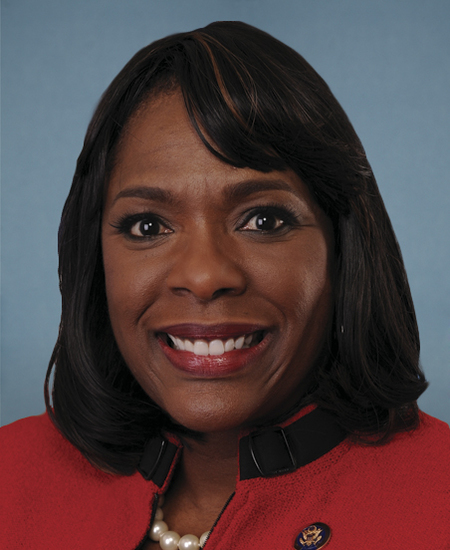
Rep. Terri A. Sewell
Sponsored bills
Maddy summaryHR 7477, the CERTS Tax Exemption Act, ensures that grants provided under the Coronavirus Economic Relief for Transportation Services Act are tax-free for eligible transportation service providers. The bill directly affects companies and organizations providing transportation services that receive these specific federal grants. Key provisions state that grant amounts cannot be counted as taxable income, deductions related to grant-funded costs cannot be denied, and tax attributes (like basis increases) must be treated as tax-free for partnerships and S corporations. This change simplifies tax treatment for recipients by preventing unintended tax liabilities on relief funds.
Employee Access to Worksite Health Services Act This bill provides that individuals who are eligible to receive qualified items and services at a worksite health clinic may make pre-tax contributions to a health savings account The bill defines qualified items and services to include primary care items and services, physical examinations, immunizations, drugs and drug testing, tests for infectious diseases, preventive care for chronic conditions, hearing, vision, or dental screenings, and mental and behavioral health services.
Opportunity Zones Improvement, Transparency, and Extension Act This bill revises rules and reinstates reporting requirements relating to qualified opportunity zones (economically distressed communities where new investments, under specified conditions, may be eligible for preferential tax treatment). Specifically, the bill terminates the designation of zones that are disqualified due to median family income exceeding 130% of national median family income and permits states to identify and expand terminations of such zones. The bill also reinstates reporting requirements for qualified opportunity zones and imposes penalties for noncompliance with such requirements, extends the opportunity zones temporary deferral period for qualifying capital gain through 2028, and establishes a State and Community Dynamism Fund to support public and private investment in qualified opportunity zones.
Ensuring Lasting Smiles Act This bill requires private health insurance plans to cover diagnosis and treatment of congenital anomalies and birth defects, such as reconstructive services and items. Coverage must include services and items that functionally improve, repair, or restore any body part that is medically necessary for normal bodily functions or appearance, as determined by the treating physician. Coverage limits and cost-sharing requirements for such services and items may not be more restrictive than those applicable to all medical and surgical benefits under the plan.
Supply Chain Disruptions Relief Act This bill modifies the treatment of liquidations of new motor vehicle inventory as qualified LIFO (last in first out accounting method) inventory. It allows new motor vehicle dealers to elect to wait until the end of 2025 to replace their inventory for purposes of determining income attributable to the sale of such inventory during 2020 and 2021.
Supporting Diverse STEM Students Act This bill authorizes minority institutions to use Minority Science and Engineering Improvement Program funds to (1) provide direct financial assistance to students who are underrepresented in science (including computer science), technology, engineering, and mathematics; and (2) improve institutional capacity to provide students with certain services, such as guidance counseling, academic advising, work-study opportunities, and peer mentorship.
Securing a Strong Retirement Act of 2022 This bill makes various changes with respect to employer-sponsored retirement plans, including providing for the automatic enrollment of employees in certain plans and increasing the age at which participants are required to begin receiving mandatory distributions.
Emmett Till Antilynching Act This bill makes lynching a federal hate crime offense. Specifically, the bill imposes criminal penalties—a fine, a prison term of up to 30 years, or both—on an individual who conspires to commit a hate crime offense that results in death or serious bodily injury or that includes kidnapping or an attempt to kidnap, aggravated sexual abuse or an attempt to commit aggravated sexual abuse, or an attempt to kill.
This resolution supports the goals and ideals of National Women's History Month and recognizes the women and organizations that continue to promote the teaching of women's history.