John Lewis Equality in Medicare and Medicaid Treatment Act of 2022 This bill requires the Center for Medicare and Medicaid Innovation to test a payment model that addresses social determinants of health and health disparities, particularly with respect to minorities, underserved areas, and high-risk individuals. The bill also generally incorporates consideration of such factors into the selection, implementation, and evaluation of other models, including the decision as to whether to expand a model's duration and scope.
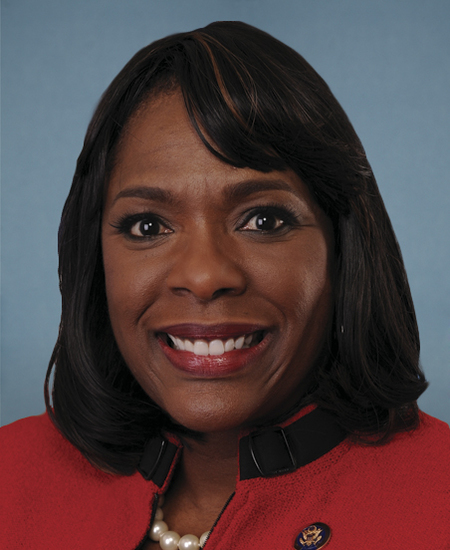
Rep. Terri A. Sewell
Sponsored bills
Federal Firefighters Fairness Act of 2022 This bill makes it easier for federally employed firefighters who contract certain illnesses to qualify for federal workers' compensation. Specifically, the bill provides that chronic obstructive pulmonary disease, mesothelioma, and specified other cancers of those employed in fire protection activities for at least five years are presumed to be proximately caused by such employment for purposes of a disability or death claim under the federal workers' compensation program. This presumption also applies to federal employees employed in fire protection activities for at least five years who experience a sudden cardiac event or stroke within 24 hours of performing a fire protection activity. The bill also requires the Department of Labor to conduct a review to determine whether breast cancer, gynecological cancer, and rhabdomyolysis should be included under the presumption and to conduct periodic reviews to determine whether other diseases should be included. In addition, a person may petition Labor to include another disease under the presumption. An employee in fire protection activities is a firefighter, paramedic, emergency medical technician, rescue worker, ambulance personnel, or hazardous material worker who (1) is trained in fire suppression; (2) has the legal authority and responsibility to engage in fire suppression; (3) is engaged in the prevention, control, and extinguishing of fires or response to emergency situations where life, property, or the environment is at risk, including the prevention, control, suppression, or management of wildland fires; and (4) performs such activities as a primary responsibility.

Benjamin Berell Ferencz Congressional Gold Medal Act This bill provides for the award of a Congressional Gold Medal to Benjamin Berell Ferencz in recognition of his service to the United States and the international community during the post-World War II Nuremberg trials and his lifelong advocacy for international criminal justice and the rule of law.
Caribbean Basin Security Initiative Authorization Act This bill authorizes the allocation of certain funds for purposes related to the Caribbean Basin Security Initiative, requires the Department of State to develop a strategy for prioritizing efforts to increase disaster response and resilience in the Caribbean, and establishes monitoring and reporting requirements. Funds for carrying out the initiative shall be used for purposes that include (1) promoting citizen safety, security, and the rule of law in the Caribbean; (2) prioritizing efforts to combat corruption; and (3) promoting the rule of law in the Caribbean and countering influence from authoritarian regimes. The State Department shall develop a strategy that incorporates specific, measurable benchmarks demonstrating a prioritization of efforts to increase disaster response and resilience through carrying out specified coordination, resilience, and preparedness programs in beneficiary countries. The State Department must also submit an implementation plan that includes a timeline and stated objectives for such actions to be taken.
United States Innovation and Competition Act of 2021 This bill addresses U.S. technology and communications, foreign relations and national security, domestic manufacturing, education, trade, and other matters. Among other provisions, the bill provides funding for FY2022-FY2026 to support U.S. semiconductor manufacturing, research and development, and supply chain security; provides funding for wireless supply chain innovation; establishes a Directorate for Technology and Innovation in the National Science Foundation; extends through 2025 the authority of the National Aeronautics and Space Administration (NASA) to lease its non-excess real property and related personal property; authorizes various programs and policies related to space exploration; authorizes various international affairs programs and activities, including foreign assistance for the Indo-Pacific region; requires federal infrastructure programs to provide for the use of materials produced in the United States; imposes sanctions on China for cybersecurity and human rights abuses; requires the Department of Health and Human Services to consider national security risks associated with sensitive genetic information; includes initiatives related to elementary and secondary education, including those to increase computer science education; contains provisions related to higher education, including those reauthorizing through FY2027 international education programs and addressing China's influence on institutions of higher education; modifies and expands the schedule for graduated merger filing fees; prohibits federal funding for the Wuhan Institute of Virology; requires the U.S. Trade Representative to take certain actions related to digital trade and censorship practices; and extends through 2027 the Generalized System of Preferences.
Maddy summaryThis resolution (HRES 1072) designates April 30, 2022, as "National Adult Hepatitis B Vaccination Awareness Day" to raise public attention. It does not create new laws or policies but symbolically supports efforts to address hepatitis B, which affects millions in the U.S. and has serious health risks like liver cancer. The resolution encourages increased adult vaccination (currently at 30% coverage), testing, and linkage to care, particularly for high-risk groups including people with opioid use disorder and communities disproportionately impacted by the disease. It highlights that hepatitis B is highly infectious and often undiagnosed, with rising cases linked to the opioid epidemic in several states.
This resolution recognizes that Black women are experiencing high, disproportionate rates of maternal mortality and morbidity in the United States and that Black Maternal Health Week is an opportunity to deepen the national conversation about Black maternal health.
Time Off to Vote Act This bill requires an employer, upon the request of an employee, to provide the employee with a minimum of two consecutive hours of paid leave in order to vote in a federal election. The employer may determine the two-hour period, excluding any lunch break or other break. Taking such leave shall not result in the employee losing accrued employment benefits. The bill makes it unlawful for an employer to interfere with the right to take such leave or for an employer to discriminate against an employee for taking such leave. Further, the bill makes it unlawful for any employer to retaliate against an employee for (1) opposing any practice made unlawful by this bill; (2) filing a charge, or instituting or causing to be instituted any proceeding, under or related to this bill; or (3) testifying or preparing to testify in an inquiry or proceeding relating to such leave. The bill specifies penalties for employers who violate these provisions.
Maddy summaryHRES 1045 (2022) is a symbolic resolution supporting National Youth HIV/AIDS Awareness Day (observed April 10). It calls on federal, state, and local entities to recognize the day and encourages efforts to address HIV disparities among youth, including promoting inclusive sex education, removing outdated HIV criminalization laws, and supporting youth-friendly healthcare access. The resolution does not create new laws or allocate funding but affirms existing policies like the Ryan White HIV/AIDS Program and the Affordable Care Act's protections for young people living with HIV. It focuses on raising awareness and reducing stigma rather than mandating specific actions.
Ending Importation of Russian Oil Act This bill prohibits the importation of energy products from Russia. Specifically, the bill prohibits the importation of Russian products that are classified under chapter 27 of the Harmonized Tariff Schedule (which includes mineral fuels, mineral oils and products of their distillation, bituminous substances, and mineral waxes). The President may terminate this prohibition, subject to congressional disapproval, if the President certifies that Russia (1) has reached an agreement to withdraw Russian forces and cease military hostilities in Ukraine, (2) poses no immediate military threat of aggression to any North Atlantic Treaty Organization member, and (3) recognizes the right of the Ukrainian people to independently and freely choose their own government.