

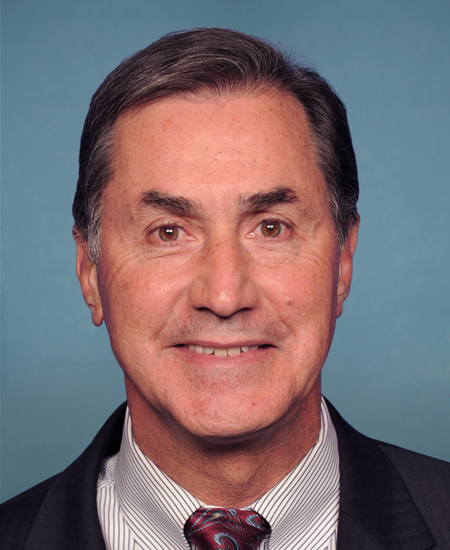
Photo of Gary J. Palmer
R United States House · District 6 · Alabama On the 2026 ballot

Rep. Gary J. Palmer

Compare
Total votes
2,837
all sessions
Attendance
99%
39 missed
Near the chamber average
With party
95%
of cast votes
Near the chamber average
Bipartisan score
3%
crosses aisle rarely
Near the chamber average
Sponsored
496
bills & resolutions
Lower than 82% of chamber peers
Committees
7
assignments
496 bills and resolutions

Sponsored bills

Total
496
Primary
76
Co-sponsor
420
This page
496
matching current filters
Co-sponsor HR 7366
In committee · United States House · Co-sponsor
To require timely publication of CBP border encounters, and for other purposes.

Maddy summaryHR 7366 requires U.S. Customs and Border Protection (CBP) to publish monthly border encounter data on its public portal by the 7th of each month. This affects CBP directly, as it mandates the timely release of data on encounters at the border during the previous month. The bill also includes a penalty: if CBP misses this deadline, funding for the Office of the Secretary of Homeland Security is reduced by 25% for the following month. The law focuses on ensuring transparency in border data reporting through specific deadlines and financial consequences.

In committee Feb 15, 2024 1 co-sponsor
Co-sponsor HR 7176
Passed · United States House · Co-sponsor
Unlocking our Domestic LNG Potential Act of 2024

Maddy summaryHR 7176, the "Unlocking our Domestic LNG Potential Act of 2024," streamlines approval processes for U.S. liquefied natural gas (LNG) export terminals. It grants the Federal Energy Regulatory Commission (FERC) exclusive authority to approve or deny LNG export facility projects, requiring FERC to deem such exports "consistent with the public interest" unless specific legal exceptions apply. The bill explicitly preserves the President’s authority to block LNG exports under sanctions laws targeting countries designated as state sponsors of terrorism. This directly affects LNG companies seeking export permits and FERC’s regulatory role, without altering existing environmental or safety regulations.

Passed Feb 15, 2024 1 co-sponsor
Primary HR 4316
In committee · United States House · Lead sponsor
Citizen Ballot Protection Act

Maddy summaryHR 4316, the Citizen Ballot Protection Act, amends the National Voter Registration Act to allow states to require mail voter registration applicants to provide proof of U.S. citizenship after federal elections. This change applies specifically to the state mail voter registration form, adding a citizenship verification step that states may implement following federal election cycles. The bill does not alter current in-person registration requirements or the timing of citizenship proof for initial registration. It directly affects voters who submit registration applications by mail for federal offices. The law would take effect upon its enactment.

In committee Feb 13, 2024 0 co-sponsors
Co-sponsor HRES 1001
In committee · United States House · Co-sponsor
Expressing the sense of the House of Representatives that former President Donald J. Trump did not engage in insurrection or rebellion against the United States, or give aid or comfort to the enemies thereof.

This resolution expresses the sense of the House of Representatives that former President Trump did not engage in insurrection or rebellion against, nor give aid or comfort to the enemies of, the United States.

In committee Feb 6, 2024 1 co-sponsor
Co-sponsor HRES 82
In committee · United States House · Co-sponsor
Expressing the sense of Congress regarding the need to designate Nigeria a Country of Particular Concern for engaging in and tolerating systematic, ongoing, and egregious violations of religious freedom, the need to appoint a Special Envoy for Nigeria and the Lake Chad region, and for other purposes.

Maddy summaryThis non-binding resolution urges the U.S. State Department to redesignate Nigeria as a "Country of Particular Concern" (CPC) for systematic religious freedom violations under the International Religious Freedom Act, and to appoint a Special Envoy for Nigeria and the Lake Chad region. It cites U.S. Commission on International Religious Freedom (USCIRF) recommendations, reports of ongoing violence against Christian communities (including church attacks and kidnappings), and Nigeria’s blasphemy laws as justification. The resolution specifically requests the Secretary of State to immediately redesignate Nigeria as a CPC and the President to appoint a Special Envoy with direct reporting to the Secretary. It does not create new law but expresses congressional intent for U.S. diplomatic action. (3 sentences)

In committee Feb 6, 2024 1 co-sponsor
Co-sponsor HJRES 111
In committee · United States House · Co-sponsor
Disapproving the rule submitted by the Department of Energy relating to "Energy Conservation Program: Energy Conservation Standards for Consumer Furnaces".

Maddy summaryThis resolution disapproves a Department of Energy rule that would have set new energy efficiency standards for consumer furnaces. The rule, published in the Federal Register (88 Fed. Reg. 87502), aimed to require furnace manufacturers to produce models meeting higher energy conservation levels. If enacted, this resolution would cancel the rule, preventing it from taking effect. As a result, current energy efficiency standards for furnaces would remain unchanged, and manufacturers would not face the new requirements.

In committee Feb 2, 2024 1 co-sponsor
Co-sponsor HJRES 107
In committee · United States House · Co-sponsor
Providing for congressional disapproval under chapter 8 of title 5, United States Code, of the rule submitted by the Federal Communications Commission relating to "The Infrastructure Investment and Jobs Act: Prevention and Elimination of Digital Discrimination".

Maddy summaryHJRES 107 is a congressional resolution seeking to block a Federal Communications Commission (FCC) rule published on January 22, 2024 (89 Fed. Reg. 4128). The resolution aims to disapprove the FCC's rule implementing digital discrimination protections under the Infrastructure Investment and Jobs Act, which would have required internet providers to prevent discriminatory practices. If passed, this resolution would nullify the FCC rule, preventing it from taking effect under the Congressional Review Act (Chapter 8 of Title 5, U.S. Code). The bill directly affects the FCC's regulatory authority over digital discrimination enforcement in broadband services.

In committee Feb 2, 2024 1 co-sponsor
Co-sponsor HR 7035
In committee · United States House · Co-sponsor
Death Tax Repeal Act

Maddy summaryThe Death Tax Repeal Act would eliminate the federal estate tax and generation-skipping transfer tax for estates of people who die on or after the bill's enactment date, and for generation-skipping transfers made after that date. It would also establish a new $10 million lifetime gift tax exemption (adjusted annually for inflation) and replace the existing gift tax rate schedule with a revised structure. These changes would primarily affect high-net-worth individuals and their heirs, as the estate tax and gift tax typically apply to large estates or gifts exceeding the new exemption threshold. The bill's provisions would take effect on the date of enactment, with transitional rules for the year the bill is signed into law.

In committee Jan 18, 2024 1 co-sponsor
Co-sponsor HR 7042
In committee · United States House · Co-sponsor
RIFLE Act of 2024

Maddy summaryThe RIFLE Act of 2024 changes how the federal government handles violations by firearms licensees, affecting gun dealers and manufacturers who hold federal licenses. It creates a graduated penalty system where non-willful violations require the Attorney General to work with licensees to fix issues before taking action, while willful violations may lead to license suspension or revocation only after proper notice, hearing, and evidence of continued noncompliance. The bill establishes new procedures for administrative hearings, defines "willful" violations more clearly, and gives licensees 90 days to liquidate inventory after license expiration or revocation, with extensions possible for reasonable cause. These changes aim to create a more transparent process for addressing violations while maintaining public safety standards.

In committee Jan 18, 2024 1 co-sponsor
Co-sponsor HR 788
Passed · United States House · Co-sponsor
Stop Settlement Slush Funds Act of 2023

Maddy summaryHR 788, the Stop Settlement Slush Funds Act of 2023, prohibits federal agencies from entering settlement agreements that direct payments to third parties (other than the U.S. government) unless the payment directly reimburses actual harm caused by the defendant or covers services related to the case. It requires agencies to report annually on such settlements to Congress and mandates annual audits by agency Inspectors General to ensure compliance. The law applies to all federal agencies entering settlements after its enactment and includes a 7-year sunset provision. This directly affects how federal agencies handle settlements in civil cases, limiting their ability to divert settlement funds to external entities without clear, direct justification.

Passed Jan 16, 2024 1 co-sponsor
Showing 281 to 290 of 496 bills
Previous 1 … 28 29 30 … 50 Next