

Maddy summaryThis bill amends U.S. Code to lower the minimum student enrollment required for high schools to establish or maintain a Junior Reserve Officers' Training Corps (JROTC) program, reducing the threshold from 100 to 50 students. It directly affects high schools seeking to start or sustain JROTC units, particularly those with smaller student populations. The key provision changes the existing requirement under Title 10, U.S. Code, making it easier for schools to qualify for JROTC participation. This is a straightforward policy adjustment to existing law, with no additional funding or program changes specified.
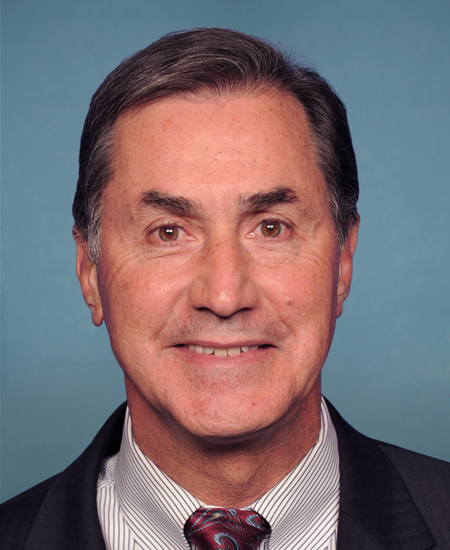
Rep. Gary J. Palmer
Sponsored bills
Maddy summaryThis bill bans airlines from transporting non-citizens using three specific documents: the CBP One mobile app, DHS Form I-385 (Notice to Report), and DHS Form I-862 (Notice to Appear). It also prohibits the Department of Homeland Security from accepting these documents as valid ID for domestic air travel. The law directly affects airlines that might facilitate travel for individuals relying on these documents and travelers using them for flight boarding. Key provisions explicitly list the banned documents in federal law, removing them as acceptable identification for air travel under U.S. Code.
Maddy summaryH.J.Res. 116 seeks to block a Department of Labor rule finalized on January 10, 2024, which aimed to clarify how businesses classify workers as employees or independent contractors under the Fair Labor Standards Act (FLSA). If passed, this resolution would prevent the rule from taking effect, directly affecting businesses that use independent contractors and their workers, who rely on FLSA protections for minimum wage and overtime pay. The bill uses a specific congressional process (under Chapter 8 of Title 5, U.S. Code) to disapprove the rule, rather than creating new policy. This action would maintain the existing classification standards until a new rule is established.
Maddy summaryHCONRES 86 is a non-binding congressional resolution expressing that a carbon tax would harm the U.S. economy. It states that such a tax would raise energy prices for essentials like gasoline, electricity, and home heating, disproportionately affecting low-income families, the elderly, and fixed-income individuals. The resolution argues a carbon tax would reduce economic growth, encourage businesses to move overseas, and weaken U.S. global competitiveness, urging focus on pro-growth energy policies instead.
Maddy summaryHR 1023, the "Cutting Green Corruption and Taxes Act," repeals the greenhouse gas reduction fund established under Section 134 of the Clean Air Act and rescinds unobligated funds allocated to it. It also repeals a related provision in the Inflation Reduction Act (Public Law 117-169) that addressed this fund. This bill directly eliminates the federal funding mechanism for greenhouse gas reduction programs, stopping the allocation of government resources toward these climate initiatives. As a result, the government would no longer have legal authority to use funds for programs previously authorized under these provisions.
Maddy summaryHR 7725 would block federal funding for graduate medical schools that require students or staff to adopt specific statements about race, gender, or identity (like claiming systemic racism or collective guilt), use race-based distinctions in admissions or programs, maintain DEI offices, or mandate "diversity statements" for admission. It directly affects graduate medical schools at colleges/universities receiving federal financial aid, including student loans. The bill exempts medical education about race-related health needs, demographic data collection for reporting, and religious institutions from adhering to policies conflicting with their beliefs. Schools violating these rules would lose eligibility for federal funds, though they could still comply with anti-discrimination laws and provide general academic instruction.
Maddy summaryThe AUSTIN Act of 2024 requires cabinet-level officials, such as department heads, to notify the President and congressional leaders within 24 hours if they cannot perform their duties due to illness or absence, and to publish this notice on their agency’s website. The notice must include the reason for the inability and a timeline for when they will be unable to work and when they expect to return. The President may temporarily waive the public posting requirement for national security reasons but must explain the waiver to Congress, and congressional leaders can override such a waiver if they disagree. Failure to comply could result in the official losing federal funding for their salary and facing termination.
Maddy summaryHR 6421, the Affordable HOMES Act, repeals federal requirements for energy efficiency standards in manufactured housing. It removes the authority established under the Energy Independence and Security Act of 2007 to set such standards and invalidates a 2022 Department of Energy rule implementing those standards. This bill directly affects manufactured home manufacturers by eliminating a federal regulatory requirement related to energy conservation.
Maddy summaryHRES 1057 is a non-binding House resolution introduced on March 5, 2024, that formally denounces public calls for a cease-fire in Gaza. It specifically demands an end to U.S. funding for Hamas through the UNRWA aid agency, condemns efforts to establish an independent State of Palestine, and calls for halting all U.S. assistance to Palestinian entities until investigations into alleged terrorism funding are completed. The resolution does not change laws or policies but serves as a symbolic statement expressing congressional opposition to cease-fire advocacy and certain aid programs. It directly addresses public discourse and policy debates, not specific individuals or organizations.
Maddy summaryH.Res. 1019 is a resolution passed by the U.S. House of Representatives condemning the Nicaraguan government's imprisonment of 11 individuals affiliated with Mountain Gateway Ministry. The resolution states these arrests occurred without due process on baseless charges of money laundering and organized crime, with detainees lacking adequate legal counsel. It specifically calls on Nicaragua to address these violations of religious freedom and human rights, following the government's pattern of targeting religious groups. This symbolic resolution expresses congressional disapproval but does not impose legal requirements on Nicaragua.