

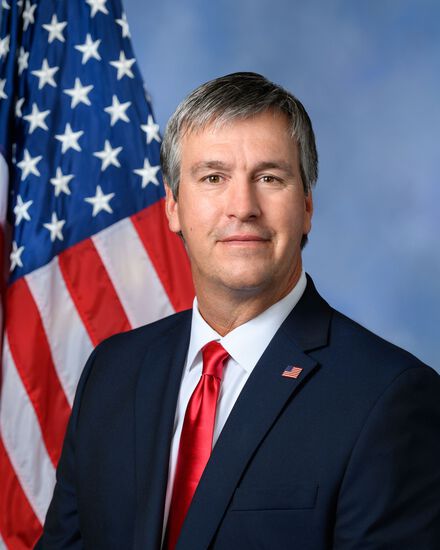
Photo of Barry Moore
R United States House · District 1 · Alabama

Rep. Barry Moore

Compare
Total votes
2,837
all sessions
Attendance
99%
39 missed
Near the chamber average
With party
90%
of cast votes
Lower than 89% of chamber peers
Bipartisan score
5%
crosses aisle rarely
Higher than 87% of chamber peers
Sponsored
1,245
bills & resolutions
Higher than 82% of chamber peers
Committees
8
assignments
1,245 bills and resolutions

Sponsored bills

Total
1,245
Primary
63
Co-sponsor
1,182
This page
1,245
matching current filters
Co-sponsor HR 262
In committee · United States House · Co-sponsor
ALERT Act

Maddy summaryHR 262 (ALERT Act) requires federal agencies to publicly share details about upcoming regulations monthly, including cost estimates, economic impact, and legal basis. Agencies must submit this information to the Office of Information and Regulatory Affairs, which then posts it online within 30 days. Rules cannot take effect until six months after this information is publicly available, except for emergencies (e.g., health/safety threats) or national security actions. This directly affects all federal agencies that issue regulations, making their rulemaking process more transparent to the public.

In committee Dec 18, 2024 1 co-sponsor
Co-sponsor HR 9096
In committee · United States House · Co-sponsor
Pharmacists Fight Back Act

Maddy summaryThe Pharmacists Fight Back Act (HR 9096) sets new rules for Pharmacy Benefits Managers (PBMs) working with federal health care programs like Medicare Part D and Medicaid. It requires PBMs to reimburse in-network pharmacies at a rate covering the drug's actual cost plus a small fee (capped at $25), and to reduce patient cost-sharing by at least 80% of rebates received from drug manufacturers. The bill bans PBMs from steering patients to specific pharmacies, charging patients more than pharmacies are paid, or using rebates to lower pharmacy payments after claims are processed. It also mandates public reporting of drug pricing data to improve transparency, ensuring patients and pharmacies receive fairer treatment under federal health programs.

In committee Dec 17, 2024 1 co-sponsor
Primary HR 8866
In committee · United States House · Lead sponsor
Advocates for Families Act of 2024

Maddy summaryHR 8866, the Advocates for Families Act of 2024, requires states to allow parents, foster parents, or legal guardians in child welfare cases to hire a family advocate to represent their interests. The bill mandates states to establish rules for these advocates, inform families about their right to use one, and notify federal authorities about implementation. Crucially, states are not required to fund or provide these advocates. It also requires the federal government to report to Congress every two years on how states are implementing this family advocate system. This bill directly affects families navigating child welfare systems and changes how states must handle family representation requests.

In committee Dec 17, 2024 0 co-sponsors
Co-sponsor HR 8411
In committee · United States House · Co-sponsor
Defending American Property Abroad Act

Maddy summaryHR 8411, the Defending American Property Abroad Act, blocks U.S. government funding for activities involving foreign ports or terminals where a U.S. entity owns the land needed for access, and a foreign government has taken actions like nationalizing that land or nullifying a related contract. It requires the Homeland Security Secretary to designate such "prohibited property" within 60 days, then prohibits funding for vessels using these locations to import goods, dock, or receive maintenance. The bill mandates annual reports to Congress tracking designated properties, affected vessels, and the foreign actions triggering designations, along with assessments of economic and national security impacts. This directly affects U.S. businesses with foreign port access and U.S. agencies managing maritime activities.

In committee Dec 17, 2024 1 co-sponsor
Co-sponsor HR 7476
In committee · United States House · Co-sponsor
Countering Communist China Act

Maddy summary# Summary of Proposed Legislation This document outlines a comprehensive U.S. legislative proposal with several key components: 1. **Research Restrictions**: - Requires certification from Federal research grant recipients that they are not Chinese citizens or participants in Chinese talent programs - Prohibits employment of Chinese nationals in federally funded research - Requires institutions receiving Federal assistance to agree not to knowingly employ individuals participating in Chinese talent programs 2. **Foreign Gifts and Contracts Disclosure**: - Mandates disclosure of foreign gifts/contracts over $50,000 to universities - Requires public reporting of restricted/conditional gifts/contracts - Creates a searchable public database of foreign gifts to universities - Requires institutions to maintain policies regarding foreign gifts to faculty and staff 3. **Investment Restrictions**: - Restricts tax-exempt organizations from holding investments in "disqualified Chinese companies" (defined as corporations incorporated in China or with significant Chinese government ownership) - Requires annual reporting on such investments - Allows limited waivers with public disclosure 4. **Taiwan Policy**: - Prohibits U.S. government from recognizing PRC claims to sovereignty over Taiwan without Taiwan's consent - Requires U.S. government to treat Taiwan's democratically elected government as the legitimate representative of the people of Taiwan - Requires a strategy to protect U.S. businesses from Chinese coercion efforts 5. **Additional Provisions**: - Requires participants in Chinese talent programs to register as agents of the Chinese government - Amends economic espionage laws to include education and research - Mandates disclosure of certain funds received by visa holders The legislation represents a significant effort to limit Chinese influence in U.S. academic institutions, research, and business sectors while establishing a more robust policy framework regarding Taiwan.

In committee Dec 17, 2024 1 co-sponsor
Co-sponsor HR 6485
In committee · United States House · Co-sponsor
Child Welfare Provider Inclusion Act of 2023

Maddy summaryThis bill protects religious child welfare providers from losing government contracts or funding if they refuse to provide services conflicting with their sincerely held religious beliefs (e.g., certain foster care or adoption placements). It prohibits states and federal agencies from denying contracts, licenses, or renewals for this reason, and allows providers to sue for violations with recovery of damages and legal fees. States violating the law risk losing 15% of federal child welfare funding. The law applies to all federally funded child welfare services, including foster care, adoption support, and family preservation programs.

In committee Dec 17, 2024 1 co-sponsor
Co-sponsor HR 6177
In committee · United States House · Co-sponsor
No Taxpayer Funding for Researchers Who Prey on Children Act

Maddy summaryHR 6177 prohibits federal funding from the Department of Health and Human Services (HHS) for researchers involved in studies or experiments involving minors that: (1) affirm a minor's gender identity differing from their sex assigned at birth, (2) provide medical/surgical services to help minors disassociate from their biological sex, or (3) use social interventions for the same purpose. The bill directly affects researchers seeking HHS grants for such studies, requiring them to certify they have never led such projects. It defines "sex" biologically at birth (based on reproductive biology and genetics) and "minor" as anyone under 18. The law bans funding for any federally-supported research meeting these criteria, regardless of the study's focus.

In committee Dec 17, 2024 1 co-sponsor
Co-sponsor HR 6133
In committee · United States House · Co-sponsor
Protecting Religious Freedom for Foster Families Act

Maddy summaryThis bill prohibits the Department of Health and Human Services from finalizing, implementing, or enforcing the proposed "Safe and Appropriate Foster Care Placement Requirements for Titles IV-E and IV-B" rule (published September 28, 2023). It directly affects federal foster care programs by blocking a specific rule that would have required states to consider religious beliefs when placing children in foster care. The key mechanism is a clear statutory ban on the rule's implementation, preventing it from taking effect. The bill does not create new requirements but stops the enforcement of this particular federal regulation.

In committee Dec 17, 2024 1 co-sponsor
Co-sponsor HR 5967
In committee · United States House · Co-sponsor
Unemployment Integrity Act of 2023

Maddy summaryHR 5967, the Unemployment Integrity Act of 2023, requires unemployment claimants to participate in job-seeking activities to maintain benefits. Specifically, it mandates that claimants respond to work-related requests, attend reemployment interviews, and comply with reasonable requests like drug testing or skills assessments. The bill also requires states to conduct a study on increasing random audits of unemployment claims and mandates that states adopt these new requirements to receive federal funds for extended unemployment benefits. These changes apply to weeks beginning one year after the bill's enactment, with adjustments for states holding biennial legislative sessions. The law directly affects individuals claiming unemployment benefits by linking eligibility to active job-seeking participation.

In committee Dec 17, 2024 1 co-sponsor
Co-sponsor HR 5790
In committee · United States House · Co-sponsor
Prioritizing Offensive Agricultural Disputes and Enforcement Act

Maddy summaryThis bill establishes an Agricultural Trade Enforcement Task Force to address foreign trade barriers harming U.S. agricultural exports, specifically targeting India's WTO-violating price support programs for rice, wheat, and other commodities. The Task Force, led by the U.S. Trade Representative and Agriculture Department, must identify systemic trade barriers, develop enforcement strategies, and file a WTO dispute against India within 60 days of consultations if needed. It requires quarterly reports to Congress on progress, including a specific plan to challenge India's subsidies that exceed WTO limits (e.g., rice supports at 93.9% of production value). The bill directly affects U.S. farmers, ranchers, and exporters who face market access barriers due to these foreign subsidies.

In committee Dec 17, 2024 1 co-sponsor
Showing 511 to 520 of 1,245 bills
Previous 1 … 51 52 53 … 125 Next