

Maddy summaryThis bill expands Medicare coverage for hereditary cancer prevention and management. It requires Medicare to cover genetic testing for individuals with a personal or family history of hereditary cancer mutations, as defined by evidence-based guidelines from organizations like the National Comprehensive Cancer Network. The bill also mandates coverage for risk-reducing surgeries (like mastectomies or oophorectomies) when medically appropriate, and increases the frequency of recommended cancer screenings (such as mammograms, colonoscopies, and breast MRI) to at least annually for those with confirmed hereditary cancer gene mutations. These changes apply to Medicare beneficiaries with specific hereditary cancer risk factors, effective upon the bill's enactment.
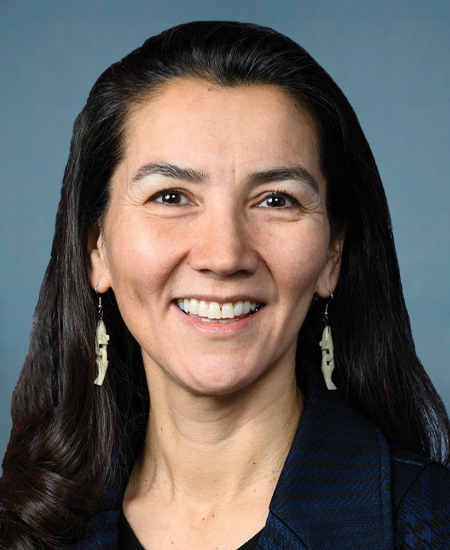
Rep. Mary Sattler Peltola
Sponsored bills
Maddy summaryThe Social Security Expansion Act would increase benefits for many Social Security recipients, extend eligibility for certain groups, and introduce new tax provisions. It raises the calculation method for benefits (increasing the first bend point from 90% to 95%), increases minimum benefits for low earners based on years worked (with higher minimums for those with more work history), and extends benefit eligibility for children who are full-time students until age 22. The bill also introduces a new tax on income between the Social Security wage base and $250,000, and increases the tax on investment income from 3.8% to 16.2%. These changes would primarily affect Social Security beneficiaries, high-income earners, and those with investment income, with the new tax revenues funding the Social Security Trust Fund.
Maddy summary# Summary of Proposed Election Reform Legislation This document outlines a comprehensive federal election reform bill with multiple titles addressing various aspects of voting rights, election administration, and election integrity. ## Key Provisions: ### 1. Democracy Restoration (Title I) - Restores voting rights to citizens with felony convictions who are not serving a felony sentence in a correctional institution - Requires states to notify individuals of restored voting rights upon release from prison, completion of probation, or sentencing - Prohibits states from conditioning voting rights on payment of fines or fees - Requires states to provide notification of voting rights to citizens with criminal convictions ### 2. Voter Identification Requirements (Title II) - Establishes a broad definition of acceptable identification documents (including utility bills, bank statements, student IDs, etc.) - Requires states to provide free identification to voters who lack one - Authorizes $5 million annually for 5 years to cover costs of providing identification - Sets procedures for provisional voting when identification is not presented ### 3. Voter List Maintenance (Title III) - Prohibits "voter caging" (using undeliverable mail to challenge voter registration) - Bans use of unverified match lists to remove voters from registration lists - Sets strict conditions for removing voters from registration lists - Requires states to provide notice to voters removed from registration lists ### 4. Election Integrity Measures (Title V) - Prohibits hindering or interfering with voter registration (Section 2001) - Restricts removal of local election administrators (Section 3001) - Prohibits harassment of election workers (Section 3101) - Bans deceptive practices in elections (Section 3201), including false statements about voting locations, eligibility, or endorsements ### 5. Additional Provisions - Requires states to provide notice of voting rights restoration to citizens - Establishes private rights of action for violations of the law - Sets criminal penalties for violations (up to $100,000 fines and 5 years imprisonment) - Includes provisions for federal funding to be contingent on compliance with voting rights restoration This legislation represents a significant overhaul of voting rights and election administration procedures across the United States, with a focus on expanding voting access, protecting voter rights, and ensuring fair election administration.
Maddy summaryHR 751, the FAIR Act, requires hospitals running medical residency programs to report annual data on applicants and acceptances from both osteopathic (DO) and allopathic (MD) medical schools starting in 2024. Specifically, hospitals must submit the number of applicants and accepted candidates from each medical school type, confirm they accept both DO and MD applicants, and state that COMLEX and USMLE exam scores are equally accepted. The Health Secretary must then publish this data online for public transparency. The bill directly affects hospitals operating residency programs and aims to make their admissions processes more visible, without mandating specific acceptance rates or changing admission criteria.
Maddy summaryHR 549, the Metastatic Breast Cancer Access to Care Act, removes waiting periods for disability and Medicare coverage for people diagnosed with metastatic breast cancer. Specifically, it amends Social Security Act sections to allow immediate eligibility for disability insurance benefits (eliminating the standard waiting period) and immediate Medicare coverage (waiving the 24-month waiting period) for these patients. The bill directly affects individuals with metastatic breast cancer who would otherwise face delays in accessing critical benefits. These changes apply to applications filed or benefits beginning after the bill's enactment date. The law makes no other policy changes beyond these specific eligibility adjustments.
Maddy summaryThis bill reserves 15% of specific funds under the Social Security Act for grants to Indian tribes, tribal organizations, and Tribal Colleges and Universities. It guarantees at least 10 annual grants to these tribal entities if they meet application requirements. The law directly affects tribal healthcare workforce development programs by mandating dedicated funding and ensuring minimum grant opportunities. These changes take effect October 1, 2023.
Maddy summaryHR 6489, the Alaska Native Village Municipal Lands Restoration Act of 2023, amends the Alaska Native Claims Settlement Act to clarify land conveyance rules affecting Alaska Native Village Corporations. It allows these corporations to revert certain lands previously conveyed to the State of Alaska in trust back to themselves under specific conditions. Key provisions include requiring that the land was conveyed for future municipal corporation establishment but no such corporation was formed by the bill's enactment date, and that the village formally resolves to dissolve the trust. This directly affects Alaska Native Village Corporations holding land under these specific trust arrangements, enabling them to regain title to the reverted land.
Maddy summaryThis bill would recognize five Southeast Alaska communities (Haines, Ketchikan, Petersburg, Tenakee, and Wrangell) that were excluded from the Alaska Native Claims Settlement Act. It would allow these communities to form Urban Corporations, receive approximately 23,040 acres of federal land each, and provide eligible Native residents with 100 shares of stock in their respective corporations. The bill includes provisions for public access to the land for subsistence and recreational uses while preserving existing agreements for roads and transportation facilities. It also establishes a process for land conveyance and provides $12.5 million in funding for implementation.
Maddy summaryThe SNAP Benefits Fairness Act of 2023 amends a specific provision in the Food and Nutrition Act of 2008 to remove a rule that previously limited eligibility for Supplemental Nutrition Assistance Program (SNAP) benefits. It directly affects individuals applying for or receiving SNAP benefits by eliminating a barrier related to certain income or asset calculations. The key change involves striking a subsection (formerly (B)) and renumbering subsequent sections in the eligibility rules. This amendment will take effect on January 1 following the bill's enactment.
Maddy summaryHR 2687 amends the Alaska Native Claims Settlement Act to clarify that distributions from Alaska Native Settlement Trusts count toward income eligibility for federal programs. It directly affects Alaska Native individuals or their descendants who receive trust benefits and need to qualify for programs like Supplemental Security Income (SSI) for the aged, blind, or disabled. The key change specifies that trust interest or distributions are now explicitly included when determining eligibility under the Social Security Act. This adjustment ensures these benefits are properly considered in federal program eligibility calculations, without altering the trust's structure or creating new benefits.