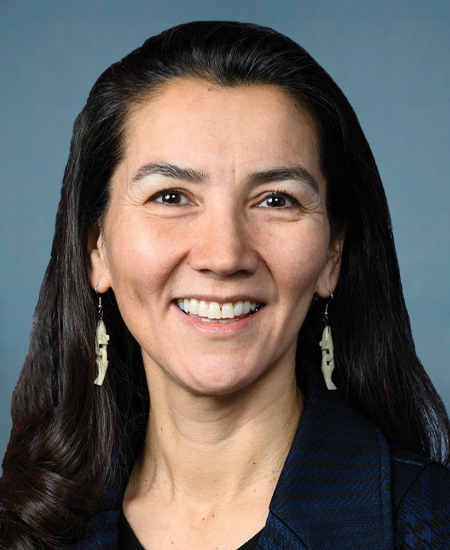
Photo of Mary Sattler Peltola
D United States House · District At-Large · Alaska

Rep. Mary Sattler Peltola

Compare
Total votes
1,329
all sessions
Attendance
82%
234 missed
Lower than 97% of chamber peers
With party
86%
of cast votes
Lower than 93% of chamber peers
Bipartisan score
7%
crosses aisle rarely
Higher than 90% of chamber peers
Sponsored
384
bills & resolutions
Near the chamber average
Committees
0
assignments
384 bills and resolutions

Sponsored bills

Total
384
Primary
36
Co-sponsor
348
This page
384
matching current filters
Co-sponsor HR 4165
In committee · United States House · Co-sponsor
United States-Russian Federation Seafood Reciprocity Act of 2023

Maddy summaryThis bill prohibits the importation of seafood products of Russian Federation origin into the United States, including products substantially transformed in other countries. It directly affects U.S. importers and businesses involved in seafood trade with Russia, banning products classified under specific tariff codes (chapters 3 or 1604 of the Harmonized Tariff Schedule). The prohibition terminates 90 days after the President certifies that Russia has lifted its ban on U.S. seafood imports. The law takes effect 90 days after enactment, with no exceptions for pre-existing contracts.

In committee Dec 17, 2024 1 co-sponsor
Co-sponsor HR 4189
In committee · United States House · Co-sponsor
CONNECT for Health Act of 2023

Maddy summaryThe CONNECT for Health Act of 2023 aims to expand access to telehealth services under Medicare by removing barriers that previously limited who could provide these services and where they could be delivered. The bill eliminates geographic restrictions on telehealth coverage, allows telehealth services to be provided from the patient's home and other clinically appropriate locations, and expands the types of healthcare providers who can offer telehealth services. It also improves the process for adding new telehealth services to Medicare coverage and includes provisions to ensure quality measurement includes telehealth services. This legislation directly affects Medicare beneficiaries seeking remote care and healthcare providers delivering telehealth services, with key provisions taking effect between 2024 and 2025.

In committee Dec 17, 2024 1 co-sponsor
Co-sponsor HR 3851
In committee · United States House · Co-sponsor
Access to Breast Cancer Diagnosis Act of 2023

Maddy summaryHR 3851, the Access to Breast Cancer Diagnosis Act of 2023, requires most health insurance plans (including group and individual coverage) to cover diagnostic and supplemental breast exams without any out-of-pocket costs like copays or deductibles. This applies to medically necessary exams used to evaluate abnormalities detected during screening (diagnostic) or to screen high-risk individuals without abnormalities (supplemental), following National Comprehensive Cancer Network guidelines. Plans may still require prior authorization for these exams, and state laws providing stronger protections remain in effect. The law takes effect for plan years beginning January 1, 2024.

In committee Dec 17, 2024 1 co-sponsor
Co-sponsor HR 3599
In committee · United States House · Co-sponsor
DIGNIDAD (Dignity) Act of 2023

Maddy summary# Comprehensive Immigration Reform Bill Summary This document appears to be a draft of a comprehensive immigration reform bill with significant changes to U.S. immigration policy, particularly focusing on employment verification and asylum processing. ## Key Provisions ### Employment Eligibility Verification (E-Verify) System - **Replaces the current E-Verify system** with a new "Employment Eligibility Verification" system under Section 274A - **Phased implementation schedule** for different employer sizes (10,000+ employees, 500-10,000 employees, 20-500 employees, and fewer than 20 employees) - **New penalties** for violations, including: - Civil penalties ranging from $2,500 to $25,000 per violation - Criminal penalties of up to $5,000 per unauthorized alien - **Good faith defense** for employers who comply with verification requirements - **Repeal of Subtitle A of Title IV of the Illegal Immigration Reform and Immigrant Responsibility Act of 1996** ### Asylum Reform - **Establishment of 5 "Humanitarian Campuses"** along the southern border for processing asylum seekers - **Expedited asylum procedures** including: - Mandatory 72-hour rest period after arrival - Initial screening within 15 days - Expedited asylum decisions within 45 days for approved cases - Case management for those referred to immigration judges - **5 Western Hemisphere facilities** for asylum pre-screening and family reunification - **New requirements** for recording credible fear interviews and expedited removal proceedings - **Stricter penalties** for asylum fraud, including permanent ineligibility for asylum benefits ### Additional Provisions - **Criminal background checks** for sponsors of unaccompanied children - **Fraud prevention measures** for Social Security numbers and identity verification - **New verification system** with requirements for biometric checks, medical screenings, and legal orientation - **Provisions for vulnerable populations** including pregnant women, victims of violence, and people with disabilities The bill contains detailed implementation timelines (with many provisions taking effect within 1-5 years), specific numerical requirements for staffing, and extensive procedural requirements for processing immigrants and asylum seekers. This appears to be a comprehensive proposal that would significantly change U.S. immigration enforcement, asylum processing, and employer verification requirements.


In committee Dec 17, 2024 1 co-sponsor
Co-sponsor HR 3461
In committee · United States House · Co-sponsor
Strengthening Tribal Families Act of 2023

Maddy summaryThe Strengthening Tribal Families Act of 2023 requires U.S. states receiving federal child welfare funding to explicitly comply with the Indian Child Welfare Act (ICWA) of 1978. It amends federal law to mandate that state child welfare agencies follow ICWA standards in cases involving Native American children, including timely tribal notice and proper placement decisions. The bill establishes specific metrics for measuring compliance, such as tracking how often courts return cases for insufficient "active efforts" and documenting foster care or adoption placements. States must submit biennial reports to Congress on their progress, and a new federal process will develop standardized compliance assessment tools by 2024. This directly affects state child welfare agencies, tribal organizations, and Native American families involved in custody proceedings.

In committee Dec 17, 2024 1 co-sponsor
Co-sponsor HR 3403
In committee · United States House · Co-sponsor
Strengthening Tribal Families Act of 2023

Maddy summaryThe Strengthening Tribal Families Act of 2023 requires state child welfare agencies to comply with the Indian Child Welfare Act of 1978 (ICWA) in all cases involving Native American children. It amends federal child welfare laws to mandate specific ICWA compliance measures in state plans, such as timely tribal notice in custody cases and proper foster care placements. The bill establishes a system for measuring state compliance, tracking factors like identification of Indian children and court decisions on parental rights. States must submit biennial reports to Congress on their progress in meeting these requirements.

In committee Dec 17, 2024 1 co-sponsor
Co-sponsor HR 3432
In committee · United States House · Co-sponsor
Telemental Health Care Access Act of 2023

Maddy summaryHR 3432, the Telemental Health Care Access Act of 2023, expands Medicare coverage for mental and behavioral health services delivered via telehealth. It removes geographic restrictions that previously limited telehealth coverage to rural areas and explicitly adds "behavioral health services" to the list of covered telehealth services under Medicare Part B. The bill requires the Secretary of Health and Human Services to submit a report within one year on utilization of these services, including recommendations on fraud prevention and funding needs for oversight. This change directly affects Medicare beneficiaries seeking remote mental/behavioral health care and the providers who deliver it.

In committee Dec 17, 2024 1 co-sponsor
Co-sponsor HR 3198
In committee · United States House · Co-sponsor
Equitable Payments for Nursing Facilities Act of 2023

Maddy summaryThe Equitable Payments for Nursing Facilities Act of 2023 would allow the U.S. Department of Health and Human Services (HHS) to adjust Medicare payment rates for skilled nursing facilities (SNFs) located in Alaska or Hawaii. These adjustments would account for unique circumstances specific to these states, such as higher operational costs due to geographic isolation. The bill does not set specific payment amounts but authorizes HHS to make necessary changes to better align rates with actual costs. This policy would directly affect SNFs in Alaska and Hawaii that receive Medicare funding. The goal is to ensure payment rates more accurately reflect the true expenses of operating in these regions.

In committee Dec 17, 2024 1 co-sponsor
Co-sponsor HR 2407
In committee · United States House · Co-sponsor
Nancy Gardner Sewell Medicare Multi-Cancer Early Detection Screening Coverage Act

Maddy summaryThis bill would require Medicare to cover FDA-approved blood tests that screen for multiple cancers simultaneously (like breast, lung, or colorectal cancer) for beneficiaries. It directly affects Medicare recipients aged 65+ who could access these new screenings once per year, without prior authorization. The key provision adds "multi-cancer early detection screening tests" to Medicare's covered services under Part B, defining them as blood tests analyzing cell-free DNA, while maintaining existing coverage for standard screenings like mammograms. The bill does not change current coverage for individual cancer screenings but ensures Medicare keeps pace with new medical technology.

In committee Dec 17, 2024 1 co-sponsor
Co-sponsor HR 1638
In committee · United States House · Co-sponsor
Improving Access to Mental Health Act of 2023

Maddy summaryThis bill increases Medicare reimbursement for clinical social workers from 75% to 85% of the payment rate for psychologists under Part B. It also removes an exclusion that previously prevented skilled nursing facilities from billing Medicare for social worker services provided to residents. The bill expands covered services to include specific mental health assessments and interventions identified by HCPCS codes (like 96156, 96158-96161, etc.) for Medicare beneficiaries. These changes take effect for services provided on or after January 1, 2024, directly affecting Medicare patients and clinical social workers.

In committee Dec 17, 2024 1 co-sponsor
Showing 31 to 40 of 384 bills
Previous 1 … 3 4 5 … 39 Next