

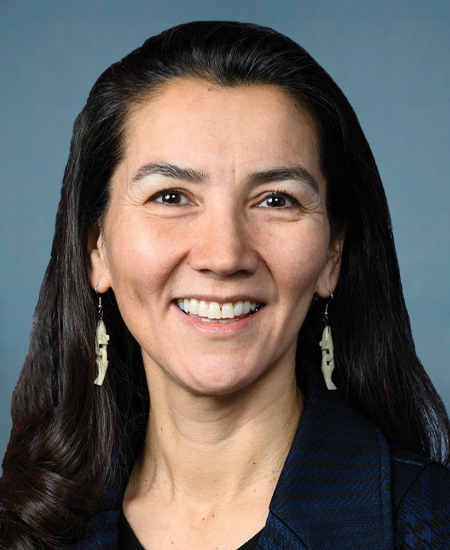
Photo of Mary Sattler Peltola
D United States House · District At-Large · Alaska

Rep. Mary Sattler Peltola

Compare
Total votes
1,329
all sessions
Attendance
82%
234 missed
Lower than 97% of chamber peers
With party
86%
of cast votes
Lower than 93% of chamber peers
Bipartisan score
7%
crosses aisle rarely
Higher than 90% of chamber peers
Sponsored
384
bills & resolutions
Near the chamber average
Committees
0
assignments
384 bills and resolutions

Sponsored bills

Total
384
Primary
36
Co-sponsor
348
This page
384
matching current filters
Co-sponsor HR 7255
In committee · United States House · Co-sponsor
GRANT Act

Maddy summaryHR 7255, the GRANT Act, requires federal agencies that award discretionary or competitive grants to post specific information on their websites within one year of enactment. Agencies must provide clear details about each grant, including application deadlines, required documents, contact information, and technical assistance resources like webinars. The bill also mandates annual reports to Congress on grant recipients, values, and numbers, with agencies able to request a six-month extension for compliance if unforeseen issues arise. This law directly affects federal agencies managing grant programs and aims to improve transparency and accessibility for applicants seeking federal funding.

In committee Feb 6, 2024 1 co-sponsor
Co-sponsor HR 7210
In committee · United States House · Co-sponsor
Help America Run Act

Maddy summaryHR 7210, the Help America Run Act, allows campaign funds to cover essential personal expenses like child care, elder care, and health insurance premiums for candidates running for office. This amendment to the Federal Election Campaign Act (Section 313) treats these payments as authorized campaign expenses if necessary for campaign activities, while limiting total payments to the same cap as candidate salary. The bill directly affects working parents, caregivers, and lower-income candidates who might otherwise be unable to run due to unaffordable basic living costs. It aims to remove financial barriers that currently prevent many everyday Americans from seeking office, particularly impacting working mothers and caregivers. The policy change does not alter overall campaign finance limits but expands permissible uses of campaign funds for critical personal needs.

In committee Feb 1, 2024 1 co-sponsor
Co-sponsor HR 7164
In committee · United States House · Co-sponsor
Advancing Research for Chronic Pain Act of 2024

Maddy summaryThe Advancing Research for Chronic Pain Act of 2024 directs the U.S. Department of Health and Human Services to create a centralized system for researching chronic pain (defined as pain lasting more than three months). This system will gather de-identified data from medical claims and surveys to analyze chronic pain’s causes, costs, demographics, and treatment effectiveness, while identifying research gaps. It mandates a public website, the Chronic Pain Information Hub, to aggregate federal data, provide clinical tools for healthcare providers, and update annually with new findings. The bill also requires conflict-of-interest disclosures for research collaborators and a two-year congressional report, with funding authorized for fiscal years 2024-2028.

In committee Jan 31, 2024 1 co-sponsor
Co-sponsor HR 7165
In committee · United States House · Co-sponsor
Credit for Caring Act of 2024

Maddy summaryThe Credit for Caring Act of 2024 creates a new federal tax credit for family caregivers. It allows eligible caregivers to claim a credit equal to 30% of qualified caregiving expenses (like home modifications, medical supplies, or respite care) exceeding $2,000 per year, capped at $5,000 annually. To qualify, caregivers must earn over $7,500 in income and provide care for a relative (like a spouse or parent) certified by a healthcare provider as needing long-term care for at least 180 days. The credit phases out for higher earners, with a $75,000 income threshold for single filers and $150,000 for joint returns.

In committee Jan 31, 2024 1 co-sponsor
Co-sponsor HR 7060
In committee · United States House · Co-sponsor
Military Spouse Job Continuity Act

Maddy summaryThe provided context does not include sufficient details about HR 7060's specific provisions or policy changes. While the bill's title ("Military Spouse Job Continuity Act") suggests it relates to military spouses' employment, the context only lists a procedural amendment to 37 U.S.C. § 453(g) (striking a paragraph and redesignating another) without explaining the substance of the change. Without the actual bill text or a substantive summary describing how this amendment affects military spouses or job continuity, a factual summary cannot be generated. For accurate information, consult the full bill text or official legislative summaries from Congress.

In committee Jan 22, 2024 1 co-sponsor
Co-sponsor HR 7056
In committee · United States House · Co-sponsor
Access to Family Building Act

Maddy summaryHR 7056, the Access to Family Building Act, establishes federal rights for individuals to access assisted reproductive technology (ART) like IVF without unreasonable restrictions, directly affecting patients seeking fertility treatments and health care providers offering ART services. The bill prohibits states from imposing limitations on ART that are more burdensome than those for comparable medical procedures, fail to advance safety, or unduly restrict access, while allowing health and safety regulations that are necessary and least restrictive. It creates federal enforcement mechanisms, including lawsuits by the Attorney General or affected individuals to challenge violating state laws, and preempts conflicting state regulations. The bill explicitly preserves state authority over health/safety regulations and does not alter existing state insurance coverage laws for ART.

In committee Jan 19, 2024 1 co-sponsor
Co-sponsor HR 6882
In committee · United States House · Co-sponsor
PREPARE Act of 2023

Maddy summaryThe PREPARE Act of 2023 establishes an Interagency Council composed of senior officials from 25 federal agencies to coordinate extreme weather resilience efforts across the government. The law requires each federal agency to develop and update comprehensive extreme weather plans that integrate climate considerations into agency operations, with plans submitted annually to the Office of Management and Budget. The Council will create a public website to share resources, best practices, and progress updates, and will issue annual reports to Congress detailing implementation and effectiveness. This legislation directly affects all federal agencies by mandating they incorporate extreme weather planning into their operations and budgeting processes. The Act aims to improve government coordination on climate resilience without creating new regulatory requirements or duplicating existing federal programs.

In committee Jan 19, 2024 1 co-sponsor
Co-sponsor HR 5970
In committee · United States House · Co-sponsor
SNAP Tribal Food Sovereignty Act of 2023

Maddy summaryHR 5970, the SNAP Tribal Food Sovereignty Act of 2023, allows federally recognized tribes to manage their Supplemental Nutrition Assistance Program (SNAP) benefits locally through contracts or compacts with the USDA. Tribes must request this option via a tribal resolution, replacing the current federal administration of SNAP for tribal members. The agreements would follow the same rules as existing tribal self-determination contracts under the Indian Self-Determination Act. This change aims to support tribal self-governance over nutrition assistance programs.

In committee Jan 18, 2024 1 co-sponsor
Co-sponsor HR 3925
In committee · United States House · Co-sponsor
Youth Coastal Fishing Program Act of 2023

Maddy summaryHR 3925 establishes a federal grant program to fund youth fishing projects in coastal and Great Lakes areas. The bill authorizes $2 million annually (2024-2028) for grants to eligible entities like nonprofits, schools, state/local governments, or Tribal organizations to cover equipment, transportation, licenses, and educational components for youth. Priority is given to projects serving underserved communities, defined as groups facing systemic barriers due to race, disability, poverty, or inequality. Recipients must report annually on grant usage and participant numbers to Congress.

In committee Jan 18, 2024 1 co-sponsor
Co-sponsor HR 1709
In committee · United States House · Co-sponsor
Tribal Firearm Access Act

Maddy summaryHR 1709, the Tribal Firearm Access Act, allows members of federally recognized tribes to use their Tribal government-issued ID instead of a state-issued ID when purchasing firearms from licensed dealers. It amends federal law (18 U.S.C. § 922(t)(1)(D)) to explicitly accept tribal identification documents as valid proof of identity for firearm transactions. The bill defines "Tribal government" to include recognized tribes listed under the Federally Recognized Indian Tribe List Act of 1994. This change directly affects tribal members seeking to purchase firearms and federally licensed dealers who must now accept tribal IDs as valid identification. The law takes effect 90 days after enactment.

In committee Jan 18, 2024 1 co-sponsor
Showing 151 to 160 of 384 bills
Previous 1 … 15 16 17 … 39 Next