

Maddy summaryHR 1752, the E-BRIDGE Act, creates a federal grant program to fund high-speed broadband infrastructure projects in rural and underserved areas. It allows grants for planning, building, or improving broadband networks through eligible groups like local governments, public-private partnerships, or community consortia. Key provisions require grant applications to include data on existing broadband coverage and ensure public ownership of infrastructure built with federal funds for the project's lifetime. The bill aims to directly expand internet access for rural communities by streamlining funding and prioritizing areas with limited service.
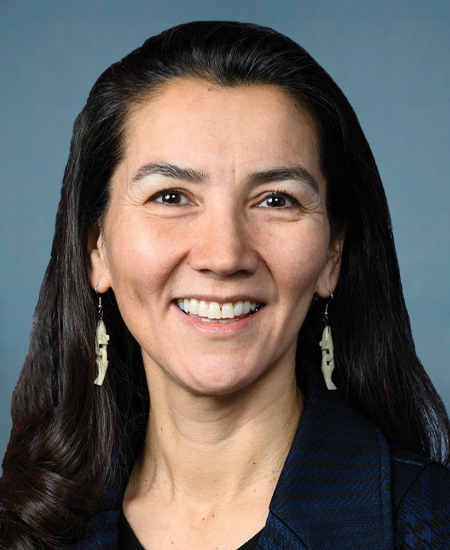
Rep. Mary Sattler Peltola
Sponsored bills
Maddy summaryHR 886, the Save Our Seas 2.0 Amendments Act, updates administrative and structural provisions of the Marine Debris Foundation and its programs. It clarifies that "tribal organization" refers to entities defined under the Indian Self-Determination Act, enabling direct tribal participation in marine debris initiatives. The bill modifies board appointment rules (requiring Commerce Secretary approval for some roles), reclassifies the Foundation as a corporation, and sets a 24-month limit on using federal funds for salaries. It also expands eligible grant recipients to include Indian tribes, international NGOs, and foreign governments, while requiring the Foundation to develop tribal outreach best practices. These changes streamline operations and broaden collaboration without altering core marine debris reduction programs.
Maddy summaryThe PARC Act requires national parks that charge entrance fees to accept cash payments as a standard option. This applies to all National Park System units where fees are collected, ensuring visitors can pay with physical currency. The bill amends federal law to mandate this change, directly affecting park visitors who rely on cash and park staff responsible for payment systems. It does not alter fee amounts or other park policies, only the accepted payment methods. The requirement is now enforced across all fee-charging park locations.
Maddy summaryHR 7587, the Port Optimization for Responsible Transportation Act, streamlines federal approval processes for port infrastructure projects. It directs the Maritime Administration to adopt environmental review shortcuts (categorical exclusions) used by other transportation agencies and create new ones specifically for port projects, reducing lengthy reviews. The bill also extends grant application deadlines when solicitation details change, allows minor budget adjustments without delays, and requires annual reports on grant processing times. These changes directly affect port authorities receiving federal grants and the Maritime Administration, aiming to speed up project approvals while maintaining environmental standards.
Military Family Leave Act of 2024 This bill entitles an employed family member of a member of the Armed Forces who receives notification of a call or order to active duty in support of a contingency operation, or who is deployed in connection with a contingency operation, to two workweeks of leave per year for each family member who is so called or deployed. Such leave may (1) be taken intermittently or on a reduced leave schedule; and (2) consist of paid or unpaid leave, as the employer considers appropriate. Additionally, the bill (1) allows an employer to require certification of entitlement to such leave within a leave request, (2) provides employment and benefits protection for employees upon their return from such leave, and (3) prohibits an employer from interfering with or otherwise denying the exercise of such leave rights.
Maddy summaryThis bill amends the Fair Credit Reporting Act to protect Native Americans from credit report damage related to certain medical debts. It defines "Native American's medical debt" as debt from health care authorized by the Indian Health Service (IHS) or wrongly charged by the Department of Health and Human Services (HHS), including debts HHS has wrongfully billed. The bill requires credit bureaus to automatically exclude from credit reports: (1) medical debt under one year old, and (2) fully paid or settled debt previously marked as delinquent. It also creates a dispute process where Native Americans can submit proof of HHS liability to have such debts removed from their reports. The changes apply to Native Americans as defined under federal law and take effect 90 days after enactment.
Maddy summaryHR 7500 allows federally recognized Indian tribes to request national security reviews (CFIUS) for transactions with foreign persons, mirroring the process available to corporations. It amends the Defense Production Act to require CFIUS to assess such tribal transactions for national security risks, treating them the same as covered business deals involving U.S. entities. This directly affects tribal governments entering business or real estate agreements with foreign entities, giving them equal access to the security review process. The bill does not change CFIUS's authority but extends its application to tribal transactions as defined under the Indian Self-Determination Act.
Maddy summaryThe Uyghur Policy Act of 2023 establishes a U.S. Special Coordinator for Uyghur Issues within the State Department to coordinate policy and advocate for the protection of Uyghur cultural, religious, and linguistic identity in Xinjiang. It authorizes $250,000 annually for Uyghur human rights advocates to speak at public diplomacy events in Muslim-majority countries and mandates Uyghur language training for U.S. diplomats. The bill also directs the U.S. government to support United Nations monitoring of Xinjiang human rights issues and oppose efforts to block discussions of Xinjiang at the UN. These provisions focus on diplomatic advocacy and information-sharing, not direct sanctions or enforcement actions against China.
Maddy summaryHRES 1017, the "BRIDGE to Congress Resolution," removes a rule requiring committee chairs to personally approve remote witness appearances at House committee hearings. It amends House Resolution 5 (2023) by deleting the phrase "at the discretion of the chair of the committee" from Section 3(j)(1). This change means witnesses can testify remotely without needing the committee chair's prior permission. The bill directly affects committee witnesses seeking to appear remotely and committee chairs who previously held this approval authority. The resolution makes remote testimony a standard option rather than requiring individual chair consent.
Maddy summaryHR 7176, the "Unlocking our Domestic LNG Potential Act of 2024," streamlines approval processes for U.S. liquefied natural gas (LNG) export terminals. It grants the Federal Energy Regulatory Commission (FERC) exclusive authority to approve or deny LNG export facility projects, requiring FERC to deem such exports "consistent with the public interest" unless specific legal exceptions apply. The bill explicitly preserves the President’s authority to block LNG exports under sanctions laws targeting countries designated as state sponsors of terrorism. This directly affects LNG companies seeking export permits and FERC’s regulatory role, without altering existing environmental or safety regulations.