

Maddy summaryThis resolution commemorates the 60th anniversary of President Johnson's 1964 War on Poverty declaration and acknowledges its historical achievements, such as creating Medicare, Medicaid, and SNAP, alongside its shortcomings. It specifically notes the War on Poverty's failure to adequately address fair employment, workforce preparation, and racial disparities in poverty, while recognizing that current antipoverty policies have not adapted to today's challenges. The resolution is purely symbolic, with no new policy requirements, and urges continued efforts to address poverty through existing frameworks.
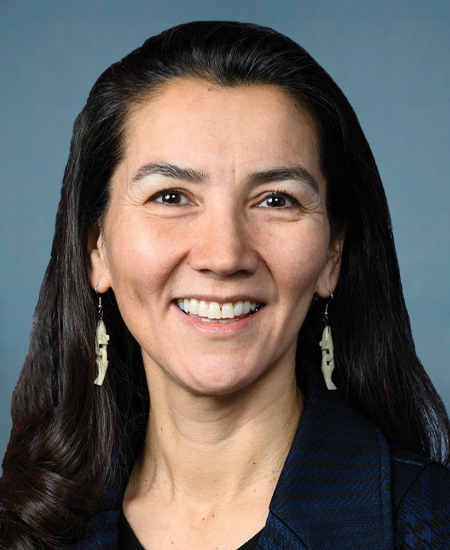
Rep. Mary Sattler Peltola
Sponsored bills
Maddy summaryHR 7022 allows the Cape Fox Village Corporation (representing the Native Village of Saxman, Alaska) to select approximately 185 acres of Federal land in the Tongass National Forest, which they were previously restricted from accessing due to a 6-mile boundary rule under the Alaska Native Claims Settlement Act. The bill waives the requirement for Cape Fox to select land within their designated township, enabling them to acquire valuable surface land (about 185 acres) that was previously unavailable. Upon selection, the surface land will transfer to Cape Fox, while the mineral rights (subsurface estate) will go to Sealaska Corporation, fulfilling both entities' land entitlements under ANCSA. This provides Cape Fox with access to economically viable land for the first time since the original settlement.
Maddy summaryHRES 963 is a symbolic resolution honoring Korean American Day, which commemorates the January 13, 1903 arrival of the first large wave of Korean immigrants to the U.S. It recognizes Korean Americans' contributions to U.S. society, including their economic, cultural, and military impacts, and marks the 121st anniversary of this historic migration. The resolution urges all Americans to observe Korean American Day to appreciate these contributions. As a commemorative measure, it does not create new policies or affect specific groups beyond this ceremonial recognition.
Maddy summaryThe Affordable Connectivity Program Extension Act of 2024 allocates $7 billion in funding for the Affordable Connectivity Program (ACP) during fiscal year 2024. The ACP provides subsidies to low-income households to help cover the cost of internet service and connected devices like laptops or tablets. This funding ensures the program can continue supporting eligible households throughout the year, with the money remaining available until fully spent. The bill extends existing program funding without changing eligibility criteria or service requirements.
Maddy summaryThis resolution (HRES 923) designates the main hearing room of the House Committee on Transportation and Infrastructure (Room 2167 in the Rayburn Building) as the "Chairman Don Young Hearing Room." It requires the Architect of the Capitol to place a commemorative plaque over the room's doorways with the inscription "The Chairman Don Young Hearing Room - Congressman for ALL Alaska." The bill directly affects the physical space of the committee's hearing room and honors Don Young, a former Alaska congressman and committee chairman. As a ceremonial resolution, it does not create new policy or affect legislation.
Maddy summaryThe 988 Lifeline Location Improvement Act of 2023 establishes a federal advisory committee to study how location information is transmitted for 988 calls. The committee, composed of representatives from telecom providers, mental health organizations, crisis centers, and government agencies, will examine privacy concerns, technical standards, and funding needs for improving location data accuracy during 988 Suicide and Crisis Lifeline calls. It must submit a report within one year to Congress and the FCC with recommendations for potential policy changes. This bill does not enact new requirements but directs a study to address challenges in connecting callers to local crisis services. The committee will terminate 30 days after submitting its report.
Maddy summaryHR 6768, the Public Health Nursing Act, authorizes $5 billion annually (2024-2033) to expand public health nursing services through federal grants to state and local health departments. The bill requires grantees to use funds for recruiting and training registered nurses in underserved areas, covering wages, medical supplies (like PPE), and administrative costs to improve maternal/infant health and chronic disease management. Priority is given to applicants serving communities with high chronic disease rates, maternal mortality, low-income populations, rural areas, or health professional shortage zones. This directly affects public health departments and their ability to hire nurses providing in-person care, home visits, and mobile clinic services.
Protecting Against Paperless and Electronic Requirements Act or the PAPER Act This bill requires depository institutions and credit unions to offer customers the option of receiving monthly paper statements. Depository institutions and credit unions are prohibited from requiring monthly digital statements as a condition of any service.
Maddy summaryThis bill establishes a federal grant program to help schools located near federal lands (like military bases and tribal reservations) with aging, unsafe facilities. It authorizes $250 million annually for four years to fund construction, renovation, and repairs of school buildings that don't meet basic safety standards. The program prioritizes schools with urgent health and safety hazards, offering full federal funding to those with no bond capacity and requiring local matching funds based on financial need for other schools. Schools must use funds to improve existing facilities, not purchase land, and must supplement but not supplant existing funding for school infrastructure.
Maddy summaryThis bill creates a 30% tax credit for owners of hydroelectric dams who make specific upgrades to their facilities. It directly affects dam operators who install qualifying improvements like fish passage systems, water quality enhancements, dam safety upgrades, or removal of obsolete river obstructions. The credit applies to property placed in service after December 2022, requires prior approval from FERC or state officials (before 2032), and covers items such as new turbines, sediment management systems, and small remote dams serving isolated communities. The tax code is amended to include this credit as a new provision under section 48F.