

Issue · Technology
Technology
Every technology bill, vote, and legislator stance in United States, automatically classified by Maddy, our AI policy reader.
Total bills
1,678
119th Congress
Top supporter
Ami Bera
86% support rate
Top opponent
Scott Perry
14% support rate
Ranked legislators
10
5 support · 5 oppose
Key legislators
Who's moving technology in United States
| Legislator | Party | Stance | Support rate | Decisive votes |
|---|---|---|---|---|

Ami Bera
House · District 6
|
D |
Strong +
|
86% | 22 |

Chrissy Houlahan
House · District 6
|
D |
Strong +
|
86% | 22 |

Kim Schrier
House · District 8
|
D |
Strong +
|
86% | 22 |

Mike Thompson
House · District 4
|
D |
Strong +
|
86% | 22 |

Nancy Pelosi
House · District 11
|
D |
Strong +
|
86% | 22 |

Scott Perry
House · District 10
|
R |
Strong −
|
14% | 21 |
|
AA
Alan Armstrong
Senate
|
R |
Strong −
|
17% | 29 |

Rand Paul
Senate
|
R |
Strong −
|
17% | 46 |
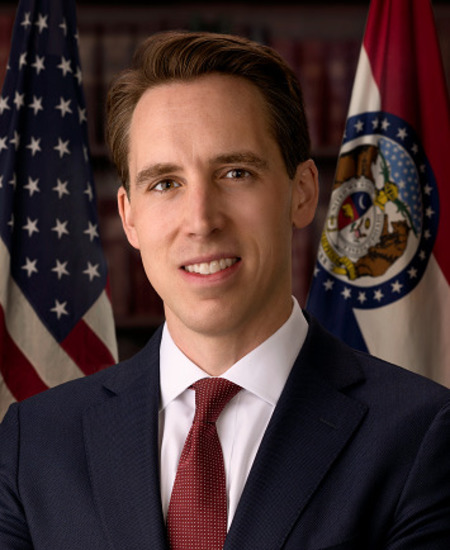
Josh Hawley
Senate
|
R |
Strong −
|
18% | 45 |

Andy Harris
House · District 1
|
R |
Strong −
|
18% | 22 |
Showing 661–670 of 1,678
bills
All technology bills
HR 4000: To prohibit persons who are not citizens of the United States, except for those from the "Five Eyes", from accessing or entering Department of Energy sites and facilities.
Topics
✗ ImmigrationOpposes ImmigrationBill restricts non-citizens (except Five Eyes) from accessing DOE facilities, directly limiting immigrant access to federal sites per immigration enforcement criteria.
✗ TechnologyOpposes TechnologyBill restricts access to DOE facilities for non-U.S. citizens, limiting international collaboration and technology exchange in the energy sector.
HR 6349: Migrant Due Process Protection Act
Topics
✓ Criminal JusticeSupports Criminal JusticeBill enhances due process rights for non-citizens in immigration proceedings, protecting civil liberties and improving fairness in legal proceedings.
✓ ImmigrationSupports ImmigrationBill mandates virtual hearings for non-detained immigrants in removal proceedings, ensuring due process and preventing disadvantage - directly protecting immigrant rights in deportation cases.
✓ TechnologySupports TechnologyBill promotes virtual hearing access via video/phone, expanding digital access for non-citizens in immigration proceedings.
HR 4772: Critical Minerals Investment Tax Modernization Act of 2025
Topics
✗ Budget & TaxesOpposes Budget & TaxesBill creates 22% tax deduction for mining companies, reducing government revenue. This tax break primarily benefits corporations (wealthy entities), fitting 'oppose' indicator of creating tax breaks for wealthy.
✓ EnergySupports EnergyTax deduction for critical minerals (used in clean energy infrastructure) directly supports renewable energy supply chain development by incentivizing mining of essential materials.
✓ TechnologySupports TechnologyBill provides tax incentives for mining critical minerals used in electronics and clean energy technology, indirectly supporting technology infrastructure development.
Sub-Topics
Renewable Energy
S 954: BITCOIN Act of 2025
Sub-Topics
Emerging Technology
HR 1166: Decoupling from Foreign Adversarial Battery Dependence Act
S 3395: Mammography Access for Veterans Act of 2025
Topics
✓ HealthcareSupports HealthcareExpands telehealth mammography access for veterans, mandates VA coverage in all states, ensures disability accessibility - directly improves patient access and coverage.
✓ TechnologySupports TechnologyBill expands telehealth mammography services and mandates accessibility standards for veterans, directly advancing technology adoption in healthcare.
✓ VeteransSupports VeteransPermanently expands telehealth mammography access for veterans, requires VA to provide options in all states with accessibility compliance, directly strengthening healthcare benefits.
S 1671: Interstate Obscenity Definition Act
S 990: Freedom to Haul Act of 2025
Topics
✗ EnergyOpposes EnergyBlocks EPA greenhouse gas standards for heavy-duty vehicles, weakening emissions regulations that support clean energy transition in transportation.
✗ EnvironmentOpposes EnvironmentBill prohibits EPA enforcement of greenhouse gas emissions standards for heavy-duty vehicles, weakening environmental regulations and allowing higher emissions. Directly restricts EPA authority on pollution control.
✗ TechnologyOpposes TechnologyBill restricts EPA's ability to mandate specific technologies for heavy-duty vehicles, limiting technological advancement in emissions standards.
✗ TransportationOpposes TransportationBill blocks EPA emissions standards for heavy-duty vehicles, weakening regulatory requirements under transportation policy.
S 3227: Protecting American Farmland Act
Topics
✗ Budget & TaxesOpposes Budget & TaxesBill explicitly restricts tax credits (Sections 25D, 45, 45Y, 48, 48E) and prohibits federal funding for solar projects on prime farmland, directly limiting tax incentives and defunding specific initiatives.
✗ EnergyOpposes EnergyBlocks federal funding and tax credits for solar on prime farmland, restricting renewable energy development as defined in the bill's summary.
✗ EnvironmentOpposes EnvironmentBlocks federal funding and tax credits for solar projects on prime farmland, restricting clean energy development that aligns with environmental protection goals.
✗ TechnologyOpposes TechnologyBill restricts solar energy technology deployment on prime farmland by blocking federal funding and tax credits, limiting renewable energy technology adoption.