Issue · Technology

Technology

Every technology bill, vote, and legislator stance in United States, automatically classified by Maddy, our AI policy reader.

Total bills
1,641
119th Congress
Top supporter
Suzan K. DelBene
86% support rate
Top opponent
Scott Perry
14% support rate
Ranked legislators
10
5 support · 5 oppose
Key legislators

Who's moving technology in United States

Legislators moving technology in United States
Legislator Party Stance Support rate Votes
Suzan K. DelBene
Suzan K. DelBene House · District 1
D
Strong +
86% 259
Mike Thompson
Mike Thompson House · District 4
D
Strong +
86% 261
Chrissy Houlahan
Chrissy Houlahan House · District 6
D
Strong +
86% 259
Nancy Pelosi
Nancy Pelosi House · District 11
D
Strong +
86% 246
Kim Schrier
Kim Schrier House · District 8
D
Strong +
86% 261
Scott Perry
Scott Perry House · District 10
R
Strong −
14% 252
AA
Alan Armstrong Senate
R
Strong −
14% 46
Rand Paul
Rand Paul Senate
R
Strong −
16% 223
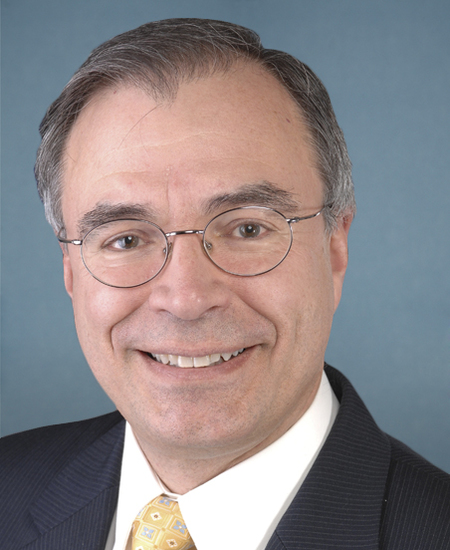
Andy Harris
Andy Harris House · District 1
R
Strong −
18% 257
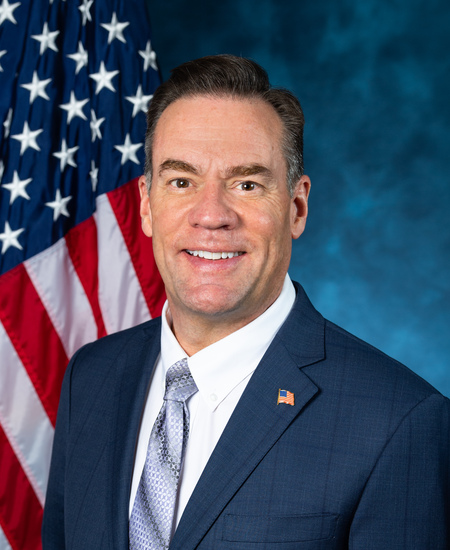
Russ Fulcher
Russ Fulcher House · District 1
R
Strong −
18% 262
Showing 1,501–1,510 of 1,641 bills

All technology bills

in committee · United States · House Feb 5, 2025

HRES 111: Expressing support for blockchain technology and digital assets.

This resolution expresses the House of Representatives' support for blockchain technology and digital assets. It states the House believes the U.S. should prioritize understanding blockchain's potential, foster innovation to improve financial systems, avoid losing digital asset development to less regulated countries, and create tailored regulations that maintain investor protections while acknowledging the unique benefits of the technology. As a non-binding resolution, it does not change laws or directly affect specific groups, but reflects congressional sentiment toward the digital asset industry.
Sub-Topics Emerging Technology
in committee · United States · Senate May 7, 2025

S 1638: Protection Against Foreign Adversarial Artificial Intelligence Act of 2025

This bill blocks federal contractors from using DeepSeek or similar AI tools developed by High Flyer (or its affiliates) for government work, with limited security waivers allowed for national defense or research. It requires a detailed report within one year on national security risks from AI platforms based in or linked to "countries of concern" (as defined in existing law). The report must analyze data privacy threats, including how U.S. user data stored in these platforms could be accessed by foreign governments, used for propaganda, or exploited for economic espionage. The law aims to protect U.S. data security and prevent foreign adversaries from leveraging AI systems for strategic advantage.
in committee · United States · House Jul 2, 2025

HR 4278: Protect U.S. Companies from Foreign Regulatory Taxation Act

This bill prohibits U.S. courts from enforcing foreign court judgments against U.S. digital companies related to foreign digital market regulations. It directly affects U.S. companies providing "core platform services" (like major social media or search platforms) that face foreign rules requiring data sharing, interoperability, or restrictions on business practices. Key provisions block enforcement of such foreign regulations unless Congress specifically authorizes it, and grant the President authority to take actions protecting these companies if they face adverse foreign regulatory actions. The bill specifically targets regulations similar to the EU's Digital Markets Act, aiming to shield U.S. tech firms from foreign rules that could hinder their competitiveness.
Sub-Topics Social Media
in committee · United States · House Mar 27, 2025

HR 2403: TELL Act

HR 2403, the TELL Act, requires companies operating websites or mobile apps that store U.S. user data in China to clearly disclose two specific facts to users: (1) that their data is stored in China, and (2) whether the Chinese Communist Party or Chinese state-owned entities have access to it. It prohibits companies from knowingly providing false information about these points. Violations would be enforced as unfair or deceptive practices under the Federal Trade Commission Act, with the FTC handling enforcement and penalties. The law directly affects U.S. technology companies that collect user data and store it in China.
in committee · United States · House Mar 3, 2025

HR 1795: NETWORKS Act

The NETWORKS Act imposes sanctions on foreign telecommunications companies (particularly those based in China) that produce fifth-generation or future mobile network technology and pose national security risks. It blocks U.S. transactions involving such companies' property after a 90-day delay, targeting vendors deemed "untrusted" under existing law. Exceptions cover humanitarian aid (food, medicine, medical supplies) and intelligence activities, while the President may temporarily waive sanctions for national security reasons. The bill directly affects global telecom vendors competing in U.S. markets, with no impact on consumers or standard network services. It aims to secure U.S. communications infrastructure by restricting business with companies linked to surveillance states.
Sub-Topics Telecommunications
in committee · United States · House Sep 15, 2025

HR 5358: TRUSTED Broadband Networks Act

This bill exempts certain broadband network projects from federal environmental (NEPA) and historic preservation (NHPA) review requirements. It directly affects projects replacing "covered communications equipment" (like equipment deemed insecure under existing law) with secure alternatives. The key mechanism removes the need for federal environmental reviews or historic preservation assessments when replacing banned equipment. This streamlines the process for deploying secure broadband infrastructure by bypassing these review steps for qualifying projects. The policy change specifically targets faster replacement of insecure equipment without altering security standards.
in committee · United States · Senate Dec 17, 2025

S 3528: Producing Real Opportunities for Technology and Entrepreneurs Investing in Nutrition Act

This bill establishes federal funding for research and development of alternative protein sources using biomanufacturing and bioprocessing technologies. It creates Centers of Excellence at agricultural institutions (including 1890 Land-Grant Universities), authorizes $50 million annually for food biomanufacturing facility grants, and provides $25 million yearly for workforce training programs. The bill directly affects research institutions, food biomanufacturing companies, and agricultural workforce development programs by providing grants for scaling production of plant-based and lab-grown proteins. It requires the USDA to develop a national strategy on protein security by 2026, focusing on supply chain resilience, job creation, and U.S. competitiveness in the global protein market. The legislation aims to diversify food systems and support domestic production of protein sources using underutilized biomass.
in committee · United States · Senate Aug 5, 2026

S 1748: Kids Online Safety Act

The Kids Online Safety Act (S 1748) requires major social media platforms, online video games, and other "covered platforms" to implement specific safety features for minors (under 17). These features include default privacy settings that limit harmful design features like infinite scrolling and auto-play, parental controls for managing minors' accounts, and restrictions on advertising illegal products to minors. The bill also mandates annual transparency reports about how platforms are used by minors and requires platforms to provide clear notices about their content algorithms. It creates a Kids Online Safety Council to advise Congress on online safety issues for children. The law applies to platforms with more than 10 million monthly users in the U.S. and takes effect 18 months after enactment.
in committee · United States · Senate Apr 9, 2025

S 1367: NO FAKES Act of 2025

The NO FAKES Act of 2025 establishes legal rights for individuals to control how their voice and visual likeness is used in AI-generated digital replicas. It defines "digital replicas" as highly realistic computer-generated representations that are readily identifiable as an individual's voice or appearance, granting individuals (and their heirs) the right to authorize or prohibit such uses. The law creates liability for unauthorized use of digital replicas or distribution of products designed to create them without authorization, while providing safe harbors for online services that follow specific procedures for handling claims. It preempts state laws regarding voice and visual likeness rights in digital replicas (with limited exceptions) and establishes a 10-year post-mortem right that can be renewed for additional 5-year periods if there's active public use.
in committee · United States · Senate Dec 17, 2025

S 3555: Comprehensive Outbound Investment National Security Act of 2025

The Comprehensive Outbound Investment National Security Act of 2025 restricts U.S. investments in certain technologies in countries of concern, primarily China, by prohibiting investments in "covered national security transactions" involving specific technologies. It targets technologies including advanced semiconductors, artificial intelligence systems, quantum information technologies, high-performance computing, and hypersonic systems that could enhance military or surveillance capabilities. The bill requires U.S. persons to notify the government about certain transactions involving "notifiable technologies" and establishes civil penalties for violations, including potential divestment requirements. The law would expire seven years after enactment and mandates annual reports to Congress about implementation and enforcement.
Showing 1,501 to 1,510 of 1,641 bills