Issue · Technology

Technology

Every technology bill, vote, and legislator stance in United States, automatically classified by Maddy, our AI policy reader.

Total bills
1,647
119th Congress
Top supporter
Ami Bera
86% support rate
Top opponent
Alan Armstrong
14% support rate
Ranked legislators
10
5 support · 5 oppose
Key legislators

Who's moving technology in United States

Legislators moving technology in United States
Legislator Party Stance Support rate Decisive votes
Ami Bera
Ami Bera House · District 6
D
Strong +
86% 22
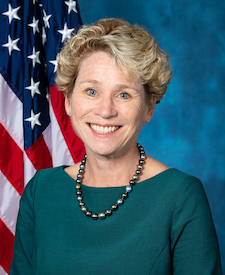
Chrissy Houlahan
Chrissy Houlahan House · District 6
D
Strong +
86% 22
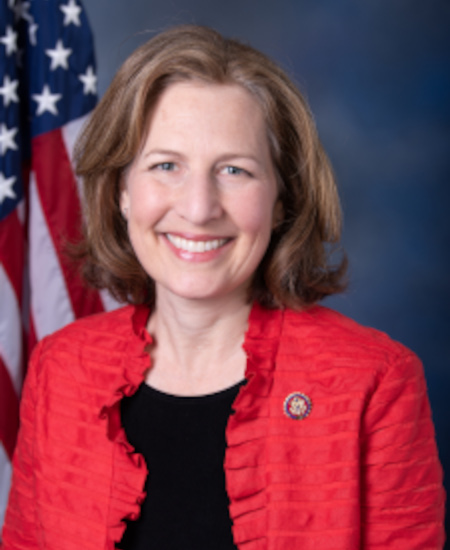
Kim Schrier
Kim Schrier House · District 8
D
Strong +
86% 22
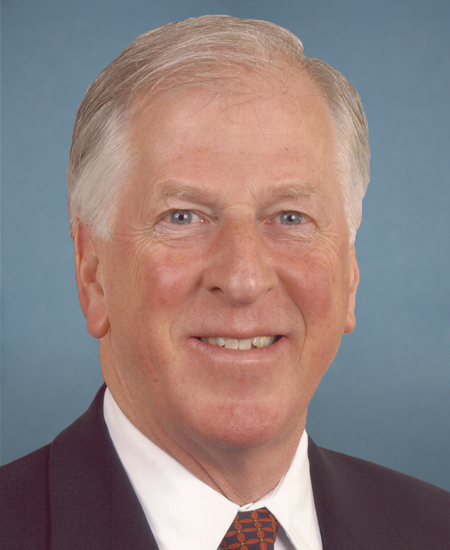
Mike Thompson
Mike Thompson House · District 4
D
Strong +
86% 22
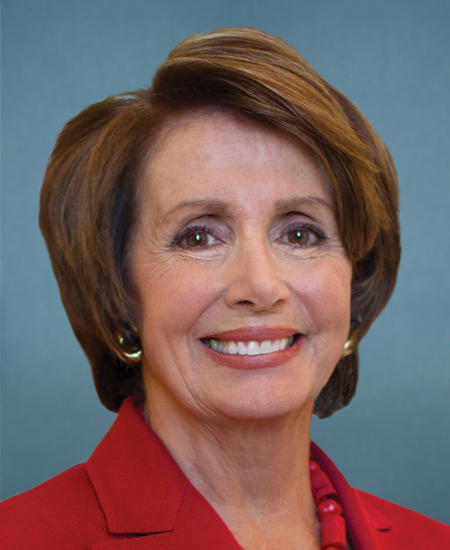
Nancy Pelosi
Nancy Pelosi House · District 11
D
Strong +
86% 22
AA
Alan Armstrong Senate
R
Strong −
14% 28
Scott Perry
Scott Perry House · District 10
R
Strong −
14% 21
Rand Paul
Rand Paul Senate
R
Strong −
16% 45
Josh Hawley
Josh Hawley Senate
R
Strong −
18% 44
Andy Harris
Andy Harris House · District 1
R
Strong −
18% 22
Showing 1,451–1,460 of 1,647 bills

All technology bills

in committee · United States · Senate Feb 12, 2026

S 3855: United States-Israel Framework for Upgraded Technologies, Unified Research, and Enhanced Security (FUTURES) Act of 2026

The FUTURES Act (S 3855) establishes a formal U.S.-Israel Defense Technology Cooperation Initiative to accelerate joint development and integration of defense technologies. It directs the U.S. Secretary of Defense to identify Israeli-origin technologies for rapid adoption into American military systems, focusing on areas like counter-drone systems, missile defense, AI, cyber security, and directed energy. The bill authorizes $150 million annually (2027-2029) for this initiative, requiring regular reports to Congress on progress, technology transitions, and industry partnerships. This policy directly affects U.S. defense contractors, Israeli defense firms, and military acquisition programs by creating new pathways to incorporate Israeli innovations into U.S. systems.
in committee · United States · House Jul 17, 2025

HR 4506: Securing Global Telecommunications Act

HR 4506, the Securing Global Telecommunications Act, requires the U.S. Secretary of State to develop a comprehensive strategy within 90 days to promote secure telecommunications infrastructure globally. The strategy must address mobile networks, data centers, 6G technology, and satellite systems, focusing on countering untrusted vendors (like Huawei) and supporting U.S. and allied "trusted" technology providers. It mandates reports on Chinese and Russian influence at the International Telecommunication Union (ITU) and opportunities for multilateral cooperation with allies to finance secure infrastructure projects. The bill directly affects U.S. agencies (State Department, FCC, USAID), foreign countries using telecommunications infrastructure, and global technology standards at the ITU.
Sub-Topics Telecommunications
passed · United States · House Sep 16, 2025

HRES 211: Providing for consideration of the joint resolution (H.J. Res. 25) providing for congressional disapproval under chapter 8 of title 5, United States Code, of the rule submitted by the Internal Revenue Service relating to ‘‘Gross Proceeds Reporting by Brokers That Regularly Provide Services Effectuating Digital Asset Sales’’; providing for consideration of the bill (H.R. 1156) to amend the CARES Act to extend the statute of limitations for fraud under certain unemployment programs, and for other purposes; providing for consideration of the bill (H.R. 1968) making further continuing appropriations and other extensions for the fiscal year ending September 30, 2025, and for other purposes; and for other purposes.

HRES 211 is a procedural resolution that allows the U.S. House of Representatives to debate and vote on three specific legislative measures. It enables consideration of H.J. Res. 25 (which would disapprove an IRS rule requiring brokers to report digital asset sales), H.R. 1156 (which would extend fraud statute of limitations for unemployment programs), and H.R. 1968 (which would fund government operations through September 2025). The resolution waives standard procedural objections and sets time limits for debate on each measure. This resolution itself does not change policy but facilitates the House’s review of these three bills.
in committee · United States · Senate Dec 16, 2025

S 3495: Artificial Intelligence Scam Prevention Act

The Artificial Intelligence Scam Prevention Act makes it illegal to use AI to impersonate people for fraudulent purposes, such as creating fake voices or images to scam consumers. It requires clear disclosure when AI is used in phone calls or text messages, so people know they're interacting with technology rather than a real person. The bill establishes an advisory group with FTC, FCC, and industry representatives to develop best practices for preventing these scams and mandates regular reports on AI-enabled fraud. The law aims to protect consumers from increasingly sophisticated scams, which cost over $1.4 billion in 2024 alone.
in committee · United States · Senate Dec 2, 2025

S 3308: Artificial Intelligence Civil Rights Act of 2025

The Artificial Intelligence Civil Rights Act of 2025 regulates AI systems that make decisions affecting people's lives, such as employment, housing, healthcare, credit, and education. It requires developers and deployers to conduct pre-deployment evaluations and annual impact assessments by independent auditors to prevent discrimination and harm. The law mandates clear consumer disclosures about AI use, provides the right to human alternatives for AI-driven decisions, and creates enforcement mechanisms through the Federal Trade Commission and state attorneys general. It also includes whistleblower protections for employees reporting violations and requires transparency about how AI systems operate.
in committee · United States · Senate Jun 25, 2025

S 2164: Algorithmic Accountability Act of 2025

The Algorithmic Accountability Act of 2025 requires companies that deploy automated decision systems for critical areas like employment, housing, healthcare, and financial services (known as "covered entities") to conduct impact assessments before and after deployment. These assessments must evaluate fairness, privacy, security, and potential negative impacts on consumers, particularly for protected groups like racial minorities, women, and people with disabilities. Covered entities must document these assessments and submit annual summary reports to the Federal Trade Commission, which will make anonymized versions publicly available in a searchable online repository. The law applies to companies with over $50 million in annual revenue or those handling data for over 1 million consumers. The goal is to increase transparency and accountability around automated decision systems that significantly affect people's lives.
in committee · United States · House Jun 3, 2025

HR 3693: To prohibit the Federal Government from establishing or maintaining a database that contains data collected through, or facilitates, the biometric identity verification of a citizen of the United States, and for other purposes.

HR 3693 prohibits all federal agencies from creating or maintaining databases that store biometric data used for verifying U.S. citizens' identities. The bill specifically bans databases containing information like fingerprints, facial recognition, or iris patterns collected through biometric identity verification systems. It applies directly to every federal agency, preventing them from using such technology for citizen identification purposes. This is a clear policy change restricting federal data collection practices related to biometric identification.
failed · United States · House Apr 1, 2025

HRES 282: Providing for consideration of the joint resolution (S.J. Res. 18) disapproving the rule submitted by the Bureau of Consumer Financial Protection relating to "Overdraft Lending: Very Large Financial Institutions''; providing for consideration of the joint resolution (S.J. Res. 28) disapproving the rule submitted by the Bureau of Consumer Financial Protection relating to ''Defining Larger Participants of a Market for General-Use Digital Consumer Payment Applications''; providing for consideration of the bill (H.R. 1526) to amend title 28, United States Code, to limit the authority of district courts to provide injunctive relief, and for other purposes; providing for consideration of the bill (H.R. 22) to amend the National Voter Registration Act of 1993 to require proof of United States citizenship to register an individual to vote in elections for Federal office, and for other purposes; and for other purposes.

HRES 282 is a procedural resolution that sets rules for debating and voting on four specific legislative items in the House. It enables consideration of two resolutions disapproving Consumer Financial Protection Bureau rules (one on overdraft lending by large banks, another on digital payment apps), a bill limiting court injunctions (H.R. 1526), and a bill requiring U.S. citizenship proof for federal voting registration (H.R. 22). The resolution waives objections to these items and allocates one hour of debate for each, equally divided between committee chairs and ranking members. This resolution itself does not change policy but streamlines the process for the House to vote on the underlying bills and disapproval resolutions.
in committee · United States · House Nov 17, 2025

HR 6067: Tribal Internet Expansion Act of 2025

This bill amends the Communications Act to expand eligibility for universal service funding to tribal lands and areas with high populations of Native American residents. It updates existing rules by adding these areas to the "high cost areas" category that qualify for federal broadband support programs. The change directly affects tribal communities and residents in designated areas by making them eligible for funding to improve internet access.
Sub-Topics Broadband Access Telecommunications Tags Rural Communities Tribal Nations
in committee · United States · Senate Mar 14, 2025

S 1085: MedShield Act of 2025

The MedShield Act of 2025 establishes a new pandemic preparedness program under the Department of Health and Human Services (HHS), requiring the use of artificial intelligence to improve national biodefense. It directs HHS to create a system for real-time pathogen tracking, accelerate vaccine development, and optimize treatment distribution using AI tools, as outlined in Section 3(c). The program mandates annual funding of $300 million in 2025, increasing to $500 million by 2029 (Section 6), and requires a report to Congress within 180 days of enactment (Section 4). This bill directly affects federal agencies coordinating pandemic response and aims to create a continuous, integrated system for addressing biological threats, replacing ad-hoc efforts like Operation Warp Speed.
Showing 1,451 to 1,460 of 1,647 bills