Issue · Healthcare

Healthcare

Every healthcare bill, vote, and legislator stance in United States, automatically classified by Maddy, our AI policy reader.

Total bills
3,150
119th Congress
Top supporter
Darline Graham
100% support rate
Top opponent
Ashley Moody
18% support rate
Ranked legislators
10
5 support · 5 oppose
Key legislators

Who's moving healthcare in United States

Legislators moving healthcare in United States
Legislator Party Stance Support rate Decisive votes
Darline Graham
Darline Graham Senate
R
Strong +
100% 6
AA
Alan Armstrong Senate
R
Strong +
88% 8
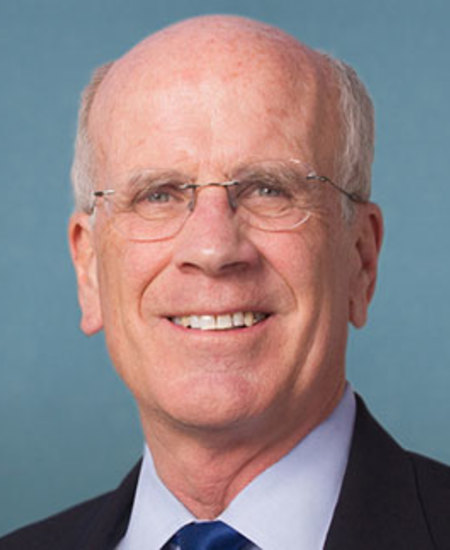
Peter Welch
Peter Welch Senate
D
Strong +
82% 22
Ron Wyden
Ron Wyden Senate
D
Support
77% 22
Alex Padilla
Alex Padilla Senate
D
Support
76% 21
Ashley Moody
Ashley Moody Senate
R
Strong −
18% 22
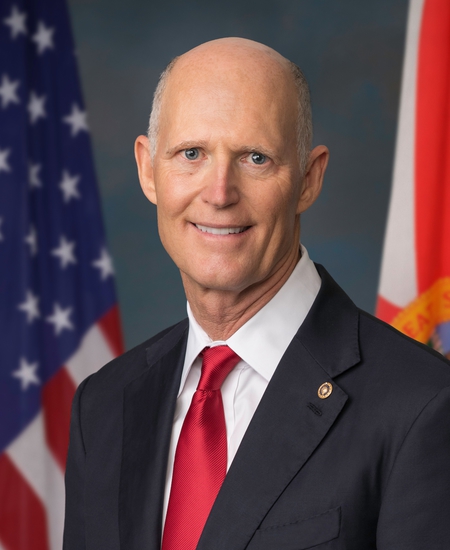
Rick Scott
Rick Scott Senate
R
Strong −
18% 22
Rand Paul
Rand Paul Senate
R
Oppose
23% 22
Brad Knott
Brad Knott House · District 13
R
Oppose
28% 18
Pat Harrigan
Pat Harrigan House · District 10
R
Oppose
28% 18
Showing 431–440 of 3,150 bills

All healthcare bills

in committee · United States · House Jun 11, 2026

HR 9257: Primary and Behavioral Health Care Access Act of 2026

The Primary and Behavioral Health Care Access Act of 2026 requires group health plans to cover three primary care visits and three behavioral health care visits per year without charging copayments, deductibles, or coinsurance. This mandate applies to plans governed by ERISA, the Public Health Service Act, and the Internal Revenue Code, affecting employees, retirees, and individuals with employer-sponsored or individual health insurance. The bill defines primary care visits as in-person appointments with designated providers like general practitioners or nurse practitioners, while behavioral health visits include services from a wider range of specialists such as psychologists and social workers. Additionally, the law ensures that these specific visits are subject to the same reimbursement rates and treatment limitations as any other covered medical service. These provisions would take effect for plan years beginning two years after the bill is enacted.
in committee · United States · House Jun 11, 2026

HR 9260: Departments of Labor, Health and Human Services, and Education, and Related Agencies Appropriations Act, 2027

Departments of Labor, Health and Human Services, and Education, and Related Agencies Appropriations Act, 2027 This bill provides FY2027 appropriations to the Departments of Labor, Health and Human Services, and Education; and related agencies. The bill provides appropriations to the Department of Labor for the Employment and Training Administration, the Veterans' Employment and Training Service, the Employee Benefits Security Administration, the Pension Benefit Guaranty Corporation, the Wage and Hour Division, the Office of Labor-Management Standards, the Office of Workers' Compensation Programs, the Occupational Safety and Health Administration, the Mine Safety and Health Administration, the Bureau of Labor Statistics, the Office of Disability Employment Policy, and Departmental Management. The bill provides appropriations to the Department of Health and Human Services for the Health Resources and Services Administration, the Centers for Disease Control and Prevention, the National Institutes of Health, the Substance Abuse and Mental Health Services Administration, the Centers for Medicare and Medicaid Services, the Administration for Children and Families, the Administration for Community Living, the Administration for Strategic Preparedness and Response, and the Office of the Secretary. The bill provides appropriations to the Department of Education for the Office of Elementary and Secondary Education; the Office of Special Education and Rehabilitative Services; the Office of Career, Technical, and Adult Education; the Office of Federal Student Aid; the Office of Postsecondary Education; the Institute of Education Sciences; and Departmental Management. The bill also provides appropriations to several related agencies, including the Committee for Purchase From People Who Are Blind or Severely Disabled, the Corporation for National and Community Service, the Federal Mediation and Conciliation Service, the Federal Mine Safety and Health Review Commission, the Institute of Museum and Library Services, the Medicaid and CHIP Payment and Access Commission, the Medicare Payment Advisory Commission, the National Council on Disability, the National Labor Relations Board, the National Mediation Board, the Occupational Safety and Health Review Commission, the Railroad Retirement Board, and the Social Security Administration. The bill also sets forth requirements and restrictions for using funds provided by this and other appropriations acts.
in committee · United States · Senate Jun 10, 2026

S 4732: Wildfire Smoke Emergency Declaration Act of 2026

This bill authorizes the President to declare a smoke emergency in states facing significant air quality drops due to wildfire smoke, either upon a request from a state governor or based on the President's own determination. Once declared, the Federal Emergency Management Agency and other federal agencies can provide assistance such as grants, equipment, and personnel to help communities set up smoke shelters, air purifiers, and monitoring sites. Additionally, the Small Business Administration would be able to offer grants to small businesses that lose significant revenue because of the smoke. The legislation also adjusts federal budget rules to ensure that funds designated for this specific type of emergency assistance are not subject to standard deficit reduction triggers.
Sub-Topics Air Quality Forestry Natural Disasters Tags Emergency Management
in committee · United States · Senate Jun 4, 2026

S 4694: Maternal Health for Veterans Act

The Maternal Health for Veterans Act establishes a new program within the Department of Veterans Affairs to coordinate maternity care for enrolled veterans from the start of pregnancy through 12 months after birth. This initiative requires the VA to systematically track mental health screenings, implement performance goals to improve care quality, and provide specialized training to community providers regarding the unique needs of veterans with service-related mental or behavioral health conditions. Additionally, the bill mandates annual reports detailing maternal health outcomes, such as mortality and severe morbidity, broken down by demographics like race, disability status, and rural residence to address specific disparities. The legislation also updates legal definitions for terms like "maternal mortality" and repeals a previous section of the Protecting Moms Who Served Act to align with these new requirements.
in committee · United States · House Jun 9, 2026

HR 9218: Marcus’s Law

Marcus's Law requires high school students in grades 9 through 12 to undergo an electrocardiogram and echocardiogram before participating in their first athletic contest starting in the 2026-2027 school year. This mandate applies to schools receiving federal education funds and includes provisions for partnerships to keep the cost of these screenings at $20 or less per student. The bill allows for waivers if schools cannot secure these partnerships despite making sufficient attempts and provides exemptions for students with religious objections or valid medical reasons.
Sub-Topics K-12 Education
in committee · United States · House Jun 4, 2026

HR 9163: Critical Access Hospital RIP Act of 2026

This bill, known as the Critical Access Hospital RIP Act of 2026, aims to protect rural hospitals from losing their special status due to new road construction. It directly affects facilities designated as critical access hospitals that might otherwise fail to meet population requirements because a nearby highway or bridge was recently built or improved. The law mandates that if a facility qualifies for designation but fails the population test solely because of a completed roadway project, it will still be considered to meet the requirement. By ignoring the impact of these specific transportation upgrades, the legislation ensures these hospitals can continue operating without being forced to close due to infrastructure changes.
Sub-Topics Hospitals Tags Rural Communities
passed · United States · Senate Jun 9, 2026

SRES 765: A resolution expressing support for the designation of July 2026 as "National Sarcoma Awareness Month".

This resolution expresses the Senate's support for designating July 2026 as National Sarcoma Awareness Month. It aims to raise public awareness about sarcoma, a rare cancer affecting bones and connective tissues, and to encourage people to seek proper diagnosis and treatment. The bill highlights that sarcoma is often misdiagnosed and affects hundreds of thousands of individuals in the United States. By officially recognizing this month, the Senate intends to focus attention on the disease and its various subtypes.
in committee · United States · Senate Jun 3, 2026

S 4675: Sergeant Dave Crete FORGOTTEN Veterans Act of 2026

The Sergeant Dave Crete FORGOTTEN Veterans Act of 2026 establishes a process to identify military veterans who served at specific locations in Nevada and other facilities known for toxic exposure. This legislation creates a registry to collect health data from these veterans and mandates a study to analyze the link between their service and potential illnesses like cancer. By amending existing laws, the bill presumes that veterans who served in these areas were exposed to toxic substances, which simplifies the process for them to receive medical benefits and compensation. Additionally, the act requires the Department of Defense to classify these sites as contaminated and share service records with the Department of Veterans Affairs to support claims.
in committee · United States · House May 19, 2026

HR 8890: Enhancing CLIA Act of 2026

This bill, the Enhancing CLIA Act of 2026, updates federal regulations to strictly govern laboratory-developed tests used for diagnosing or treating patients. Starting two years after enactment, laboratories must prove these tests are accurate and reliable by providing documented evidence of their performance and clinical validity before they can be used. The law creates a centralized online database where labs must report details about their tests and establishes a system for third parties, including the FDA, to review and affirm that tests meet safety standards. Additionally, the bill requires labs to immediately report any test errors that cause serious harm or death and mandates regular public forums and periodic reviews to ensure regulations keep pace with scientific advancements.
in committee · United States · Senate Jun 8, 2026

S 4698: Right to Try for Individualized Treatments Act

This bill, known as the Right to Try for Individualized Treatments Act, allows patients with life-threatening diseases or severe illnesses to access certain experimental drugs tailored to their specific genetic makeup without going through the standard FDA approval process. To qualify, a patient must have exhausted approved treatment options and receive a written recommendation from a doctor who is not paid by the drug manufacturer. The law permits manufacturers and eligible healthcare facilities to offer these personalized treatments if the patient provides informed consent and the facility operates under existing federal safety regulations. Importantly, the bill does not require manufacturers to provide these treatments, leaving the decision to share them entirely up to the companies involved.
Showing 431 to 440 of 3,150 bills
Previous 1 … 43 44 45 … 315 Next