Issue · Healthcare

Healthcare

Every healthcare bill, vote, and legislator stance in United States, automatically classified by Maddy, our AI policy reader.

Total bills
3,150
119th Congress
Top supporter
Darline Graham
100% support rate
Top opponent
Ashley Moody
18% support rate
Ranked legislators
10
5 support · 5 oppose
Key legislators

Who's moving healthcare in United States

Legislators moving healthcare in United States
Legislator Party Stance Support rate Decisive votes
Darline Graham
Darline Graham Senate
R
Strong +
100% 6
AA
Alan Armstrong Senate
R
Strong +
88% 8
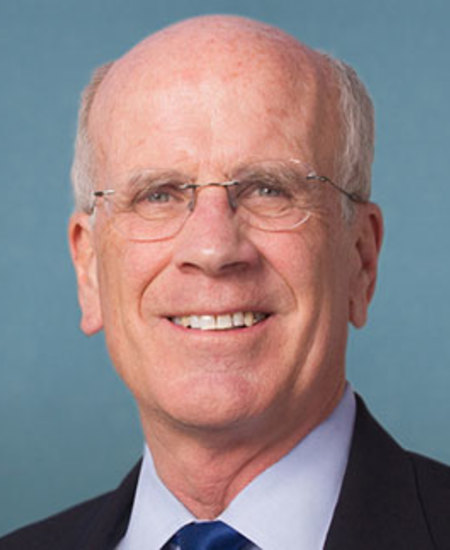
Peter Welch
Peter Welch Senate
D
Strong +
82% 22
Ron Wyden
Ron Wyden Senate
D
Support
77% 22
Alex Padilla
Alex Padilla Senate
D
Support
76% 21
Ashley Moody
Ashley Moody Senate
R
Strong −
18% 22
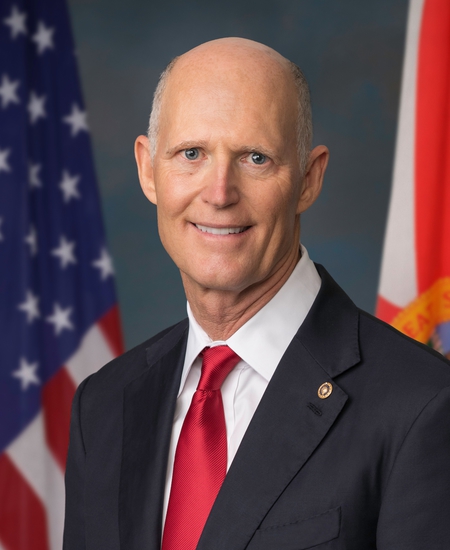
Rick Scott
Rick Scott Senate
R
Strong −
18% 22
Rand Paul
Rand Paul Senate
R
Oppose
23% 22
Brad Knott
Brad Knott House · District 13
R
Oppose
28% 18
Pat Harrigan
Pat Harrigan House · District 10
R
Oppose
28% 18
Showing 2,621–2,630 of 3,150 bills

All healthcare bills

in committee · United States · Senate Feb 26, 2025

S 735: Sickle Cell Disease and Other Heritable Blood Disorders Research, Surveillance, Prevention, and Treatment Act of 2025

This bill increases funding and expands the scope of federal efforts to address sickle cell disease. It boosts annual funding for research and treatment programs from $4.455 million (2019-2023) to $8.205 million (2025-2029) and updates language to specifically include "prevention and treatment of complications" alongside disease treatment. The bill also modifies grant procedures to allow more flexible funding mechanisms for organizations working on sickle cell disease and related heritable blood disorders. It directly affects federal health agencies, researchers, and healthcare providers serving patients with sickle cell disease, focusing on concrete policy changes in funding and program scope.
in committee · United States · House Feb 13, 2025

HR 1349: Women’s Protection in Telehealth Act

HR 1349, the Women’s Protection in Telehealth Act, excludes Medicare participation for providers who prescribe, administer, dispense, or furnish abortion-inducing drugs via telehealth unless they meet strict conditions. Specifically, providers must be physicians who physically examine the patient, be present in the same room during drug administration, and schedule an in-person follow-up within 14 days. The bill defines "abortion-inducing drug" as any substance used to terminate a clinically diagnosable pregnancy with knowledge it will likely cause fetal death. This directly affects Medicare-covered telehealth abortion services, requiring in-person care for such treatments rather than remote consultations. The exclusion is permanent for non-compliant providers under Medicare rules.
in committee · United States · House Jan 7, 2025

HR 238: Healthy Technology Act of 2025

This bill amends the Federal Food, Drug, and Cosmetic Act to allow artificial intelligence (AI) and machine learning technologies to legally prescribe drugs under specific conditions. It requires AI systems to be both authorized by state law and approved by the FDA under sections 510(k), 513, 515, or 564. The law directly affects healthcare AI developers, providers, and patients by establishing a regulatory framework for AI-driven drug prescriptions. Key provisions define AI as a "practitioner" for prescription purposes only when meeting these two federal and state requirements. This creates a clear pathway for AI to legally prescribe drugs within existing FDA and state oversight.
in committee · United States · Senate Sep 30, 2025

S 2943: ACE Veterans Act

This bill (S 2943, the ACE Veterans Act) requires the VA to allow veterans enrolled in its healthcare system to receive a full-year supply of prescribed contraceptive pills, patches, rings, or other approved contraceptive products instead of monthly refills. It directly affects veterans prescribed these products who are enrolled in VA care, ensuring they can access a year’s supply with a single prescription. Medical providers must inform veterans about this option, and the bill defines "contraceptive product" broadly to include FDA-approved methods for pregnancy prevention. The change aims to improve access and convenience for veterans managing contraceptive needs within VA healthcare.
in committee · United States · Senate May 20, 2025

S 1816: Improving Seniors’ Timely Access to Care Act of 2025

This bill requires Medicare Advantage plans to implement electronic prior authorization systems by 2028 and report detailed transparency data starting in 2027. Plans must publicly disclose approval/denial rates, average processing times (including for appeals), technology use, and other metrics for covered medical services. It mandates 24-hour response standards for expedited requests and routinely approved services, with data collection to analyze access patterns and potential disparities in rural/low-income communities. These changes directly affect Medicare Advantage plans, providers, and seniors enrolled in these plans by standardizing and increasing visibility into prior authorization processes.
Sub-Topics Long-Term Care Medicare Tags Seniors
in committee · United States · Senate Feb 20, 2025

S 652: Protecting Patients from Deceptive Drug Ads Act

S 652 requires social media influencers and healthcare providers to avoid false or misleading promotions of FDA-approved drugs on social media, including disclosing key safety information like side effects in a summary format similar to traditional drug ads. It makes these individuals liable for civil penalties if they knowingly or recklessly omit critical facts or fail to include required safety summaries. The bill also directs the FDA to issue new guidance on enforcement, monitor drug ads using AI, and conduct market surveillance on social media platforms. This affects influencers, healthcare providers, and drug manufacturers who pay for such promotions, with the FDA authorized to spend $15 million annually for enforcement.
in committee · United States · House Nov 18, 2025

HR 6077: HEAL-AI Act

The HEAL-AI Act (HR 6077) establishes a federal grant program to fund medical schools and teaching hospitals in training medical students, residents, and faculty on using artificial intelligence in healthcare. It requires grantees to develop curricula covering AI diagnostics, ethical issues (like bias and patient privacy), and clinical integration, while limiting administrative costs to 10% of funds. Schools must report annually on program progress and publicly share educational materials, with priority given to institutions serving underserved communities. The program allocates $1 million annually from 2026-2030, totaling $5 million over five years, to support competency-based AI literacy in medical education.
in committee · United States · House Apr 1, 2025

HR 2529: Convenient Contraception Act

This bill requires health insurance plans (including employer-sponsored and individual plans) to cover up to a full year's supply of contraceptives in a single fill, without copays or deductibles. It applies to all contraceptives already covered under existing law, making it easier for insured individuals to access longer-term supplies. The policy change takes effect for plan years beginning January 1, 2026, and mandates government outreach to inform providers and enrollees about the new coverage option.
in committee · United States · House Jan 3, 2025

HR 114: Responsible Path to Full Obamacare Repeal Act

HR 114, the "Responsible Path to Full Obamacare Repeal Act," would repeal the Patient Protection and Affordable Care Act (ACA) and the Health Care and Education Reconciliation Act of 2010, effective October 1, 2025. This bill directly affects all Americans covered by the ACA's provisions, including those using health insurance marketplaces, Medicaid expansions, and essential health benefits. The key mechanism is the complete removal of these laws, restoring pre-2010 health care regulations as if the ACA had never been enacted. The bill does not introduce new rules but eliminates the existing framework governing health insurance coverage and subsidies.
Sub-Topics Insurance Medicaid
in committee · United States · Senate Jul 27, 2026

S 3794: SAFE Drugs Act of 2026

The SAFE Drugs Act of 2026 restricts pharmacies, facilities, and physicians from compounding more than 20 times in a single month for out-of-state patients any drug that is essentially a copy of a commercially available product (e.g., containing the same active ingredient without a significant patient-specific difference). It requires these providers to submit annual reports to the federal government detailing the types of drugs compounded and the frequency for such out-of-state compounding, with reports due by year-end. The bill also mandates initial and biennial inspections for large-scale compounding facilities (those compounding over 100 times yearly) and adjusts the base fee for compounding registration to be set by the Secretary. Hospital pharmacies are exempt from the reporting requirement.
Sub-Topics Hospitals
Showing 2,621 to 2,630 of 3,150 bills