Issue · Environment

Environment

Every environment bill, vote, and legislator stance in United States, automatically classified by Maddy, our AI policy reader.

Total bills
2,003
119th Congress
Top supporter
Aisha Wahab
100% support rate
Top opponent
Marsha Blackburn
11% support rate
Ranked legislators
10
5 support · 5 oppose
Key legislators

Who's moving environment in United States

Legislators moving environment in United States
Legislator Party Stance Support rate Decisive votes
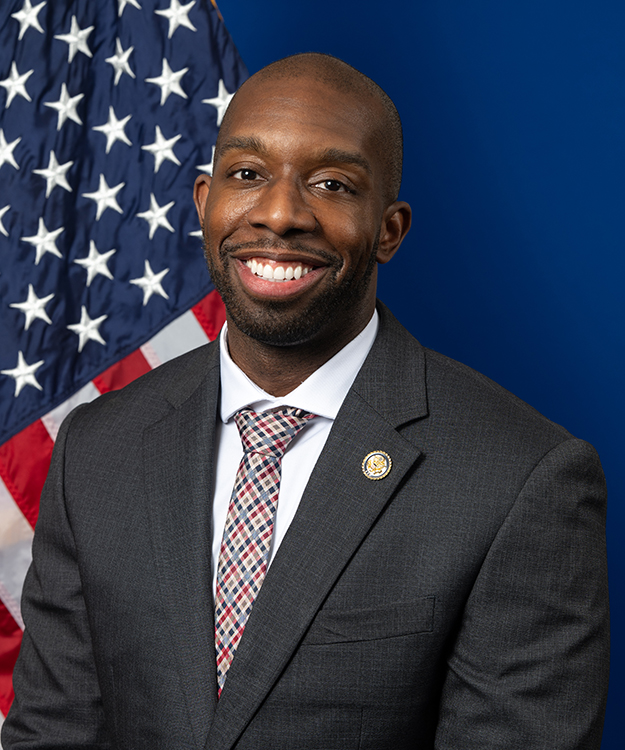
Aisha Wahab
Aisha Wahab House · District 14
D
Strong +
100% 7
Everton Blair Jr.
Everton Blair Jr. House · District 13
D
Strong +
89% 9
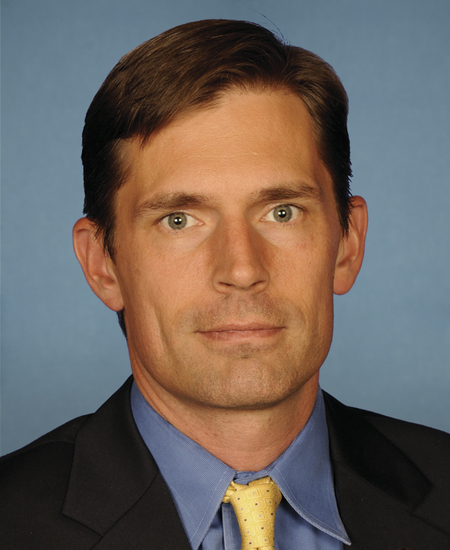
Martin Heinrich
Martin Heinrich Senate
D
Strong +
84% 37
Adam B. Schiff
Adam B. Schiff Senate
D
Support
79% 53
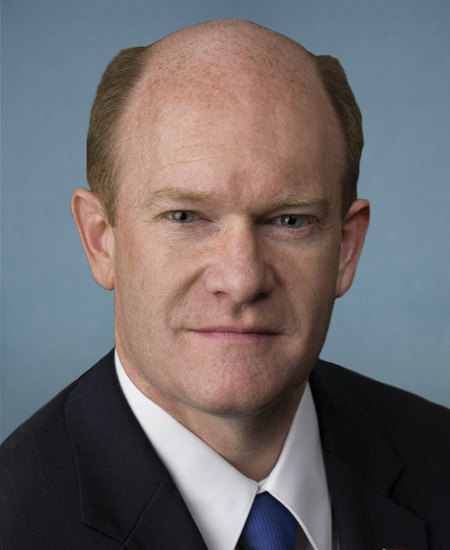
Christopher A. Coons
Christopher A. Coons Senate
D
Support
79% 52
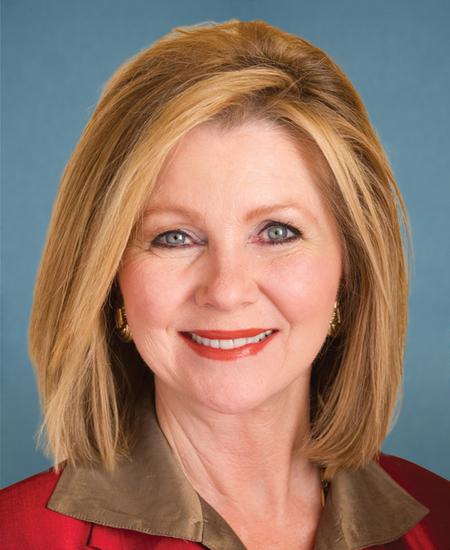
Marsha Blackburn
Marsha Blackburn Senate
R
Strong −
11% 36
Ted Budd
Ted Budd Senate
R
Strong −
20% 40
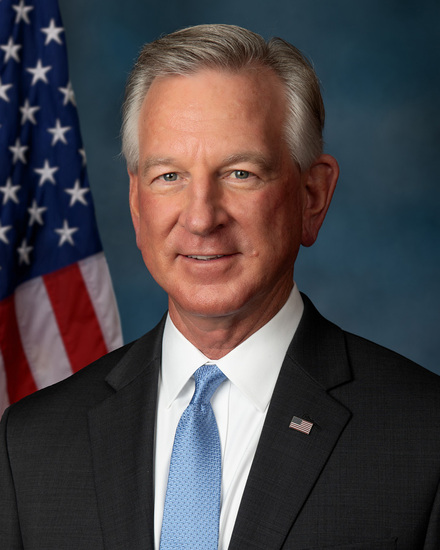
Tommy Tuberville
Tommy Tuberville Senate
R
Oppose
21% 53
Bill Cassidy
Bill Cassidy Senate
R
Oppose
22% 54
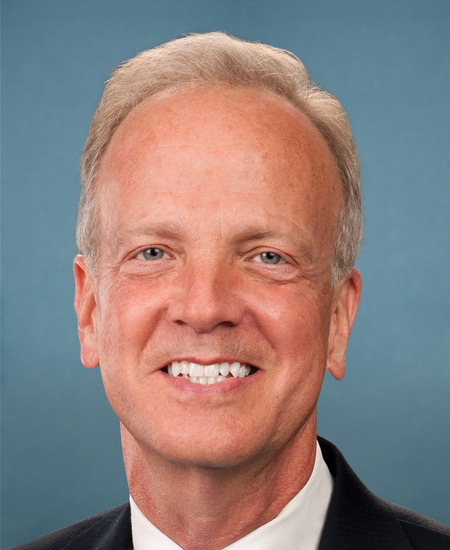
Jerry Moran
Jerry Moran Senate
R
Oppose
23% 53
Showing 531–540 of 2,003 bills

All environment bills

in committee · United States · Senate Oct 30, 2025

S 3091: DISPOSAL Act

S 3091, the DISPOSAL Act, requires the General Services Administration (GSA) to sell or lease for up to 99 years six specific Washington, D.C., federal buildings (including the Frances Perkins and James V. Forrestal Buildings) at fair market value. The bill mandates that GSA may relocate federal agencies occupying these buildings to other facilities, prohibits foreign ownership in any sale or lease, and exempts disposal from certain environmental and historic preservation laws. Proceeds from sales must first cover relocation costs (deposited into the Federal Buildings Fund) with excess funds going to reduce the deficit. The law expires on December 31, 2028, and includes limited authority to add up to 20 more underutilized buildings annually.
Sub-Topics Conservation
in committee · United States · Senate Jun 4, 2025

S 1953: Complete Streets Act of 2025

The Complete Streets Act of 2025 requires states to establish programs that provide technical assistance and grants for local governments, transit agencies, and other eligible entities to develop and implement street projects accommodating all transportation modes. The bill mandates that these projects prioritize safety for pedestrians and cyclists, especially in underserved communities, and must follow new design standards including protected bike lanes, accessible sidewalks, and proper lighting. States must dedicate 5% of certain federal transportation funds to support these initiatives and report on progress to the federal government. The law establishes specific deadlines for implementing these standards on new road projects, with phased requirements for different types of projects and locations. This legislation aims to create streets that safely serve people of all ages, abilities, and backgrounds, including those who walk, bike, take transit, or drive.
in committee · United States · House Feb 13, 2026

HR 7568: Hot Rock Act

HR 7568, the Hot Rock Act, funds research and development for "hot dry rock" geothermal energy - a next-generation technology that extracts heat from superhot (300°C+) rock formations with low natural permeability. It authorizes $16-30 million annually (2027-2031) for grant programs targeting high-temperature drilling, reservoir creation, and supercritical fluid research, plus a workforce training program to transition oil/gas workers into geothermal roles. The bill directly affects eligible entities (National Labs, universities, private companies) and covered individuals (U.S. oil/gas workers seeking geothermal careers), with provisions requiring seismic monitoring and risk research. Key mechanisms include milestone-based grants for achieving technical goals like drilling to supercritical temperatures and developing new well-casing methods.
in committee · United States · House May 30, 2025

HR 3661: Extreme Weather and Heat Response Modernization Act

HR 3661, the Extreme Weather and Heat Response Modernization Act, requires FEMA to review and update how it defines "incident periods" (timeframes for disaster response) for extreme weather events. Within one year, FEMA must form an advisory panel with diverse emergency management representatives to assess current procedures, particularly for slow-onset, compound, or cascading disasters, and submit findings to Congress. The bill also mandates FEMA to issue new guidance on community cooling centers, resilience centers, and extreme heat/cold mitigation projects within a year, and conduct a study on impacts to vulnerable communities, infrastructure, and emergency alerts. These changes directly affect FEMA, state/local emergency managers, and communities facing extreme heat or cold events by modernizing response protocols and funding eligibility.
Sub-Topics Natural Disasters Tags Emergency Management
in committee · United States · Senate Feb 20, 2025

S 647: Regional Leadership in Wildland Fire Research Act of 2025

The Regional Leadership in Wildland Fire Research Act of 2025 establishes seven regional research centers at colleges and universities across specific U.S. regions (Alaska, California, Northern Rockies, Pacific Northwest, Pacific Islands, Southeast, and Southwest) to advance wildland fire research. These centers will coordinate with federal fire management agencies, develop predictive tools for fire behavior and smoke impact, and create open data-sharing protocols following FAIR principles (findability, accessibility, interoperability, reusability). The law authorizes $60 million to $64 million annually for the centers from 2026-2030, plus $1 million yearly for a National Center Coordination Board that oversees research priorities and avoids duplication. It requires annual reports to Congress on research progress and establishes advisory boards with representation from tribal organizations, state agencies, and fire management professionals. This law directly affects land-grant universities, federal fire management agencies, Tribal organizations, and state wildfire management entities.
Sub-Topics Forestry Public Lands
in committee · United States · House Jan 31, 2025

HR 907: Northern Montana Water Security Act of 2025

The Northern Montana Water Security Act of 2025 (HR 907) establishes a final settlement of water rights for the Fort Belknap Indian Community (Gros Ventre and Assiniboine Tribes) in Montana, confirming their rights to 20,000 acre-feet of water annually from Lake Elwell. The bill ratifies a water rights compact between the tribe and Montana, creates a process for exchanging Federal and State lands, and establishes two trust funds to support water infrastructure projects and management. It includes provisions for the tribe to manage water allocations, lease water rights, and develop infrastructure while protecting allottees' water rights through a Tribal water code. The bill provides specific funding for rehabilitation of the Fort Belknap Indian Irrigation Project and mitigation for the Milk River Project, with implementation requirements and timelines.
Tags Tribal Nations
in committee · United States · House Feb 4, 2026

HR 7340: Rebuild America’s Schools Act of 2026

The Rebuild America's Schools Act of 2026 authorizes $20 billion annually from 2027 to 2031 to improve public school facilities nationwide. The bill provides grants to states to fund school construction, renovation, and modernization projects that focus on safety, energy efficiency, and accessibility, with priority given to schools serving high percentages of students eligible for free or reduced-price lunch. Funds cannot be used for routine maintenance, athletic facilities, or vehicles, and must meet specific environmental, safety, and energy efficiency standards. The bill also includes specific provisions for repairing school foundations affected by pyrrhotite, a mineral that causes concrete deterioration, and requires use of American-made materials for construction projects.
in committee · United States · Senate Jan 14, 2026

S 3471: EFFECTIVE Food Procurement Act

The EFFECTIVE Food Procurement Act requires the U.S. Department of Agriculture (USDA) to change its food procurement practices to prioritize foods supporting local farmers, worker well-being, environmental sustainability, and equitable food systems. It mandates the USDA to purchase more foods produced by beginning farmers, socially disadvantaged farmers, veterans, and those using sustainable practices, while requiring transparency through annual reports on procurement spending. The bill sets specific targets for increasing such purchases by 2032, allocates $2 million annually from 2026-2031 for covered producers, and creates a $25 million grant program to help small producers meet USDA requirements. The legislation also establishes a pilot program to evaluate "best value" procurement that considers factors beyond price, such as environmental impact and labor practices.
in committee · United States · House Jan 14, 2026

HR 7074: Keeping Public Lands Out of Adversarial Hands Act

HR 7074 requires the Secretary of the Interior to join the Committee on Foreign Investment in the United States (CFIUS) when reviewing transactions involving land or resources near federal lands managed by agencies like the Bureau of Land Management, National Park Service, or Bureau of Indian Affairs. It specifically targets acquisitions by foreign entities from China, North Korea, Russia, or Iran, mandating CFIUS to assess whether such transactions - reported by the Interior Secretary - constitute a "covered transaction" requiring review. The bill creates a new process for evaluating these land deals, with the review ending for a specific country once it’s removed from the U.S. list of "foreign adversaries." This directly affects foreign buyers from those four nations seeking to acquire land adjacent to federally protected areas.
in committee · United States · House Dec 2, 2025

HR 6094: Fire Innovation Unit Act

The Fire Innovation Unit Act establishes a 7-year federal pilot program to test and deploy new wildfire prevention, detection, and response technologies. It connects private companies, nonprofits, and universities (covered entities) with government agencies like FEMA, tribal fire departments, and land management agencies (covered agencies) to jointly test technologies in real-world scenarios. Key provisions include identifying priority technology areas - such as remote sensing, safety equipment, community resilience tools, and autonomous systems - and requiring annual reports to Congress on costs, effectiveness, and procurement barriers. The program aims to accelerate the adoption of proven, cost-effective technologies through public-private partnerships, with the pilot ending seven years after enactment.
Sub-Topics Forestry Public Lands Tags Emergency Management
Showing 531 to 540 of 2,003 bills
Previous 1 … 53 54 55 … 201 Next