Issue · Environment

Environment

Every environment bill, vote, and legislator stance in United States, automatically classified by Maddy, our AI policy reader.

Total bills
1,978
119th Congress
Top supporter
Aisha Wahab
100% support rate
Top opponent
Marsha Blackburn
11% support rate
Ranked legislators
10
5 support · 5 oppose
Key legislators

Who's moving environment in United States

Legislators moving environment in United States
Legislator Party Stance Support rate Decisive votes
Aisha Wahab
Aisha Wahab House · District 14
D
Strong +
100% 7
Everton Blair Jr.
Everton Blair Jr. House · District 13
D
Strong +
89% 9
Martin Heinrich
Martin Heinrich Senate
D
Strong +
84% 37
Adam B. Schiff
Adam B. Schiff Senate
D
Support
79% 53
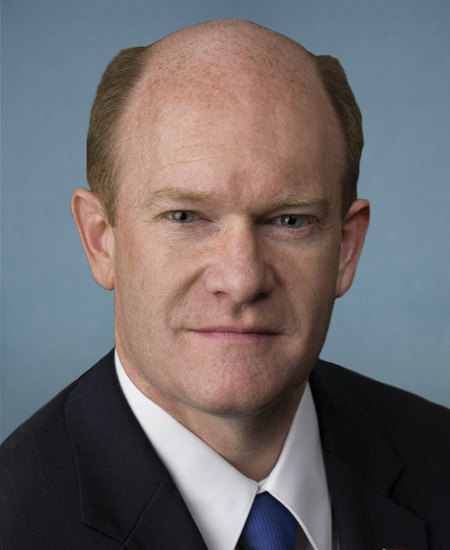
Christopher A. Coons
Christopher A. Coons Senate
D
Support
79% 52
Marsha Blackburn
Marsha Blackburn Senate
R
Strong −
11% 36
Ted Budd
Ted Budd Senate
R
Strong −
20% 40
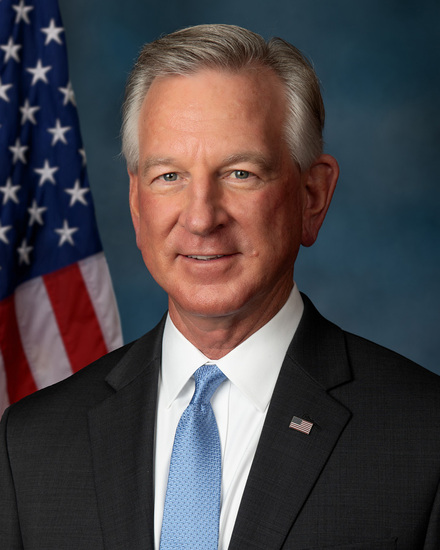
Tommy Tuberville
Tommy Tuberville Senate
R
Oppose
21% 53
Bill Cassidy
Bill Cassidy Senate
R
Oppose
22% 54
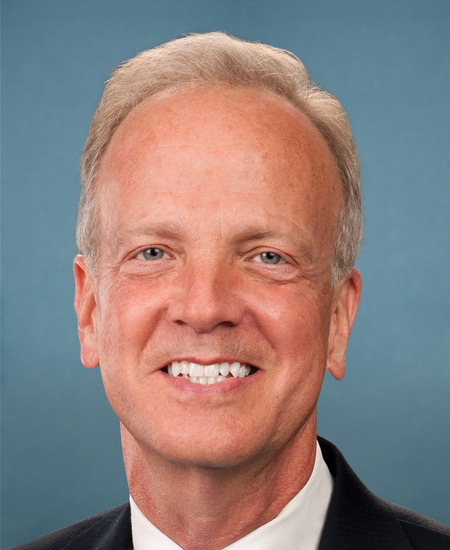
Jerry Moran
Jerry Moran Senate
R
Oppose
23% 53
Showing 1,751–1,760 of 1,978 bills

All environment bills

in committee · United States · Senate Mar 6, 2025

S 897: Farewell to Foam Act of 2025

S 897, the Farewell to Foam Act of 2025, bans the sale and distribution of expanded polystyrene food service ware (like single-use cups, trays, and takeout containers), expanded polystyrene loose fill (packing peanuts), and expanded polystyrene coolers starting January 1, 2028. It directly affects food service providers (restaurants, schools, grocery stores), manufacturers, distributors, and retailers who sell or handle these products. The bill excludes coolers used for medical products or drugs and defines covered items to clarify what is prohibited. This policy change aims to reduce non-recyclable foam waste by prohibiting specific foam products in the food service and packaging industries.
Sub-Topics Recycling
in committee · United States · House Feb 24, 2026

HR 7656: ReSCUE Oceans Act

The ReSCUE Oceans Act establishes a federal program to advance marine carbon dioxide removal (mCDR) research, development, and field trials through the National Oceanic and Atmospheric Administration. It creates designated research areas for mCDR projects that require consultation with Indian Tribes, Native Hawaiian organizations, and coastal communities, while mandating monitoring of environmental and social impacts. The bill develops protocols for measuring carbon removal efficacy and establishes an interagency working group to coordinate federal efforts across NOAA, NASA, the National Science Foundation, and other agencies. It requires biennial reports on mCDR activities, includes special data protections for tribal communities, and aims to support safe, responsible mCDR technologies through science-based research and community engagement.
Sub-Topics Coastal & Flood Protection Tags Tribal Nations
in committee · United States · Senate Nov 19, 2025

S 3224: SPEED Act

The SPEED Act amends the National Environmental Policy Act (NEPA) to streamline federal environmental reviews for projects like infrastructure, energy, or development. It limits agencies to considering only "reasonably foreseeable" environmental effects directly tied to a specific project - excluding speculative or distant impacts - and prohibits requiring new scientific research unless essential and reasonable. The bill sets strict deadlines (e.g., 180 days for court remands) and restricts legal challenges by requiring claims to be filed within 150 days of a project’s approval and limiting disputes to issues raised during public comment. This directly affects federal agencies (e.g., EPA, Corps of Engineers) and project developers, aiming to accelerate permitting while maintaining procedural NEPA compliance.
in committee · United States · Senate Jul 24, 2025

S 2467: Agricultural Biorefinery Innovation and Opportunity Act of 2025

This bill expands federal support for biorefineries producing advanced biofuels (including ultra-low-carbon and zero-carbon bioethanol), renewable chemicals, and biobased products. It establishes a new competitive grant program (up to 60% of project costs) for pilot/demonstration-scale facilities, with funding capped at $40 million annually for fiscal years 2025-2029. Projects are evaluated based on market potential, innovation, environmental benefits, rural economic development, and feasibility, with priority given to those using novel feedstocks or technologies. The program directly affects biorefinery developers, manufacturers of renewable chemicals, and biobased product companies seeking federal support for commercial-scale demonstration projects.
in committee · United States · Senate Feb 18, 2025

S 623: No IRIS Act of 2025

This bill prohibits the Environmental Protection Agency (EPA) from using assessments generated by its Integrated Risk Information System (IRIS) program in key regulatory actions. Specifically, it blocks the EPA from relying on IRIS assessments to develop or issue rules, conduct enforcement or permitting, or inform air toxics mapping tools. The bill directly affects how the EPA conducts its environmental regulation and risk assessment work. It represents a procedural change limiting the use of existing EPA scientific assessments in regulatory decision-making.
in committee · United States · House Mar 27, 2025

HR 2165: Choice in Automobile Retail Sales Act of 2025

HR 2165, the Choice in Automobile Retail Sales Act of 2025, amends the Clean Air Act to prevent the Environmental Protection Agency (EPA) from writing future tailpipe emissions regulations that mandate specific vehicle technologies (like electric or hydrogen systems) or limit the availability of new vehicles based on engine type (e.g., gasoline vs. electric). The bill requires the EPA to update its regulations within 24 months to ensure new rules comply with these restrictions. This directly affects the EPA’s regulatory authority and automakers, as it limits how emissions standards can be structured. The law aims to preserve consumer choice in vehicle types by preventing regulations from favoring one engine technology over others.
Sub-Topics Air Quality
in committee · United States · House Jul 22, 2025

HR 4591: Habitat Enhancement Now Act

HR 4591, the Habitat Enhancement Now Act, creates two federal grant programs to boost waterfowl populations. It provides $3.5 million annually (2026-2030) for grants to states, tribes, nonprofits, or individuals to install nesting structures (like hen houses) in the Prairie Pothole Region to improve duck nest success, and to establish nesting cover, brood ponds, and incentivize private landowners in California to enhance breeding habitat for mallards and gadwalls. The bill directly affects landowners who participate in the California program and conservation entities implementing both programs. Key mechanisms include competitive grants for specific habitat actions proven to increase nest success, based on scientific findings about declining duck populations. The funding is explicitly allocated for these targeted habitat management activities.
in committee · United States · House Mar 4, 2026

HJRES 151: Providing for congressional disapproval under chapter 8 of title 5, United States Code, of the rule submitted by the Bureau of Land Management relating to "Grand Staircase-Escalante National Monument Record of Decision and Approved Resource Management Plan".

H.J. Res. 151 seeks to block a Bureau of Land Management (BLM) rule that established management guidelines for Utah's Grand Staircase-Escalante National Monument. The resolution, introduced in March 2026, uses the Congressional Review Act to request Congress disapprove the rule, which was issued in January 2025 and submitted for review. If enacted, the resolution would prevent the rule from taking effect, meaning the BLM would not be required to follow the specific management plan outlined in that rule. This action directly affects the monument's management, as the rule governed activities like land use and conservation within the protected area.
passed · United States · House Feb 24, 2026

HRES 1075: Providing for consideration of the bill (H.R. 4626) to amend the Energy Policy and Conservation Act to prohibit the Secretary of Energy from prescribing any new or amended energy conservation standard for a product that is not technologically feasible and economically justified, and for other purposes, and providing for consideration of the bill (H.R. 4758) to repeal provisions of Public Law 117–169 relating to taxpayer subsidies for home electrification, and for other purposes.

HRES 1075 is a procedural resolution that enables the House to debate and vote on two specific bills. It allows consideration of H.R. 4626, which would prevent the Energy Secretary from setting new appliance efficiency standards unless they are both technologically possible and economically reasonable for manufacturers. It also enables consideration of H.R. 4758, which would eliminate federal tax subsidies for home electrification projects under Public Law 117-169. This resolution waives objections to debating these bills and sets rules for their floor consideration. The resolution itself does not change policy but facilitates the legislative process for these two bills.
in committee · United States · Senate Jul 21, 2026

S 3785: North Rim and Kaibab National Forest Restoration Act of 2026

This bill authorizes emergency contracting for recovery efforts in the Grand Canyon National Park and Kaibab National Forest after the Dragon Bravo and White Sage wildfires (which burned over 200,000 acres and destroyed structures). It grants the Secretaries of Interior and Agriculture emergency contracting authority to quickly hire contractors for forest restoration, rebuilding structures, and ecological recovery within the affected areas, while requiring detailed public reports on spending, contractors, and progress. The law mandates involving tribes and local stakeholders in planning and prioritizes contracts with tribal and local businesses for reconstruction work. It also allows noncompetitive contracts with existing park concessioners to coordinate recovery efforts and requires a joint study on recovery costs. The emergency authority expires after 5 years or when recovery is complete, whichever comes first.
Showing 1,751 to 1,760 of 1,978 bills