Issue · Energy

Energy

Every energy bill, vote, and legislator stance in United States, automatically classified by Maddy, our AI policy reader.

Total bills
886
119th Congress
Top supporter
Martin Heinrich
75% support rate
Top opponent
Marsha Blackburn
26% support rate
Ranked legislators
10
5 support · 5 oppose
Key legislators

Who's moving energy in United States

Legislators moving energy in United States
Legislator Party Stance Support rate Decisive votes
Martin Heinrich
Martin Heinrich Senate
D
Support
75% 24
John W. Hickenlooper
John W. Hickenlooper Senate
D
Support
74% 38
Frederica S. Wilson
Frederica S. Wilson House · District 24
D
Support
74% 34
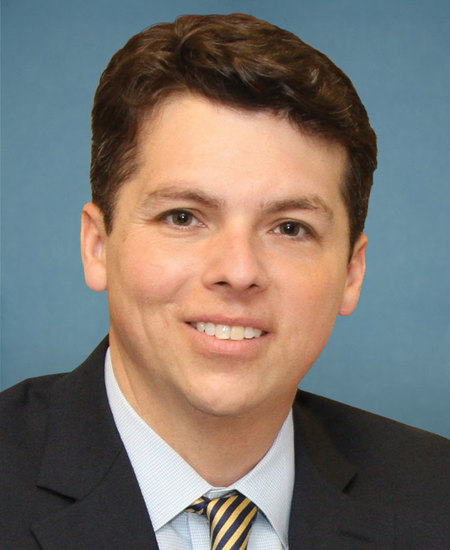
Brendan F. Boyle
Brendan F. Boyle House · District 2
D
Support
73% 49
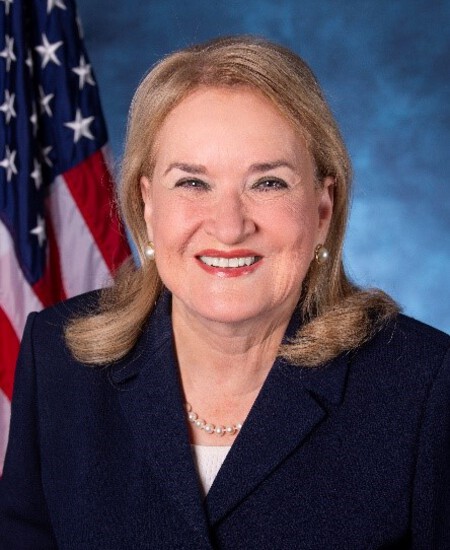
Sylvia R. Garcia
Sylvia R. Garcia House · District 29
D
Support
72% 47
Marsha Blackburn
Marsha Blackburn Senate
R
Oppose
26% 23
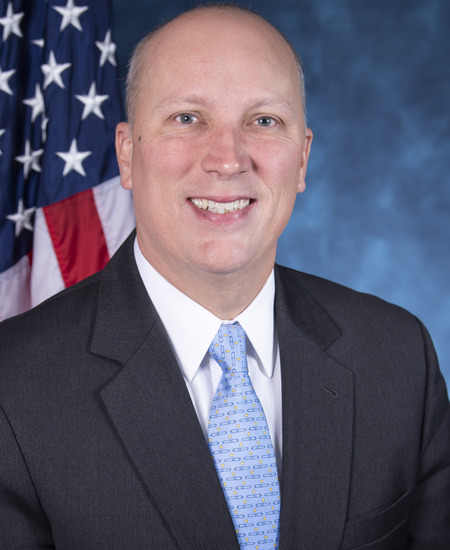
Chip Roy
Chip Roy House · District 21
R
Oppose
27% 52
Ted Budd
Ted Budd Senate
R
Oppose
27% 26
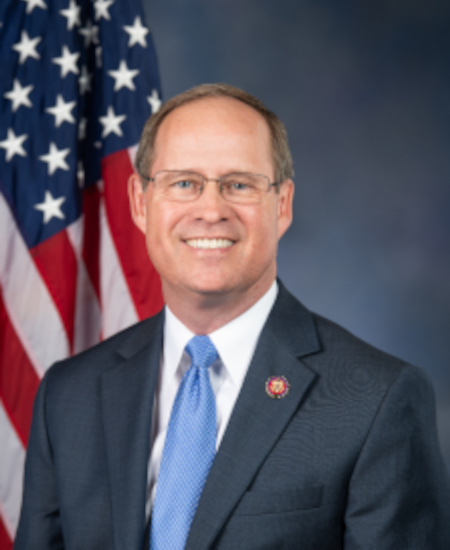
Gregory F. Murphy
Gregory F. Murphy House · District 3
R
Oppose
28% 46
Mike Johnson
Mike Johnson House · District 4
R
Oppose
28% 46
Showing 301–310 of 886 bills

All energy bills

in committee · United States · Senate Jan 23, 2025

S 202: Helping Small Businesses THRIVE Act

This bill establishes a Small Business Administration (SBA) pilot program to help eligible small businesses manage volatile input costs for essential commodities like gasoline and diesel. The SBA will offer cost-based futures contracts, including price protection options for 5%+ increases, to qualifying businesses that are not financial institutions, new startups (under 1 year), or otherwise excluded. Eligible businesses must apply through the program, which includes guidance to help them assess if hedging aligns with their operational costs. The program requires annual reports tracking participation, commodity coverage, and business impacts, with initial funding authorized for five years.
Tags Small Business
in committee · United States · House Nov 12, 2025

HR 5062: Pipeline Security Act

The Pipeline Security Act (HR 5062) assigns the Transportation Security Administration (TSA) primary responsibility for securing U.S. pipelines against cybersecurity threats and terrorism, replacing prior authority. It requires the TSA Administrator to develop and update security guidelines based on NIST standards, issue necessary regulations, inspect pipeline facilities (including critical ones), and share threat information with stakeholders. Pipeline owners and operators must implement these security measures, while the TSA must report biennially to Congress and create a personnel strategy focused on cybersecurity expertise. The bill directly affects pipeline companies and TSA operations, mandating concrete security protocols without specifying new funding or penalties.
in committee · United States · Senate Feb 12, 2026

S 1464: Buffalo Tract Protection Act

S 1464, the Buffalo Tract Protection Act, withdraws approximately 4,288 acres of federal land in New Mexico (described as Tracts A-D on a 2019 map) from mining claims, mineral leasing, and other disposal under federal law. This directly affects the Bureau of Land Management (BLM), which administers the land, by prohibiting new mineral development on the surface. The bill allows the surface estate to be conveyed (sold or transferred) under existing laws like the Federal Land Policy Act, but requires the federal government to retain all mineral rights permanently.
Sub-Topics Public Lands
signed · United States · House May 23, 2025

HJRES 61: Providing for congressional disapproval under chapter 8 of title 5, United States Code, of the rule submitted by the Environmental Protection Agency relating to "National Emission Standards for Hazardous Air Pollutants: Rubber Tire Manufacturing".

HJRES 61 is a congressional resolution that formally disapproves an Environmental Protection Agency (EPA) rule setting new air pollution standards for rubber tire manufacturing. It directly affects tire manufacturers by blocking the EPA’s proposed rule (published November 29, 2024), which would have required them to meet specific limits on hazardous air pollutants. The resolution’s key mechanism is a formal congressional vote to nullify the rule, making it legally ineffective under Title 5, U.S. Code. This action stops the EPA rule from taking effect without creating new regulations.
Sub-Topics Air Quality
in committee · United States · Senate Nov 20, 2025

S 3276: UNtaxed Act

This bill prohibits the United Nations or its affiliated bodies from levying any tax, tariff, fee, or penalty on U.S. citizens or U.S. entities without a Senate-approved treaty. It specifically blocks U.S. funding for any United Nations activities related to implementing or enforcing a global carbon tax, defined as a tax on vessel emissions under a global fuel regime. The bill directly affects U.S. citizens and businesses by preventing the UN from imposing such taxes or using U.S. funds to support global carbon tax systems. It establishes a clear legal barrier requiring Senate approval for any UN tax affecting U.S. interests.
in committee · United States · House Jun 11, 2025

HR 3930: Roadless Area Conservation Act of 2025

This bill codifies existing protections for designated roadless areas within the National Forest System by prohibiting new road construction, road reconstruction, and logging in these areas. It directly affects National Forest lands already identified as "inventoried roadless areas" under the current Roadless Rule, which covers roughly 58 million acres. The key mechanism requires the Secretary of Agriculture to enforce these prohibitions, maintaining current protections without expanding restrictions to other lands or altering existing multiple-use management. The bill does not create new protected areas but legally solidifies the existing regulatory framework to preserve ecological and recreational values.
in committee · United States · Senate Mar 17, 2026

SRES 645: A resolution recognizing 2026 as the "International Year of Rangelands and Pastoralists".

This resolution formally recognizes 2026 as the International Year of Rangelands and Pastoralists, acknowledging the ecological and economic importance of these lands to the United States. The bill highlights that rangelands cover a significant portion of U.S. territory and support domestic production of food, fiber, and energy while providing critical ecosystem services like carbon storage and wildfire risk reduction. It encourages federal agencies, universities, and organizations to engage in education, research, and outreach activities related to sustainable rangeland management during the designated year. The measure does not create new laws or funding but serves to raise awareness and promote collaboration among stakeholders involved in rangeland stewardship.
Sub-Topics Forestry Public Lands
in committee · United States · House Mar 20, 2026

HR 8033: No Harm Data Centers Act

This bill, the No Harm Data Centers Act, requires large data centers to pay their full share of electricity costs and infrastructure upgrades without shifting those expenses to residential or small business customers. It gives the Federal Energy Regulatory Commission authority to approve rates for data centers and mandates that utilities cover all transmission, distribution, and generation costs needed to support these facilities. The legislation also establishes a new penalty system for violations and directs the EPA to conduct an assessment of data centers' environmental and public health impacts.
in committee · United States · Senate Jun 10, 2026

S 789: Critical Minerals Security Act of 2025

Critical Minerals Security Act of 2025 This bill establishes requirements for the Department of the Interior related to securing U.S. access to critical minerals and rare earth element (REE) resources.  Critical minerals mean any mineral, element, substance, or material designated as critical by the U.S. Geological Survey.  REEs mean cerium, dysprosium, erbium, europium, gadolinium, holmium, lanthanum, lutetium, neodymium, praseodymium, promethium, samarium, scandium, terbium, thulium, ytterbium, and yttrium.  First, Interior must report on the critical mineral and REE resources, including recyclable or recycled materials containing those resources, around the world. Among other information, the report must include an assessment of the global ownership and supply of critical mineral and REE resources. Interior must submit the report within a year and every two years thereafter. Next, Interior must establish a process to assist a U.S. person—a U.S. citizen, a non-U.S. National (alien under federal law) lawfully admitted for permanent residence, or an entity organized under U.S. laws—seeking to divest stock in mining, processing, or recycling operations for critical minerals and REEs in a foreign country with finding a purchaser that is not under the control of North Korea, China, Russia, or Iran. Finally, Interior must develop (1) a strategy to collaborate with U.S. allies and partners to develop advanced mining, refining, separation, processing, and recycling technologies; and (2) a method for sharing related intellectual property with U.S. allies and partners to enable those countries to license those technologies and develop their resources.
in committee · United States · House Jan 3, 2025

HR 52: Stop Woke Investing Act

HR 52, the Stop Woke Investing Act, limits shareholder proposals on corporate proxy materials based on company size. Public companies must exclude proposals that do not have a "material" financial impact on the business, defined as directly affecting investment returns or risks. This excludes proposals focused on non-financial social, environmental, or political goals (like diversity initiatives or climate action) from being included in voting materials. The bill caps the number of proposals companies must include: 2 for small firms, 4 for mid-sized firms, and 7 for large firms, with companies deciding which proposals meet the financial impact requirement.
Showing 301 to 310 of 886 bills
Previous 1 30 31 32 89 Next