Issue · Education

Education

Every education bill, vote, and legislator stance in United States, automatically classified by Maddy, our AI policy reader.

Total bills
1,179
119th Congress
Top supporter
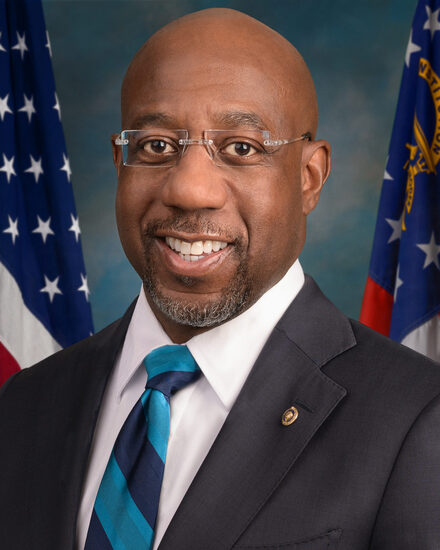
Raphael G. Warnock
100% support rate
Top opponent
Thomas Massie
14% support rate
Ranked legislators
10
5 support · 5 oppose
Key legislators

Who's moving education in United States

Legislators moving education in United States
Legislator Party Stance Support rate Votes
Raphael G. Warnock
Raphael G. Warnock Senate
D
Strong +
100% 167
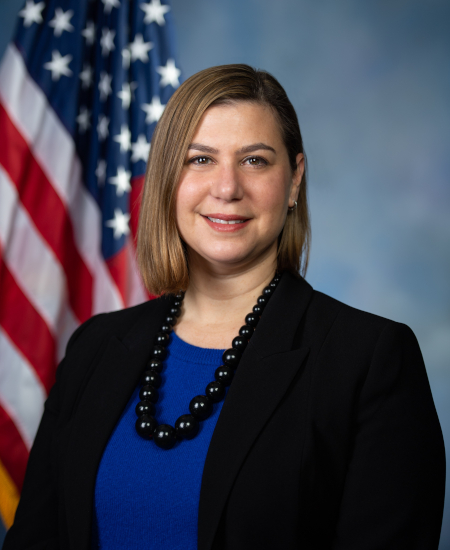
Elissa Slotkin
Elissa Slotkin Senate
D
Strong +
86% 166
Michael F. Bennet
Michael F. Bennet Senate
D
Strong +
86% 137
Mark R. Warner
Mark R. Warner Senate
D
Strong +
86% 167
Gary C. Peters
Gary C. Peters Senate
D
Strong +
86% 167
Thomas Massie
Thomas Massie House · District 4
R
Strong −
14% 126
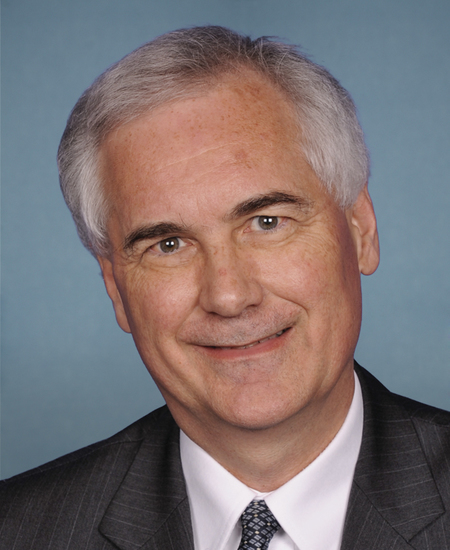
Tom McClintock
Tom McClintock House · District 5
R
Strong −
14% 125
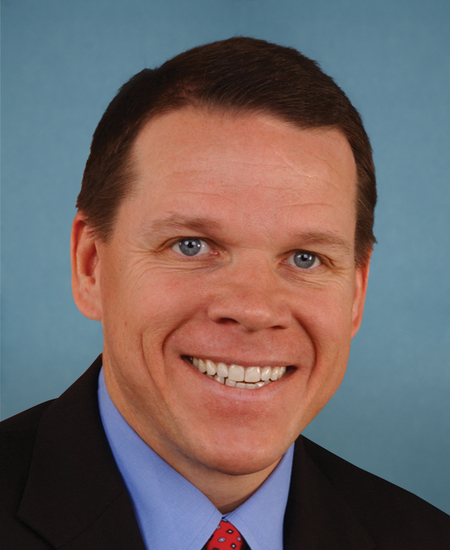
Sam Graves
Sam Graves House · District 6
R
Strong −
14% 124
Elijah Crane
Elijah Crane House · District 2
R
Strong −
14% 128
Wesley Hunt
Wesley Hunt House · District 38
R
Strong −
14% 109
Showing 931–940 of 1,179 bills

All education bills

in committee · United States · Senate Feb 6, 2025

S 469: Family Farm and Small Business Exemption Act

This bill amends the Higher Education Act of 1965 to exempt certain family-owned assets from financial need calculations for college students. Specifically, it removes the net value of a family farm (where the family resides) or a small business (with 100 or fewer full-time equivalent employees) owned and controlled by the family from being counted as assets when determining federal financial aid eligibility. The change applies to need analysis for award years starting after the bill's enactment date. This policy directly affects students from qualifying family farms or small businesses when applying for federal student aid under Title IV programs.
Sub-Topics Higher Education Student Financial Aid Tags Agriculture Small Business
in committee · United States · House Dec 1, 2025

HR 6335: Education Not Endless Scrolling Act

HR 6335, the "Education Not Endless Scrolling Act," imposes a 50% tax on large digital advertising companies (those with over $2.5 billion in annual U.S. digital ad revenue) starting in 2026. The tax revenue funds three new trust funds: one for local journalism support, one for individual tutoring programs in schools, and one for career and technical education initiatives. These trust funds will distribute one-third of the collected tax revenue to directly support journalism entities, school tutoring programs, and career education programs without requiring new annual appropriations. The bill’s key mechanism is redirecting tax revenue from major digital ad platforms to specific education and journalism programs, effective for taxes paid after December 31, 2025.
Sub-Topics Revenue
in committee · United States · House Jul 17, 2025

HR 4507: TUTOR Act

The TUTOR Act creates a federal tax credit for certified K-12 teachers who provide academic tutoring outside school hours. Teachers qualify if they work at a preschool, elementary, or secondary school (meeting state certification), provide at least 150 hours of tutoring in math, reading, writing, or science during non-school time, and meet other defined criteria. The credit starts at $500, with a supplemental amount (capped at $500) based on hours exceeding 150, calculated as a ratio of excess hours to 50. The credit expires after 2032, and the Treasury must annually report on credit claims and tutoring hours to Congress.
in committee · United States · Senate Apr 10, 2025

S 1447: Early Childhood Nutrition Improvement Act

The Early Childhood Nutrition Improvement Act (S 1447) amends the National School Lunch Act to improve nutrition programs for young children in childcare settings. It directly affects childcare centers, family/group day care homes, and sponsoring organizations participating in federal meal programs by: (1) revising eligibility criteria to require specific staffing and bonding standards; (2) mandating a federal review of "serious deficiency" processes to clarify error margins and ensure fair appeals; (3) adjusting meal reimbursement limits and requiring a study on third-meal benefits; and (4) establishing an advisory committee to reduce paperwork burdens through digital solutions and streamlined recordkeeping. The bill focuses on modernizing program administration while maintaining accountability.
in committee · United States · Senate Apr 1, 2025

S 1236: FISCAL Act

Freedom in School Cafeterias and Lunches Act or the FISCAL Act This bill revises requirements for milk provided by the National School Lunch Program of the Department of Agriculture (USDA) to require that schools offer plant-based milk. Under current law, schools must provide a substitute for fluid milk for students whose disability restricts their diet (on receipt of a written statement from a licensed physician). Schools may also substitute a nondairy beverage for fluid milk for students who have an identified medical or other special dietary need (on receipt of a written statement from a medical authority or a student's parent or legal guardian). The bill eliminates the exceptions and documentation requirements. Instead, schools participating in the school lunch program must offer all students a plant-based milk option that is consistent with (1) the most recent U.S. Dietary Guidelines, or (2) USDA-established nutritional standards if the milk is not included under those guidelines.
Sub-Topics Student Health
in committee · United States · Senate Feb 26, 2025

S 758: Apprenticeships to College Act

S 758 establishes a voluntary "Registered Apprenticeship College Consortium" to connect apprenticeship programs with colleges. It requires the Labor and Education Secretaries to create an interagency agreement promoting data sharing between apprenticeship records and college transcripts, aligning funding from education laws, and enabling credit transfer for apprentices. The bill mandates that participating colleges and apprenticeship sponsors enter into agreements for articulation (credit recognition), electronic transcripts, and sharing program details via a public website. It directly affects students in apprenticeships, postsecondary institutions, and apprenticeship sponsors by creating structured pathways to earn college credit while completing on-the-job training. Participation is optional for all involved parties, as specified in the bill's limitations.
in committee · United States · Senate Jul 10, 2025

S 2251: Say No to Indoctrination Act

This bill amends federal education law to prohibit public schools from teaching concepts related to "gender ideology," as defined by a specific executive order. It directly affects K-12 public schools receiving federal funding by banning instruction on certain gender-related topics. The key provision adds a new restriction to the Elementary and Secondary Education Act, explicitly forbidding the teaching of these concepts in classrooms. The bill does not specify which topics are covered, only referencing the executive order's definition. This change applies to all federally funded elementary and secondary schools.
Sub-Topics K-12 Education
in committee · United States · Senate Mar 20, 2026

S 1602: Mathematical and Statistical Modeling Education Act

This bill allocates $10 million annually (2026-2030) to fund National Science Foundation programs developing K-12 mathematical and statistical modeling education. It requires research and partnerships to integrate real-world data analysis, computational tools, and problem-based learning into classrooms, with specific focus on students from groups historically underrepresented in STEM. The bill also mandates a National Academies study on implementation barriers and best practices for teaching modeling skills. Funding expires September 30, 2029.
Sub-Topics K-12 Education
in committee · United States · House Dec 11, 2025

HR 6634: To amend the Internal Revenue Code of 1986 to establish a refundable childhood education tax credit with monthly advance payments.

HR 6634 would establish a refundable tax credit providing $667 per month for each child aged 2-4 who receives early childhood education and lives with the taxpayer. The credit would be reduced for households earning above 300% of the poverty line, with monthly advance payments made directly to eligible families rather than as a yearly tax refund. To qualify, children must be enrolled in an early childhood education program (including licensed private prekindergarten), receive care from the taxpayer, and meet specific residency requirements. The bill includes provisions to prevent fraud, coordinate with other government programs, and adjust payments for inflation starting in 2026, with the credit applying to taxable years beginning after December 31, 2025.
in committee · United States · House Oct 17, 2025

HR 5769: 21st Century Dyslexia Act

The 21st Century Dyslexia Act amends the Individuals with Disabilities Education Act (IDEA) to explicitly include dyslexia in the definition of specific learning disabilities and provide a clear definition of dyslexia as an unexpected difficulty in reading due to challenges in phonological processing. It requires schools to provide equal access to accommodations and services for all eligible students, including those from low-income families, low socioeconomic backgrounds, and limited English proficient students. This change ensures students with dyslexia are formally recognized under IDEA and that schools must consider these equity factors when determining eligibility and service provision. The bill does not alter existing eligibility criteria but clarifies definitions and mandates equitable access to support services.
Sub-Topics Special Education
Showing 931 to 940 of 1,179 bills
Previous 1 93 94 95 118 Next