Issue · Criminal Justice

Criminal Justice

Every criminal justice bill, vote, and legislator stance in United States, automatically classified by Maddy, our AI policy reader.

Total bills
1,286
119th Congress
Top supporter
Alan Armstrong
86% support rate
Top opponent
Amy Klobuchar
13% support rate
Ranked legislators
10
5 support · 5 oppose
Key legislators

Who's moving criminal justice in United States

Legislators moving criminal justice in United States
Legislator Party Stance Support rate Decisive votes
AA
Alan Armstrong Senate
R
Strong +
86% 28
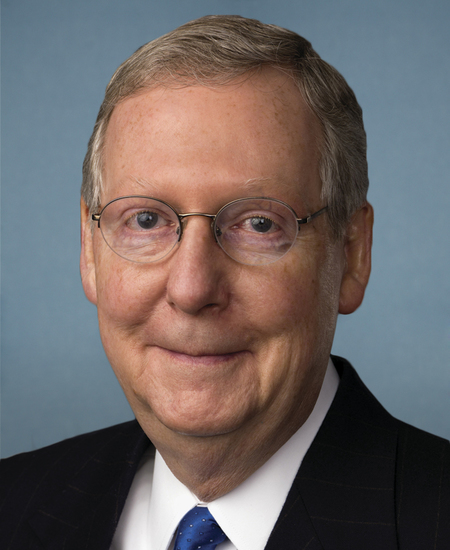
Mitch McConnell
Mitch McConnell Senate
R
Strong +
84% 31
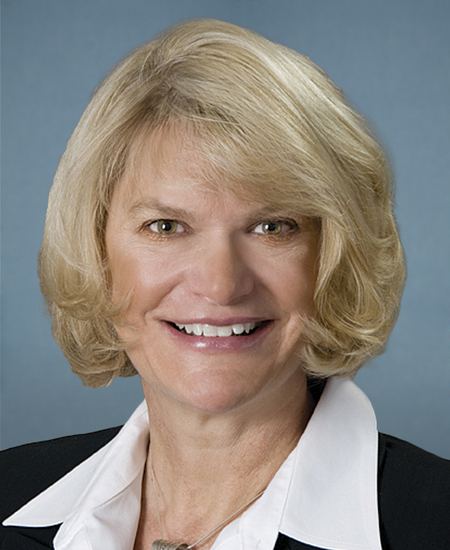
Cynthia M. Lummis
Cynthia M. Lummis Senate
R
Strong +
80% 30
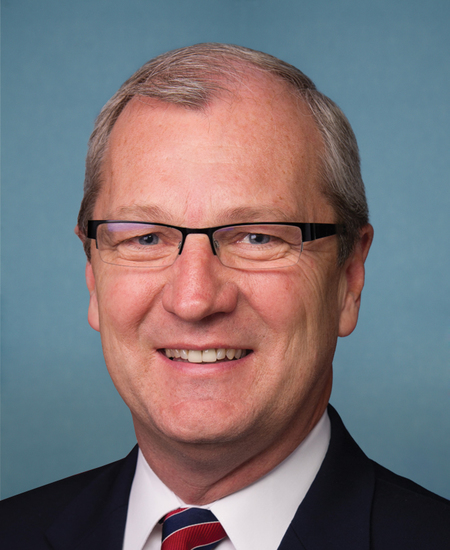
Kevin Cramer
Kevin Cramer Senate
R
Strong +
80% 30
Bernie Moreno
Bernie Moreno Senate
R
Support
77% 31
Amy Klobuchar
Amy Klobuchar Senate
D
Strong −
13% 31
Catherine Cortez Masto
Catherine Cortez Masto Senate
D
Strong −
13% 31
Margaret Wood Hassan
Margaret Wood Hassan Senate
D
Strong −
13% 31
Andy Kim
Andy Kim Senate
D
Strong −
16% 31
Angus S. King, Jr.
Angus S. King, Jr. Senate
I
Strong −
16% 31
Showing 771–780 of 1,286 bills

All criminal justice bills

in committee · United States · House Jan 16, 2025

HR 545: To direct the Attorney General to conduct a study on the efficacy of extreme risk protection orders on reducing gun violence, and for other purposes.

HR 545 requires the Attorney General to study how effectively extreme risk protection orders (ERPOs) reduce gun violence. The study must be completed within one year of the bill's enactment and conducted by the Bureau of Justice Assistance. This bill does not change existing laws or impose new requirements on individuals; it only directs a federal study on ERPOs, which are court-ordered temporary firearm removals for high-risk individuals. The summary focuses solely on the bill's procedural mandate, not on policy outcomes.
in committee · United States · House May 1, 2025

HR 3172: To amend section 287 of the Immigration and Nationality Act with respect to certain uniform requirements for United States immigration officers.

This bill requires U.S. Customs and Border Protection (CBP), U.S. Immigration and Customs Enforcement (ICE), and other deputized immigration officers to visibly identify themselves during enforcement actions. Specifically, it mandates that officers display a 12-inch by 6-inch agency identifier on their uniform front or back, ensuring it remains unobscured by armor or accessories. The requirement applies during all "time of action" activities, such as patrols, raids, arrests, or warrant service. The bill directly affects immigration enforcement personnel by standardizing their visible identification during interactions with the public.
in committee · United States · House Feb 11, 2026

HR 7491: Effective Assistance of Counsel in the Digital Era Act

HR 7491, the Effective Assistance of Counsel in the Digital Era Act, protects attorney-client communications for incarcerated people by prohibiting government monitoring of their electronic messages with lawyers. The bill requires the Attorney General to create or modify a secure system within 180 days that excludes privileged communications from monitoring, while allowing retention of these messages until the person’s release. It mandates strict safeguards: law enforcement can only access retained communications with a court-issued warrant (requiring U.S. Attorney approval), and a U.S. Attorney must review messages first to ensure privileged content isn’t accessed; they’re also barred from participating in related legal cases. This directly affects incarcerated individuals communicating digitally with their attorneys or legal representatives, including through systems like the Trust Fund Limited Inmate Computer System.
in committee · United States · House May 15, 2025

HR 3430: SRO Funding Protection Act of 2025

This bill requires states receiving federal education funds under the Elementary and Secondary Education Act to maintain funding for school resource officer (SRO) programs in public schools at either their prior year's level or a 5-year average. It directly affects State Educational Agencies (SEAs), which must annually certify compliance by reporting their SRO funding amounts and officer counts. If a state fails to meet the funding requirement without a waiver for emergencies like disasters, the federal government will reduce its future education funding proportionally. The bill includes a waiver option for states facing extraordinary financial hardship but does not change SRO program requirements or definitions.
in committee · United States · House Nov 18, 2025

HR 6091: Bivens Act of 2025

This bill amends Section 1983 of federal law (42 U.S.C. 1983) to explicitly allow lawsuits against federal officials who violate constitutional rights while acting under federal authority. It directly affects individuals whose constitutional rights were allegedly infringed by federal employees, such as law enforcement or agency staff. The key provision inserts "of the United States" before "of any State" in the statute, expanding the existing legal remedy for state officials to cover federal officials as well. This creates a clear, standalone legal path for citizens to seek redress for federal constitutional violations without relying on precedent.
Sub-Topics Law Enforcement Tags Civil Liberties
in committee · United States · Senate Feb 6, 2025

S 463: Protect Our Letter Carriers Act of 2025

This bill directs $1.4 billion annually (2025-2029) to upgrade U.S. Postal Service mailboxes with high-security models and replace physical "arrow keys" with electronic locks, directly affecting postal carriers and mail collection points. It requires the Attorney General to appoint dedicated prosecutors in each judicial district to coordinate investigations and prosecutions of crimes against postal employees, including assaults or robberies. The bill also mandates the U.S. Sentencing Commission to amend guidelines so that assaults or robberies against postal employees are treated with the same severity as assaults against law enforcement officers. These changes aim to enhance physical security, improve legal responses to violence, and increase penalties for attacks on postal workers.
in committee · United States · House Nov 21, 2025

HR 6258: Disarm Hate Act

This bill, the Disarm Hate Act (HR 6258), bars individuals convicted of a hate-motivated misdemeanor crime or who received an enhanced sentence for such a crime from purchasing, possessing, shipping, or transporting firearms under federal law. It directly affects people convicted in any court of a misdemeanor that involved hate or bias (based on race, religion, sexual orientation, gender identity, or disability) and included physical force, threats, or credible safety threats. The bill amends existing federal gun laws (Section 922(d) and 922(g)) to add these new prohibitions, preventing gun sales to and possession by these individuals. It does not apply to expunged convictions, pardons, or cases where legal rights were properly waived.
in committee · United States · Senate Feb 11, 2025

S 516: SHIELD Act of 2023

The SHIELD Act of 2023 makes it a federal crime to knowingly distribute intimate visual depictions (like private photos or videos) without consent when the person had a reasonable expectation of privacy, the image wasn’t voluntarily shared in public, and the distribution causes harm (e.g., psychological or reputational damage). It specifically targets non-consensual sharing of intimate images of adults and prohibits distributing images of minors for abuse or sexual gratification, with penalties of up to 2 years in prison for adults and 3 years for minors. The law includes exceptions for law enforcement, legitimate reporting, medical/educational use, and legal proceedings. It does not apply to platforms that host user content unless they intentionally promote such material.
in committee · United States · Senate Mar 27, 2025

S 1189: School Guardian Act of 2025

The School Guardian Act of 2025 creates a federal grant program to fund armed law enforcement officers at K-12 schools. It allocates $80 billion from unused IRS funds over 10 years, with grants distributed to states based on their share of national K-12 student enrollment. States must then award subgrants to local law enforcement agencies to hire at least one full-time officer per school, covering pay, training, and equipment costs. States must report annually on how funds are used, including the number of schools and officers supported.
in committee · United States · Senate Jun 27, 2025

S 2201: LGBTQ+ Panic Defense Prohibition Act of 2025

This bill prohibits defendants in federal criminal cases from using a victim's LGBTQ+ sexual orientation, gender identity, or expression as a legal excuse for violent crimes like assault or murder. It directly affects defendants who attempt to justify violence by claiming the victim's identity provoked them, and it protects LGBTQ+ victims by preventing their identities from being used to reduce sentences. The law bans such defenses entirely, except when evidence of the defendant's past trauma is admitted under standard federal evidence rules. It also requires the Attorney General to annually report on federal prosecutions involving violence against LGBTQ+ individuals motivated by bias. This is a concrete policy change to end the use of discriminatory defenses in federal court.
Sub-Topics Courts Violent Crime
Showing 771 to 780 of 1,286 bills
Previous 1 … 77 78 79 … 129 Next