Issue · Criminal Justice

Criminal Justice

Every criminal justice bill, vote, and legislator stance in United States, automatically classified by Maddy, our AI policy reader.

Total bills
1,286
119th Congress
Top supporter
Alan Armstrong
86% support rate
Top opponent
Amy Klobuchar
13% support rate
Ranked legislators
10
5 support · 5 oppose
Key legislators

Who's moving criminal justice in United States

Legislators moving criminal justice in United States
Legislator Party Stance Support rate Decisive votes
AA
Alan Armstrong Senate
R
Strong +
86% 28
Mitch McConnell
Mitch McConnell Senate
R
Strong +
84% 31
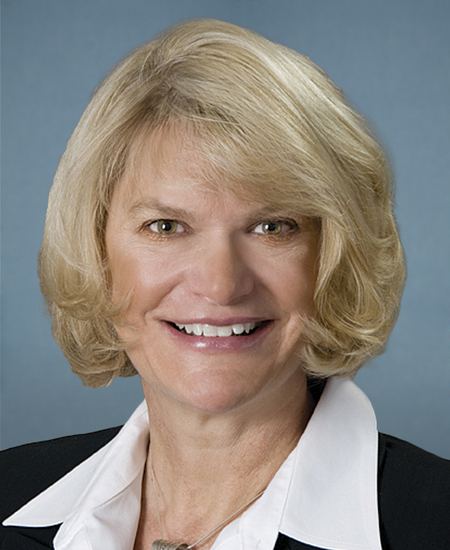
Cynthia M. Lummis
Cynthia M. Lummis Senate
R
Strong +
80% 30
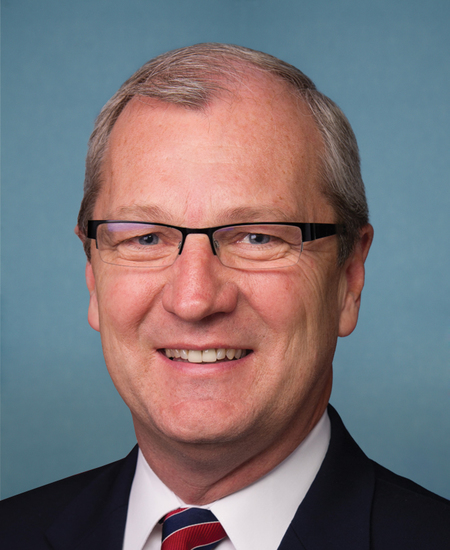
Kevin Cramer
Kevin Cramer Senate
R
Strong +
80% 30
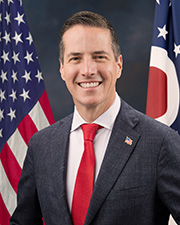
Bernie Moreno
Bernie Moreno Senate
R
Support
77% 31
Amy Klobuchar
Amy Klobuchar Senate
D
Strong −
13% 31
Catherine Cortez Masto
Catherine Cortez Masto Senate
D
Strong −
13% 31
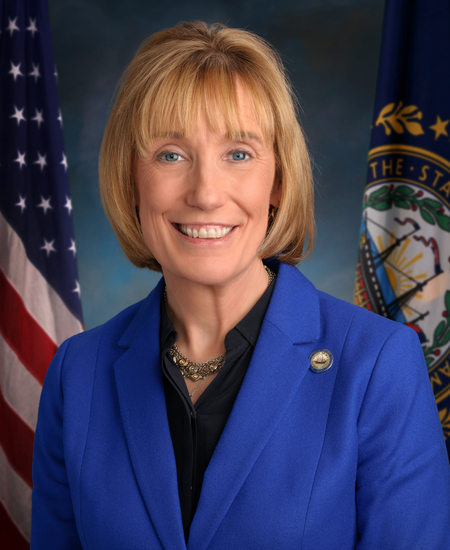
Margaret Wood Hassan
Margaret Wood Hassan Senate
D
Strong −
13% 31
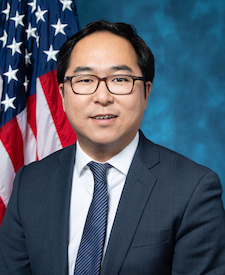
Andy Kim
Andy Kim Senate
D
Strong −
16% 31
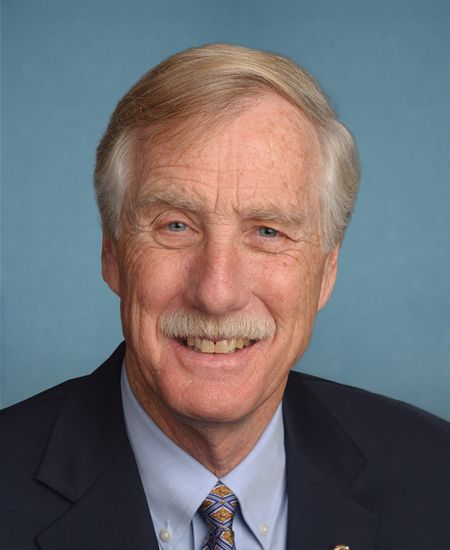
Angus S. King, Jr.
Angus S. King, Jr. Senate
I
Strong −
16% 31
Showing 651–660 of 1,286 bills

All criminal justice bills

in committee · United States · House Jan 7, 2025

HR 223: Preventing Unjust Red Flag Laws Act of 2025

This bill (HR 223) prohibits federal funding for implementing or enforcing "red flag laws," which allow courts to temporarily remove firearms from individuals without proper court review. It blocks all federal money from being used by any federal agency or to assist state/local governments in carrying out these laws. The bill does not ban red flag laws themselves but prevents federal financial support for their enforcement.
in committee · United States · House Dec 11, 2025

HR 6548: DHS Suicide Prevention and Resiliency for Law Enforcement Act

This bill establishes the Law Enforcement Mental Health and Wellness Program within the Department of Homeland Security (DHS) to address suicide prevention and mental health support for DHS law enforcement personnel. It directly affects officers and agents in DHS components like U.S. Customs and Border Protection, Immigration and Customs Enforcement, the Secret Service, and Transportation Security Administration. Key provisions require confidential data collection on mental health and suicides, mandatory annual suicide prevention training for officers (including during hiring, promotions, and transitions), peer support programs, and policies prohibiting retaliation for seeking mental health assistance. The program also mandates annual reports to Congress and requires DHS components to improve access to confidential counseling resources and support for officers’ families.
in committee · United States · House Apr 17, 2025

HR 2948: Safer Neighborhoods Gun Buyback Act of 2025

HR 2948, the Safer Neighborhoods Gun Buyback Act of 2025, authorizes $360 million annually from 2025-2027 to fund gun buyback programs across the country. The bill creates a grant program for states, local governments, tribal governments, and eligible gun dealers to collect firearms from individuals using "smart prepaid cards" that cannot be used to purchase guns. Participants would pay 125% of a gun's market value (with possible increases for modified weapons) and must destroy all collected firearms and ammunition within 30 days. The program requires criminal background checks on all collected weapons and prohibits reselling any guns obtained through the initiative, with a new federal criminal provision making it illegal to use these cards for firearm transactions.
Sub-Topics Firearms
in committee · United States · House Mar 21, 2025

HR 2281: Strengthening Job Corps Act of 2025

The Strengthening Job Corps Act of 2025 amends the Workforce Innovation and Opportunity Act to update the Job Corps program, which provides job training, education, and residential services to young adults aged 16-24 (with age limits extended to 28 for individuals with disabilities or justice involvement). Key provisions include requiring Job Corps campus operators to consider student outcomes like employment rates, educational attainment, and earnings when selecting operators, and establishing new performance metrics for evaluating campus effectiveness. The bill modifies recruitment and screening processes, updates funding levels for 2026-2031 with specific allocations for campus construction and rehabilitation, and expands eligibility to include opportunity youth and low-income individuals in qualified opportunity zones. These changes aim to improve program outcomes for young people seeking job training and education opportunities.
in committee · United States · House Feb 12, 2025

HR 1274: PROTECT Our Children Reauthorization Act of 2025

HR 1274, the PROTECT Our Children Reauthorization Act of 2025, reauthorizes and updates key provisions of the 2008 PROTECT Our Children Act to strengthen efforts against child exploitation. The bill requires the Department of Justice to update its National Strategy for Child Exploitation Prevention and Interdiction every four years instead of every two years, with detailed requirements for analyzing trends, assessing resources, and reviewing Internet Crimes Against Children (ICAC) task force effectiveness. It establishes annual funding levels of $70 million for 2026, $80 million for 2027, and $90 million for 2028 for the ICAC Task Force Program, which directly affects federal, state, local, tribal, and military law enforcement agencies working on child exploitation cases. The legislation also includes limited liability protections for ICAC task forces and their personnel when making prioritization decisions about child exploitation cases. These changes aim to improve coordination, resource allocation, and effectiveness in combating child exploitation crimes across multiple jurisdictions.
in committee · United States · House Jan 16, 2025

HR 544: To provide a private right of action against the maker of any component of a ghost gun, and any person who facilitated a sale of the ghost gun, for injury or death resulting from the use of the ghost gun.

HR 544 creates a new federal civil lawsuit pathway allowing individuals injured or families of those killed by ghost guns to sue the maker of any component or anyone who facilitated the sale. It directly affects victims, their families, and states/political subdivisions where the injury occurred, targeting manufacturers and sellers of unserialized firearms (defined as ghost guns lacking required serial numbers). The bill establishes a private right of action in U.S. district court for damages, including consequential losses, while including limited defenses for self-defense or police actions responding to imminent threats. This policy change modifies civil liability for ghost gun-related harm without altering criminal law or gun ownership rights.
Sub-Topics Courts Firearms Policing
in committee · United States · House Jun 13, 2025

HR 3950: Truth in Gender Act of 2025

HR 3950, the Truth in Gender Act of 2025, requires U.S. federal agencies to define and enforce "sex" based on biological characteristics at conception (male/female), replacing "gender" in all official policies and communications. It mandates government-issued IDs (like passports) to reflect biological sex, prohibits federal funding for programs promoting "gender ideology," and directs agencies to rescind policies allowing gender identity to override sex in areas like prison housing and single-sex facilities. The bill directly affects federal agencies, contractors receiving federal funds, and individuals interacting with government services, such as those applying for IDs or accessing gender-segregated spaces. Key provisions include requiring all agency forms to list "sex" (not gender), revising prison medical policies to ban procedures altering appearance to match gender identity, and directing the DOJ to clarify sex-based protections under civil rights law.
in committee · United States · House Jan 31, 2025

HR 863: National Human Trafficking Database Act

HR 863, the National Human Trafficking Database Act, requires state law enforcement and public health agencies to collect and report human trafficking data to the federal government. Covered state agencies must gather annual data on prosecutions, survivor services, anti-trafficking organization locations, and anonymized trafficking trends by county, then submit it to the Justice Department. The data will be published online in a public database showing county-level rates, top trafficking areas, and federal prosecution numbers, while strictly protecting survivor identities. States will receive $50 million annually in grants to support this data collection effort. The law mandates confidentiality for survivors and prohibits using the data for funding decisions or publicizing personal details.
in committee · United States · House Aug 18, 2025

HR 4971: Terrorist Watchlist Data Accuracy and Transparency Act

HR 4971, the Terrorist Watchlist Data Accuracy and Transparency Act, requires the Department of Homeland Security (DHS) to implement new quality checks before submitting individuals for inclusion on terrorism watchlists (like the No Fly List). It mandates pre-submission reviews to verify data accuracy, annual audits of U.S. person nominations, and monthly random audits of all nominations to ensure ongoing validity. DHS must notify the FBI’s Terrorist Screening Center within 24 hours if errors are found and seek corrections, with a 30-day consultation period if unresolved. The bill also requires annual reports to Congress tracking corrections and retractions for both U.S. and non-U.S. persons on watchlists.
in committee · United States · Senate Jul 28, 2025

S 2476: Disability and Age in Jury Service Nondiscrimination Act

This bill prohibits federal courts from excluding potential jurors based on disability or age. It amends jury selection rules to replace the term "infirmity" with "disability that cannot be reasonably accommodated" and explicitly states that people cannot be disqualified from serving on federal juries due to disability if reasonable accommodations would allow them to serve. The law requires courts to consider reasonable accommodations for qualified jurors with disabilities or age-related needs. This directly affects individuals with disabilities and older adults who may have been excluded from federal jury service under previous rules.
Tags People with Disabilities
Showing 651 to 660 of 1,286 bills
Previous 1 … 65 66 67 … 129 Next