Issue · Criminal Justice

Criminal Justice

Every criminal justice bill, vote, and legislator stance in United States, automatically classified by Maddy, our AI policy reader.

Total bills
1,286
119th Congress
Top supporter
Alan Armstrong
86% support rate
Top opponent
Amy Klobuchar
13% support rate
Ranked legislators
10
5 support · 5 oppose
Key legislators

Who's moving criminal justice in United States

Legislators moving criminal justice in United States
Legislator Party Stance Support rate Decisive votes
AA
Alan Armstrong Senate
R
Strong +
86% 28
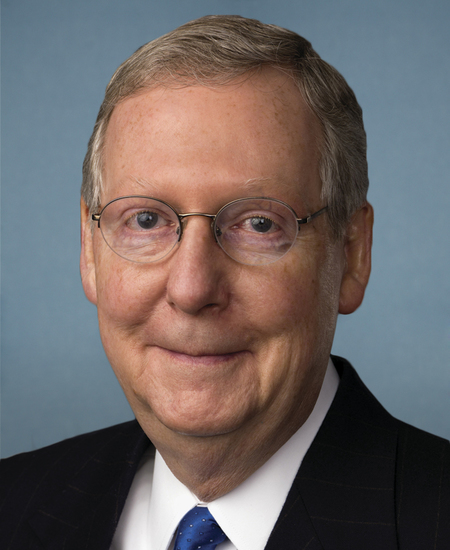
Mitch McConnell
Mitch McConnell Senate
R
Strong +
84% 31
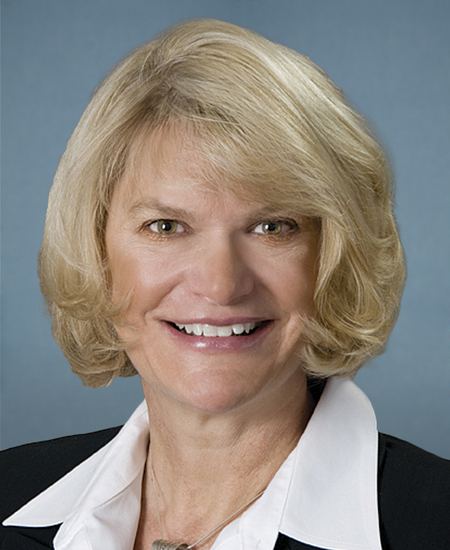
Cynthia M. Lummis
Cynthia M. Lummis Senate
R
Strong +
80% 30
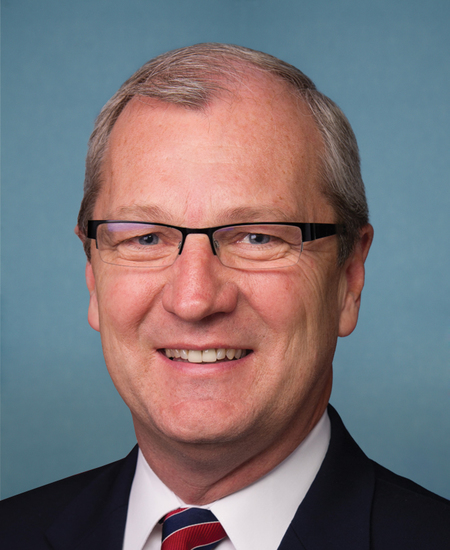
Kevin Cramer
Kevin Cramer Senate
R
Strong +
80% 30
Bernie Moreno
Bernie Moreno Senate
R
Support
77% 31
Amy Klobuchar
Amy Klobuchar Senate
D
Strong −
13% 31
Catherine Cortez Masto
Catherine Cortez Masto Senate
D
Strong −
13% 31
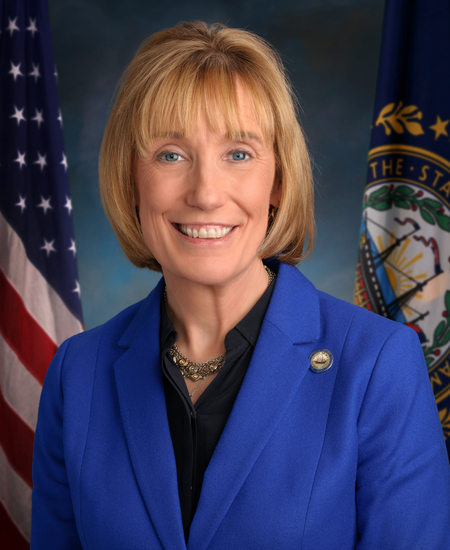
Margaret Wood Hassan
Margaret Wood Hassan Senate
D
Strong −
13% 31
Andy Kim
Andy Kim Senate
D
Strong −
16% 31
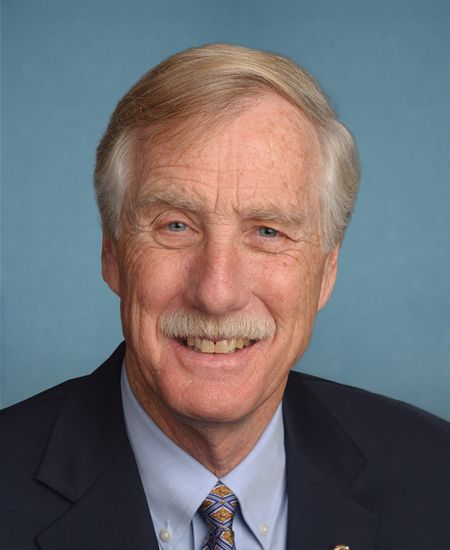
Angus S. King, Jr.
Angus S. King, Jr. Senate
I
Strong −
16% 31
Showing 661–670 of 1,286 bills

All criminal justice bills

in committee · United States · House Jun 23, 2025

HR 4066: Countering White Supremacist Extremism Act

This bill requires the Department of Homeland Security to develop a threat assessment and reference aid focused on foreign white supremacist extremist organizations that use violence to promote white racial superiority. The assessment will be shared with state, local, and tribal law enforcement agencies (including fusion centers) and, upon request, with online platforms to help identify violating content. It defines such organizations as foreign-based groups using unlawful force to advance white supremacy and mandates that the assessment include symbols they use. DHS must ensure the tool does not include names of individuals engaging in lawful political speech protected by the Constitution.
Sub-Topics Law Enforcement
in committee · United States · Senate Jun 12, 2025

SCONRES 14: A concurrent resolution urging the establishment of a United States Commission on Truth, Racial Healing, and Transformation.

SCONRES 14 is a symbolic congressional resolution urging the executive branch to establish a U.S. Commission on Truth, Racial Healing, and Transformation. It does not create the commission itself but calls for its formation to examine historical racial injustices affecting people of color, including slavery, discriminatory housing policies, and systemic inequities in healthcare, education, and voting rights. The commission would aim to address the root causes of racial division and promote efforts to eliminate persistent racial inequities. This resolution is procedural and does not impose binding requirements on the government.
Sub-Topics Civil Rights
passed · United States · Senate Dec 16, 2025

S 1510: Civil Rights Cold Case Records Collection Reauthorization Act

S 1510, the Civil Rights Cold Case Records Collection Reauthorization Act, requires federal, state, and local governments to make civil rights cold case records publicly available by default, with a presumption of immediate disclosure. The bill mandates that state and local governments holding such records can be reimbursed for costs related to digitizing, copying, or mailing these records to the federal Collection. It also removes exceptions for state/local government records and specifies that records created before January 1, 1990, must still be disclosed (unlike newer records). This bill directly affects state/local governments managing these historical records and the public seeking access to civil rights history.
Sub-Topics Civil Rights
passed · United States · Senate Jun 11, 2025

S 1136: DETERRENCE Act

S 1136, the DETERRENCE Act, adds sentencing enhancements for certain federal crimes when committed "knowingly at the direction of or in coordination with a foreign government or an agent of a foreign government." It applies to existing offenses including kidnapping (up to 10 additional years), murder-for-hire (up to 10 years), stalking (up to 10 years for serious cases), attacks on federal officials (up to 10 years), and threats against presidential staff (up to 10 years). The bill does not create new crimes but increases penalties for specific violations where foreign government coordination is proven. It directly affects individuals convicted under these provisions who are found to have acted with foreign government involvement.
in committee · United States · Senate Jun 3, 2025

S 1931: A bill to provide additional funding to States that provide certain rights to sexual assault survivors, and for other purposes.

This bill (S 1931) provides federal funding to states that meet specific standards for protecting sexual assault survivors' rights. States qualify for one of three funding tiers based on whether they have laws, regulations, or policies that provide rights matching federal standards under Section 3772 of Title 18 (e.g., right to be informed of case status, right to a safe environment during medical exams). The funding allocates 60% to states meeting the strictest standard, 25% to those meeting a moderate standard, and 15% to those meeting a less comprehensive standard. Additionally, the bill extends the minimum retention period for sexual assault evidence kits from "20 years or statute of limitations" to "at least 20 years" to preserve evidence for potential future investigations.
signed · United States · House Nov 19, 2025

HR 4405: Epstein Files Transparency Act

HR 4405, the Epstein Files Transparency Act, requires the U.S. Attorney General to publicly release all unclassified Department of Justice documents related to Jeffrey Epstein within 30 days of the law’s enactment. This includes investigations, flight logs, immunity deals, internal communications, and records about Epstein’s detention or death, while prohibiting redactions for "embarrassment" or political sensitivity. The law allows limited redactions only for victim privacy, child sexual abuse materials, active investigations, or national security (with justification), and mandates an unclassified summary for withheld classified information. The Attorney General must submit a detailed report to Congress within 15 days of release, listing all redactions and naming any government officials referenced in the materials.
Sub-Topics Drug Policy
in committee · United States · Senate Feb 3, 2025

S 361: Supporting Victims of Human Trafficking Act

S 361 amends the Trafficking Victims Protection Act of 2000 to adjust how federal grants assist human trafficking victims. It increases the maximum allowable administrative costs for grantees from 3% to up to 7% and from 5% to up to 10%, while requiring at least 95% of grant funds to go directly to victim services. The bill also adds "strengthening program administration and budgeting" as a permitted use of funds. These changes directly affect organizations receiving federal grants under the Trafficking Victims Protection Act, providing greater flexibility for operational costs while ensuring most funding supports victims.
in committee · United States · House Nov 20, 2025

HR 6208: No Surrogacy for Sex Offenders Act

HR 6208, the "No Surrogacy for Sex Offenders Act," makes it a federal crime for registered sex offenders to use interstate communication or services to enter surrogacy agreements where they intend to claim parental rights over a child. The bill specifically targets two scenarios: (1) sex offenders using interstate means for surrogacy with parental intent, and (2) individuals committing sex offenses during the surrogacy process (from initiation to birth). Penalties include fines or up to 18 years in prison. This law directly affects registered sex offenders and surrogacy arrangements involving them, aiming to prevent exploitation by prohibiting their participation in such agreements under federal criminal law.
Sub-Topics Corrections
passed · United States · House Jan 13, 2026

HR 6715: Child Predators Accountability Act

This bill amends U.S. Code sections 2251(a), 2260(a), and 2256 to clarify and strengthen laws against child sexual exploitation. It explicitly adds "or be depicted engaging in" to definitions of sexual exploitation and sexually explicit depictions involving minors, making it a crime to distribute material showing minors in such conduct - even if the minor did not physically participate. The law directly affects prosecutors, defendants accused of distributing child sexual abuse material, and minors depicted in such images. The key change ensures that intentionally including minors in sexually explicit visual depictions (via photos or videos) is prosecutable under existing federal law.
Sub-Topics Human Trafficking
in committee · United States · House Jun 12, 2025

HR 3968: School Violence Prevention Act

HR 3968, the School Violence Prevention Act, creates a federal grant program to fund school-based violence prevention programs in communities with severe gun violence. It authorizes $25 million annually (2025-2031) for grants to partnerships between state/local education agencies and community nonprofits in areas experiencing high homicide rates (e.g., 35+ homicides annually) or double the national violent crime arrest rate for youth. Grants must support evidence-based programs for K-12 students - including trauma-informed counseling, conflict resolution skills, mental health access, and community engagement - while requiring annual data collection on outcomes like graduation rates. All programs must be evaluated by grantees and independent researchers, with reports shared publicly and submitted to Congress every three years.
Showing 661 to 670 of 1,286 bills
Previous 1 … 66 67 68 … 129 Next