Issue · Criminal Justice

Criminal Justice

Every criminal justice bill, vote, and legislator stance in United States, automatically classified by Maddy, our AI policy reader.

Total bills
1,260
119th Congress
Top supporter
Alan Armstrong
86% support rate
Top opponent
Amy Klobuchar
13% support rate
Ranked legislators
10
5 support · 5 oppose
Key legislators

Who's moving criminal justice in United States

Legislators moving criminal justice in United States
Legislator Party Stance Support rate Decisive votes
AA
Alan Armstrong Senate
R
Strong +
86% 28
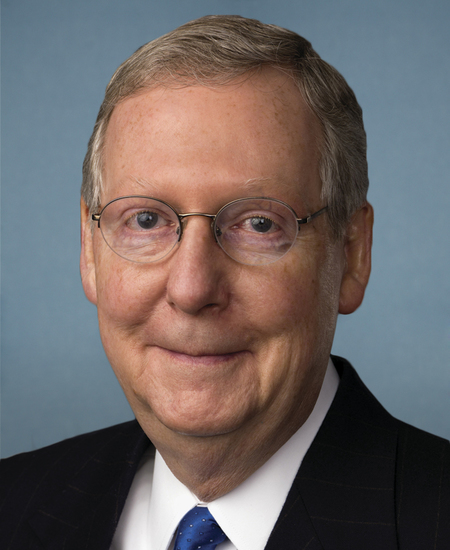
Mitch McConnell
Mitch McConnell Senate
R
Strong +
84% 31
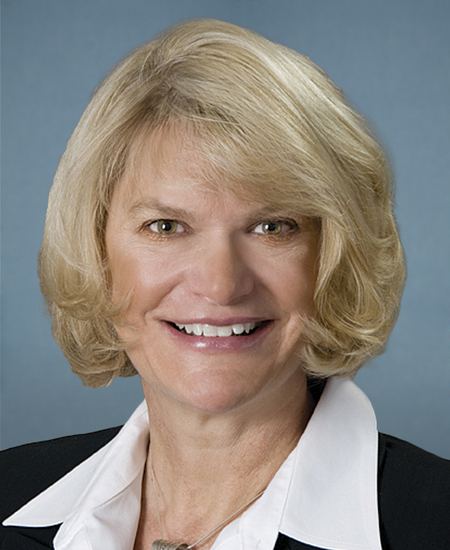
Cynthia M. Lummis
Cynthia M. Lummis Senate
R
Strong +
80% 30
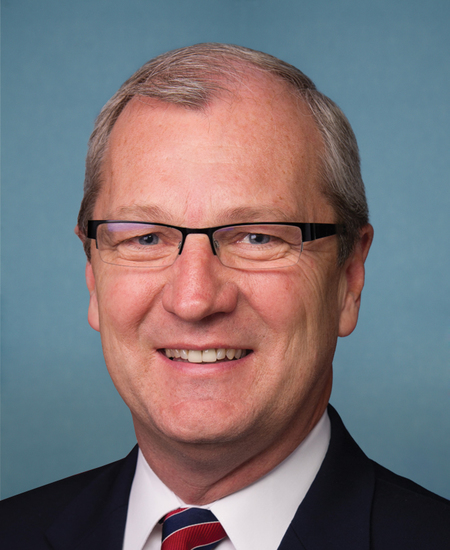
Kevin Cramer
Kevin Cramer Senate
R
Strong +
80% 30
Bernie Moreno
Bernie Moreno Senate
R
Support
77% 31
Amy Klobuchar
Amy Klobuchar Senate
D
Strong −
13% 31
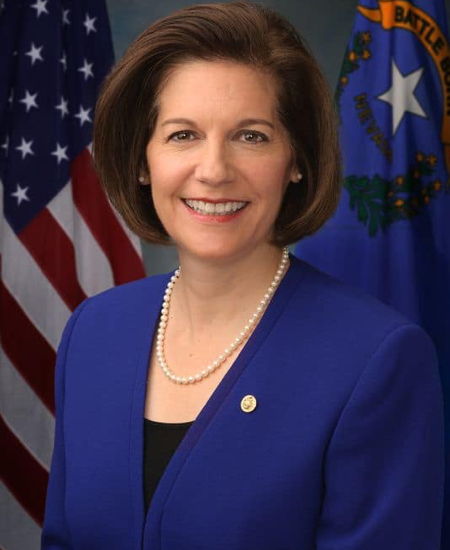
Catherine Cortez Masto
Catherine Cortez Masto Senate
D
Strong −
13% 31
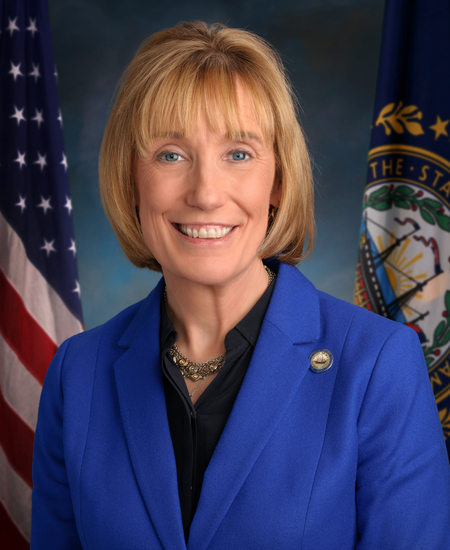
Margaret Wood Hassan
Margaret Wood Hassan Senate
D
Strong −
13% 31
Andy Kim
Andy Kim Senate
D
Strong −
16% 31
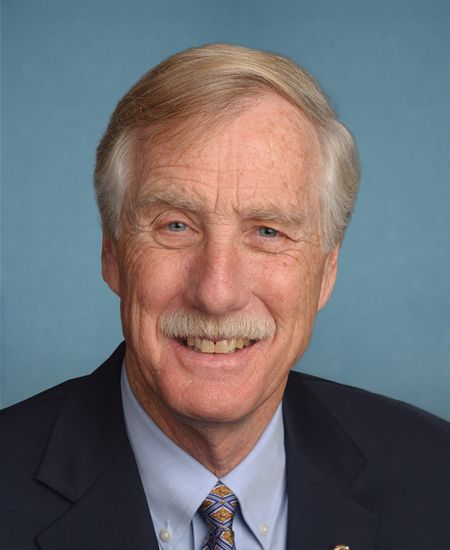
Angus S. King, Jr.
Angus S. King, Jr. Senate
I
Strong −
16% 31
Showing 1,121–1,130 of 1,260 bills

All criminal justice bills

passed · United States · Senate Oct 7, 2025

SRES 441: A resolution designating the week of October 5, 2025, through October 11, 2025, as "National Community Policing Week".

This resolution designates the week of October 5-11, 2025, as "National Community Policing Week" to recognize the role of community policing in building trust between law enforcement and communities. It does not create new laws or allocate funds; instead, it formally acknowledges community policing as a strategy for improving public safety and relationships. The resolution encourages communities, law enforcement agencies, and officials to focus on strengthening trust and collaboration through community policing efforts. It is a symbolic gesture with no direct impact on policy or affected individuals.
in committee · United States · Senate Jun 5, 2025

S 1975: Dark Web Interdiction Act of 2025

The Dark Web Interdiction Act of 2025 creates a new federal task force within the FBI to target drug trafficking and illegal marketplaces operating on the dark web. It directly affects law enforcement agencies (including the FBI, DEA, and Homeland Security) by requiring them to investigate, disrupt, and dismantle dark web marketplaces selling drugs, weapons, and stolen data. Key provisions include establishing the Joint Criminal Opioid and Darknet Enforcement Task Force, mandating specialized training for investigators on dark web evidence collection, and requiring annual reports on task force activities and virtual currency use in illicit transactions. The bill amends the Controlled Substances Act to explicitly prohibit distributing controlled substances via the dark web, with enhanced penalties for violations.
in committee · United States · House Jul 22, 2025

HJRES 108: Proposing an amendment to the Constitution of the United States providing that there is no immunity from criminal prosecution for an act on the grounds that such act was within the constitutional authority or official duties of an individual, and providing that the President may not grant a pardon to himself or herself.

H.J. Res. 108 proposes a constitutional amendment to remove legal immunity for federal officials, including the President, from criminal prosecution for actions taken while performing official duties. It would prohibit the President from granting pardons to themselves and eliminate the defense that "official authority" excuses violations of federal or state law (with limited exceptions for certain congressional actions). If ratified, this amendment would require Congress to pass implementing laws to enforce these changes. The proposal is currently in the House Judiciary Committee and requires approval by three-fourths of state legislatures to become part of the Constitution.
in committee · United States · House Dec 18, 2025

HR 6887: Stop Crimes Against Children Act

HR 6887, the Stop Crimes Against Children Act, amends the PROTECT Our Children Act of 2008 to require federal agencies to develop specific plans. These plans must coordinate with nonprofit child advocacy organizations and universities to prevent, identify, and respond to crimes against children (including abuse, trafficking, and exploitation), and provide evidence-based guidance for supporting victims. The bill also mandates federal recommendations for state, local, and tribal law enforcement on best practices for preventing child crimes and supporting victims. It directly affects federal agencies, law enforcement, and organizations working with child victims. The key change is adding these coordination and recommendation requirements to existing federal strategy.
passed · United States · House Sep 16, 2026

HR 5109: Transportation Worker Identification Credential Efficiency Act

HR 5109 requires the Transportation Security Administration (TSA) to create guidelines helping individuals in federal, state, and local prisons prepare for and apply for Transportation Worker Identification Credential (TWIC) cards *before* their release. The bill directs TSA to develop specific procedures for prison staff to assist inmates in pre-applying for TWIC cards and navigating appeals or waivers if initially denied. This aims to streamline access to TWIC cards - required for many port and maritime jobs - allowing returning citizens to secure employment faster after release. The bill cites that 525,000 jobs in Louisiana alone depend on TWIC access, and faster credential acquisition supports reintegration efforts.
Sub-Topics Corrections
in committee · United States · House Jan 14, 2025

HR 378: Thin Blue Line Act

HR 378, the Thin Blue Line Act, adds a new aggravating factor for the death penalty in federal cases where a defendant kills or targets a law enforcement officer, firefighter, or other first responder. It specifically applies when the victim was killed or targeted while performing official duties, because of those duties, or due to their status as a public official. This amendment to federal death penalty law would make the death penalty a potential sentencing option for such crimes, as the killing would be considered an aggravating factor. The bill directly affects defendants convicted of homicides meeting these specific circumstances involving public safety personnel.
Sub-Topics Law Enforcement Sentencing Tags Public Safety
in committee · United States · Senate Jan 27, 2026

S 3704: COP Act

S 3704 (COP Act) adds new criminal provisions targeting threats to distribute images of minors in sexually explicit conduct. It makes it a federal offense to knowingly threaten to share such images with the intent that the minor (or someone believed to be a minor) create or send similar images. The bill directly affects individuals who make these specific threats, expanding existing laws against child exploitation material. This amendment clarifies that threatening to distribute images to coerce minors into creating explicit content is punishable under federal law.
Sub-Topics Human Trafficking
in committee · United States · House Nov 19, 2025

HR 6155: Federal Carjacking Enforcement Act

This bill amends Section 2119 of Title 18 (carjacking statute) to clarify the legal definition of the offense. It removes the phrase "with the intent to cause death or serious bodily harm" from the main definition, replacing it with "knowingly," and refines the death penalty provision to specify that death must result from a carjacking taken with the intent to cause death or serious bodily harm. The change streamlines the statute by focusing on the act of taking a vehicle "knowingly" rather than requiring proof of intent to cause harm as a core element. This technical amendment affects how federal prosecutors define and prosecute carjacking cases under existing law.
in committee · United States · House Jun 26, 2025

HR 4187: Stop Hate Crimes Act of 2025

HR 4187, the Stop Hate Crimes Act of 2025, amends federal hate crime law to clarify how bias motivation is proven. It changes the standard so that a protected characteristic (like race, religion, disability) only needs to be "a contributory motivating factor" for a crime, not the sole reason. This directly affects federal hate crime prosecutions by making it easier for prosecutors to prove bias was involved. The bill modifies Section 249(a) of Title 18, U.S. Code, to update the legal language defining hate crimes.
Sub-Topics Civil Rights Courts
in committee · United States · House May 24, 2025

HR 3598: Deescalation Drone Pilot Program Act of 2025

HR 3598, the Deescalation Drone Pilot Program Act of 2025, establishes a federal pilot program to test nonlethal drones for law enforcement during active shooter events. The program, managed by the FAA, will review nonlethal devices (like sound emitters or cameras) for drones, develop training and safety protocols, and assess effectiveness in indoor scenarios to increase officer safety. It requires drones to be manufactured in the U.S. and mandates a report to Congress within 3 months of the pilot's conclusion, followed by rulemaking to create a formal approval process for law enforcement use. The bill directly affects Federal, State, local, and Tribal law enforcement agencies responding to active shooter events as defined by the legislation.
Sub-Topics Law Enforcement
Showing 1,121 to 1,130 of 1,260 bills