Issue · Criminal Justice

Criminal Justice

Every criminal justice bill, vote, and legislator stance in United States, automatically classified by Maddy, our AI policy reader.

Total bills
1,260
119th Congress
Top supporter
Alan Armstrong
86% support rate
Top opponent
Amy Klobuchar
13% support rate
Ranked legislators
10
5 support · 5 oppose
Key legislators

Who's moving criminal justice in United States

Legislators moving criminal justice in United States
Legislator Party Stance Support rate Decisive votes
AA
Alan Armstrong Senate
R
Strong +
86% 28
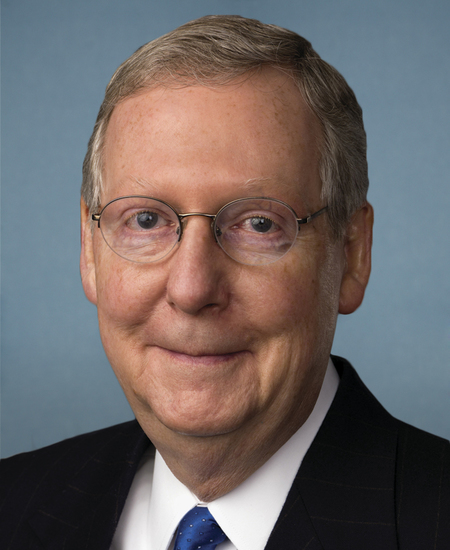
Mitch McConnell
Mitch McConnell Senate
R
Strong +
84% 31
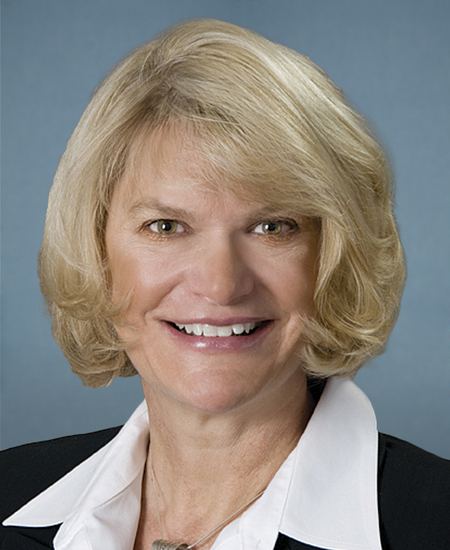
Cynthia M. Lummis
Cynthia M. Lummis Senate
R
Strong +
80% 30
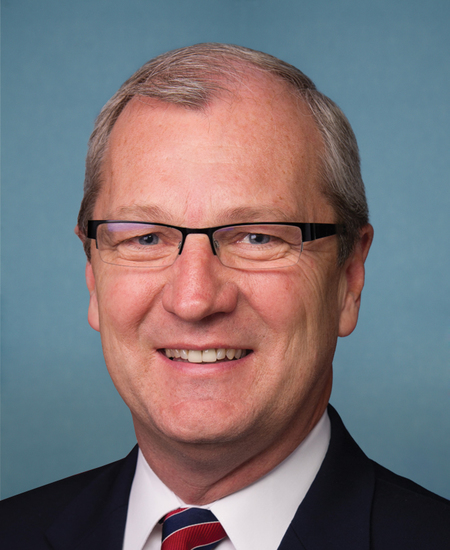
Kevin Cramer
Kevin Cramer Senate
R
Strong +
80% 30
Bernie Moreno
Bernie Moreno Senate
R
Support
77% 31
Amy Klobuchar
Amy Klobuchar Senate
D
Strong −
13% 31
Catherine Cortez Masto
Catherine Cortez Masto Senate
D
Strong −
13% 31
Margaret Wood Hassan
Margaret Wood Hassan Senate
D
Strong −
13% 31
Andy Kim
Andy Kim Senate
D
Strong −
16% 31
Angus S. King, Jr.
Angus S. King, Jr. Senate
I
Strong −
16% 31
Showing 1,101–1,110 of 1,260 bills

All criminal justice bills

in committee · United States · Senate Dec 9, 2025

S 3394: SAFE Act

Sentencing Accountability For Exploitation Act or the SAFE Act This bill directs the U.S. Sentencing Commission to review and amend its guidelines and policy statements applicable to federal criminal offenses involving the production, receipt, transport, shipment, or distribution of child sexual abuse material to (1) account for the actual and potential harm from the offense and changes since the last amendments with respect to the typical offense behavior and modern technologies, and (2) better reflect the spectrum of offender culpability.
in committee · United States · Senate Apr 30, 2025

SRES 189: A resolution expressing support for the designation of April 1, 2025, through April 30, 2025, as "Fair Chance Jobs Month".

This resolution (SRES 189) is a symbolic Senate measure expressing support for designating April 1-30, 2025, as "Fair Chance Jobs Month." It does not create new law but aims to raise awareness about employment barriers faced by people with criminal records, including systemic hiring restrictions and lack of access to licenses or stable jobs. The resolution urges efforts to dismantle these barriers, expand workforce programs for returning citizens, and promote fair-chance hiring practices. It directly affects formerly incarcerated individuals and employers seeking to hire them, focusing on policy changes like reducing licensing restrictions and connecting job seekers with opportunities.
passed · United States · Senate Jan 29, 2025

SRES 46: A resolution raising awareness and encouraging the prevention of stalking by designating January 2025 as "National Stalking Awareness Month".

SRES 46 designates January 2025 as "National Stalking Awareness Month" to promote public education about stalking. The resolution highlights stalking's prevalence (affecting 1 in 3 women and 1 in 6 men in the U.S.) and encourages efforts by victim services, law enforcement, schools, and organizations to support victims and improve responses. It does not create new laws but urges increased awareness and resource availability through coordinated community action during this designated month.
in committee · United States · House Dec 17, 2025

HR 6789: Federal Prisons Naloxone Access Act of 2025

HR 6789, the Federal Prisons Naloxone Access Act of 2025, requires federal prisons to maintain naloxone kits in all correctional facilities, including medical units, staff areas, and common spaces where incarcerated people gather. The bill mandates annual training for staff and incarcerated individuals on opioid overdose recognition and kit use, ensures proper storage and expiration checks, and requires detailed documentation of each kit administration. It also prohibits holding incarcerated people liable for good-faith naloxone use during an overdose and requires annual reports to Congress on kit availability, overdose incidents, training, and expired kits. The law authorizes $6 million for 2026 and $2 million annually through 2028 for implementation, including kit purchases and training.
in committee · United States · House Nov 20, 2025

HR 6173: Public Transit Crime Prevention Act

This bill creates federal crimes targeting vandalism and assaults on public transit systems. It makes damaging vehicles or facilities with graffiti punishable by up to 5 years in prison (10 years for repeat offenses or $1,000+ damage), and assaults on workers or passengers punishable by 5-20 years (15-20 years with weapons, injury, or prior convictions). Courts must order full restitution for property damage. The law applies only to transit systems using federal funds, affecting interstate commerce, or involved in commerce.
in committee · United States · House Sep 30, 2025

HR 5649: Judicial Accountability for Public Safety Act of 2025

HR 5649, the Judicial Accountability for Public Safety Act of 2025, allows individuals injured by a judicial officer's actions to sue for civil damages. It specifically targets cases where a judge intentionally ignored public safety risks or acted with gross negligence during bond or sentencing decisions in criminal cases. Victims must prove their injury with clear and convincing evidence, and courts may award compensatory or punitive damages. This bill removes legal immunity for such judges in these specific circumstances, applying to both federal and state judges handling criminal cases, but does not apply to actions taken in good faith or within normal judicial discretion.
in committee · United States · House Aug 22, 2025

HR 5023: Fentanyl Kills Act

HR 5023, the Fentanyl Kills Act, redefines "trafficked fentanyl" to broadly cover activities like producing, distributing, financing, or transporting illicit fentanyl, its precursors, or related substances - both domestically and internationally with intent to distribute in the U.S. It directly affects individuals involved in fentanyl trafficking by automatically classifying such offenses as "attempted murder" under existing federal law. The bill adds specific definitions for trafficking activities (including manufacturing, distributing, or possessing intent) and mandates that convicted traffickers face penalties under murder statutes. This changes sentencing by treating fentanyl trafficking as an attempted homicide, increasing penalties for those involved in the supply chain.
in committee · United States · House Jan 28, 2025

HR 749: Stop Illegal Reentry Act

This bill increases criminal penalties for individuals who re-enter the U.S. after being deported, removed, or excluded. It sets a maximum 5-year prison sentence for most cases, but adds up to 10 years for those with prior drug/crime convictions or multiple prior removals. For serious cases - such as aggravated felonies or two prior reentry convictions - it mandates a 5-20 year prison term. The law directly affects people who return without authorization after formal immigration removal proceedings.
in committee · United States · Senate Nov 18, 2025

S 3186: Constitutional Accountability Act

The Constitutional Accountability Act (S 3186) amends Section 1983 to expand liability for constitutional violations by law enforcement. It directly affects state/local governments, police departments, and federal entities by removing barriers that currently limit their accountability for officers' actions. Key provisions require municipalities to be held liable for constitutional violations by their officers (similar to private employers under "respondeat superior"), eliminate sovereign immunity for states under the 14th Amendment, and clarify that federal entities waive sovereign immunity. This change aims to strengthen enforcement of constitutional rights by making oversight mechanisms more consistent and accessible to victims.
Sub-Topics Law Enforcement Policing Tags Civil Liberties
in committee · United States · Senate Jul 31, 2025

S 2590: Fresh Start Act of 2025

The Fresh Start Act of 2025 provides federal grants to states with existing laws allowing automatic expungement or sealing of criminal records without requiring individuals to pay fees, fines, or take action. States meeting these criteria can apply for grants of up to $5 million to build technology infrastructure enabling automatic record clearance for eligible individuals. Grants cover up to 75% of infrastructure costs, with states required to report annually on clearance numbers disaggregated by race, ethnicity, and gender. The program is funded at $50 million per year from 2026 through 2030.
Showing 1,101 to 1,110 of 1,260 bills