Issue · Criminal Justice

Criminal Justice

Every criminal justice bill, vote, and legislator stance in United States, automatically classified by Maddy, our AI policy reader.

Total bills
1,260
119th Congress
Top supporter
Alan Armstrong
86% support rate
Top opponent
Amy Klobuchar
13% support rate
Ranked legislators
10
5 support · 5 oppose
Key legislators

Who's moving criminal justice in United States

Legislators moving criminal justice in United States
Legislator Party Stance Support rate Decisive votes
AA
Alan Armstrong Senate
R
Strong +
86% 28
Mitch McConnell
Mitch McConnell Senate
R
Strong +
84% 31
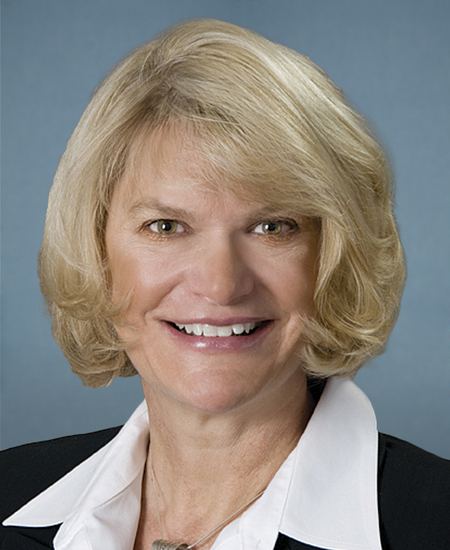
Cynthia M. Lummis
Cynthia M. Lummis Senate
R
Strong +
80% 30
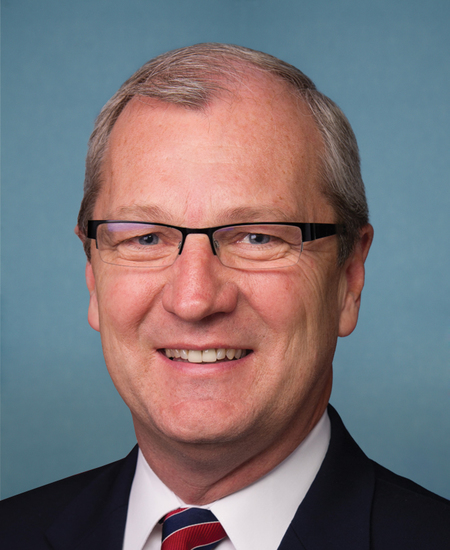
Kevin Cramer
Kevin Cramer Senate
R
Strong +
80% 30
Bernie Moreno
Bernie Moreno Senate
R
Support
77% 31
Amy Klobuchar
Amy Klobuchar Senate
D
Strong −
13% 31
Catherine Cortez Masto
Catherine Cortez Masto Senate
D
Strong −
13% 31
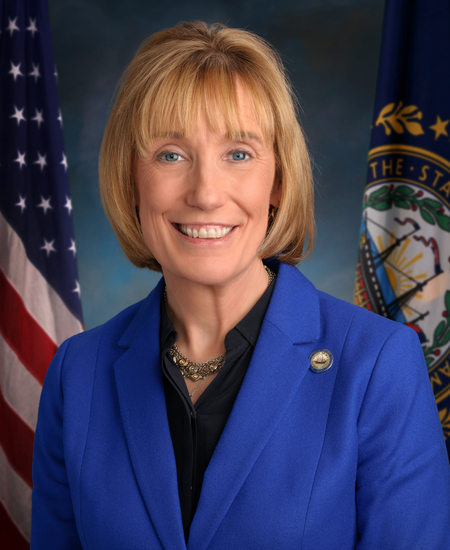
Margaret Wood Hassan
Margaret Wood Hassan Senate
D
Strong −
13% 31
Andy Kim
Andy Kim Senate
D
Strong −
16% 31
Angus S. King, Jr.
Angus S. King, Jr. Senate
I
Strong −
16% 31
Showing 1,091–1,100 of 1,260 bills

All criminal justice bills

in committee · United States · Senate Oct 30, 2025

S 3089: STOP Act

This bill (S 3089, the STOP Act) creates a new federal offense for barricading during arrest evasion. It defines "barricade" as blocking access to a location while refusing to comply with a law enforcement officer's orders during an arrest attempt. The law makes it illegal to barricade oneself in such situations or to assist others in doing so, with penalties of up to 3 years in prison for basic violations and up to 5 years if weapons are involved, serious harm occurs, or others are present. The bill directly affects individuals resisting arrest by blocking access to officers, not the general public.
passed · United States · Senate Jun 15, 2026

S 1890: Carla Walker Act

The Carla Walker Act establishes two competitive grant programs to fund forensic DNA analysis and equipment for public law enforcement and medical examiner offices. It provides $5 million annually (2025-2029) for eligible entities like state police, prosecutors' offices, medical examiners, and coroners to purchase equipment or conduct whole-genome sequencing (testing 100,000+ genetic markers) to solve cold cases or identify unknown remains when standard DNA databases fail. Grants cannot cover staffing, travel, or general equipment but require compliance with DOJ’s 2019 forensic genealogy policy and mandate detailed annual reports on case outcomes. The law aims to improve investigative capabilities through specialized forensic genetic genealogy while maintaining strict oversight and reporting requirements.
in committee · United States · House Oct 3, 2025

HR 5172: Strong Sentences for Safer D.C. Streets Act of 2025

This bill increases mandatory minimum prison sentences for several serious crimes in the District of Columbia. It mandates life imprisonment without parole for first-degree murder, raises the minimum sentence for rape to 25 years (30 years if the offender has a prior violent crime conviction), and sets new minimums of 10 years for second-degree murder, kidnapping, and burglary. Carjacking without a weapon now requires a minimum of 10 years, while armed carjacking requires 20 years. These changes apply to individuals charged on or after the bill's enactment date and affect all D.C. criminal cases involving these offenses.
in committee · United States · House May 13, 2025

HR 3366: EAGLE Act of 2025

The EAGLE Act of 2025 establishes a $10 million federal grant program to help small local law enforcement agencies (under 350 employees) pay for accredited certification. Agencies must apply demonstrating financial need and specify costs for accreditation fees, on-site assessments, or extension fees charged by recognized bodies like CALEA. Grant funds cover only direct costs related to achieving or maintaining accredited status, not general operations. The program requires the Attorney General to set up the grants within 90 days of the bill becoming law.
Sub-Topics Law Enforcement
in committee · United States · Senate Jan 9, 2025

S 50: Transnational Criminal Organization Illicit Spotter Prevention and Elimination Act

This bill, S 50 (Transnational Criminal Organization Illicit Spotter Prevention and Elimination Act), creates new federal crimes targeting actions that hinder border security. It makes it illegal to knowingly share law enforcement location data (like border patrol movements) to aid immigration, customs, or border control crimes, and to destroy or damage border infrastructure like fences or sensors. The bill also expands firearm penalties for individuals using guns during alien smuggling crimes, specifically linking these enhancements to violations of immigration laws. Violations carry fines, up to 10 years in prison (or 20 years if a firearm is involved), and apply to individuals directly involved in obstructing border enforcement.
in committee · United States · Senate Jan 13, 2026

S 3625: Qualified Immunity Abolition Act of 2026

This bill would remove "qualified immunity" as a legal defense for law enforcement officers in civil rights lawsuits. It amends federal law (42 U.S.C. 1983) to eliminate four specific excuses officers can currently use, including claiming they reasonably believed their actions were lawful or that constitutional rights weren't clearly established. The change applies to all lawsuits filed after enactment against federal, state, or local police officers who acted under official authority. This means officers could face civil liability for constitutional violations even if they thought their conduct was lawful at the time.
Sub-Topics Civil Rights Law Enforcement Policing Tags Civil Liberties
in committee · United States · House Mar 31, 2025

HR 2502: Law Enforcement Training for Mental Health Crisis Response Act of 2025

This bill establishes a federal grant program to fund mental health crisis response training for law enforcement and corrections officers. It provides up to $10 million annually for state, local, and tribal agencies to cover training costs, including travel and lodging, for officers responding to mental health crises. The training must be evidence-based, developed with healthcare professionals and people with lived mental health experience, and cover de-escalation, empathy, community resources, and safety protocols. Agencies applying must demonstrate current training gaps, officer safety records, and how the training will reduce injuries to officers and the public during mental health emergencies. The grants are supplemental to existing funding and require annual reporting on training participation and outcomes.
in committee · United States · House Jan 16, 2025

HR 520: Empowering Law Enforcement To Fight Sex Trafficking Demand Act of 2025

HR 520 allows law enforcement agencies to use Byrne JAG funds for programs specifically targeting the demand behind sex trafficking, such as initiatives aimed at reducing the market for commercial sex acts involving trafficked individuals. This bill amends existing federal funding rules to explicitly authorize these funds for "programs to combat human trafficking (including programs to reduce the demand for trafficked persons)." It directly affects state and local law enforcement agencies that receive Byrne JAG grants by expanding how they can allocate those resources. The key change is creating a dedicated funding category for demand reduction efforts, moving beyond solely supporting victim services or investigations.
in committee · United States · House Jan 9, 2025

HR 263: Transnational Criminal Organization Illicit Spotter Prevention and Elimination Act

HR 263, the Transnational Criminal Organization Illicit Spotter Prevention and Elimination Act, creates new federal criminal penalties for actions aiding criminal groups evading border controls. It makes it a crime to knowingly transmit law enforcement locations or movements to help with immigration, customs, or border-related crimes, punishable by fines or up to 10 years in prison. The bill also criminalizes damaging or tampering with border infrastructure like fences or sensors, with penalties increasing to 20 years if a firearm is involved. These provisions directly affect individuals assisting transnational criminal organizations in circumventing U.S. border security measures. The law aims to strengthen enforcement against those who undermine border control systems.
in committee · United States · House Jun 10, 2025

HR 59: Mens Rea Reform Act of 2025

This bill establishes a default rule for federal criminal prosecutions: prosecutors must prove beyond reasonable doubt that defendants knowingly acted unlawfully for most offenses. It applies to all federal crimes punishable by imprisonment or a $2,500+ fine (excluding certain military offenses and jurisdictional elements), requiring proof of awareness of unlawfulness unless the law specifies a different mental state. The rule affects nearly all federal criminal defendants by clarifying that "knowingly" is the default standard for unaddressed elements of a crime. The law applies to cases filed after its enactment, with limited exceptions for retroactive application to prior cases.
Showing 1,091 to 1,100 of 1,260 bills