Issue · Budget & Taxes

Budget & Taxes

Every budget & taxes bill, vote, and legislator stance in United States, automatically classified by Maddy, our AI policy reader.

Total bills
2,411
119th Congress
Top supporter
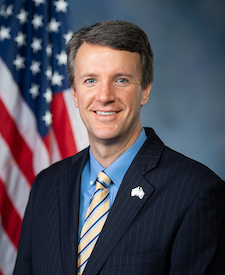
Clay Fuller
87% support rate
Top opponent
Eleanor Holmes Norton
0% support rate
Ranked legislators
10
5 support · 5 oppose
Key legislators

Who's moving budget & taxes in United States

Legislators moving budget & taxes in United States
Legislator Party Stance Support rate Decisive votes
Clay Fuller
Clay Fuller House · District 14
R
Strong +
87% 46
Tina Smith
Tina Smith Senate
D
Strong +
83% 77
Andrew Ogles
Andrew Ogles House · District 5
R
Strong +
83% 65
Aaron Bean
Aaron Bean House · District 4
R
Strong +
83% 69
Ben Cline
Ben Cline House · District 6
R
Strong +
83% 69
Eleanor Holmes Norton
Eleanor Holmes Norton House · District At-Large
D
Strong −
0% 26
Pablo José Hernández
Pablo José Hernández House · District At-Large
D
Strong −
7% 28
Analilia Mejia
Analilia Mejia House · District 11
D
Strong −
13% 45
George Latimer
George Latimer House · District 16
D
Strong −
13% 67
Gregory W. Meeks
Gregory W. Meeks House · District 5
D
Strong −
14% 66
Showing 671–680 of 2,411 bills

All budget & taxes bills

in committee · United States · Senate Sep 4, 2025

S 2721: Prevent Government Shutdowns Act of 2025

The Prevent Government Shutdowns Act of 2025 would prevent government shutdowns by automatically continuing funding for federal programs at previous year's levels if Congress fails to pass regular appropriations bills. If a lapse in appropriations occurs, the bill would provide automatic funding for 14 days, extendable for additional 14-day periods until a new appropriations bill is enacted, with funds charged to the appropriate account once legislation is passed. The bill also restricts official travel for certain government employees and congressional staff during a lapse, with limited exceptions for returning to Washington, D.C. or responding to national security events. It establishes procedures requiring Congress to prioritize appropriations legislation during a funding gap and would take effect on September 30, 2025.
Sub-Topics Appropriations
in committee · United States · Senate Mar 13, 2025

S 1021: Dairy Nutrition Incentive Program Act of 2025

S 1021 establishes a new program within the Supplemental Nutrition Assistance Program (SNAP) to increase purchases of "naturally nutrient-rich dairy" (like fluid milk, yogurt, and cheese made from cow's milk) by SNAP households. It provides point-of-sale incentives at checkout, meaning SNAP users would receive immediate discounts when buying qualifying dairy products. The program allocates $10 million annually for grants to state/local governments or nonprofits to run projects, with priority given to initiatives maximizing direct incentives and using electronic systems. Projects must be evaluated for effectiveness, and results will be publicly reported, while transitioning existing dairy incentive programs to this new framework.
in committee · United States · House Mar 25, 2026

HR 8085: Ultra-Millionaire Tax Act of 2026

This bill establishes a new annual wealth tax on individuals with net assets exceeding $50 million, requiring them to pay a percentage of their total asset value each year. The tax applies a 2 percent rate to assets between $50 million and $1 billion, with a higher rate of 3 percent or 6 percent on assets above $1 billion depending on whether a universal health insurance program is enacted. Married couples are taxed as a single unit, and certain assets like primary residences and small personal items are excluded from the calculation. The legislation also mandates enhanced reporting requirements for asset values, requires the IRS to audit at least 30 percent of taxpayers subject to this tax annually, and authorizes $100 billion in funding over ten years to support enforcement and administration of the new tax system.
signed · United States · House Feb 18, 2026

HJRES 142: Disapproving the action of the District of Columbia Council in approving the D.C. Income and Franchise Tax Conformity and Revision Temporary Amendment Act of 2025.

This joint resolution reinstates provisions of District of Columbia (DC) tax law to conform with federal tax law. As background, DC generally automatically adopts changes to federal tax law (known as rolling conformity). Therefore, upon enactment of the 2025 reconciliation act (commonly known as the One Big Beautiful Bill Act), many of its tax provisions became DC law. DC subsequently enacted its own legislation (the DC Income and Franchise Tax Conformity and Revision Temporary Amendment Act of 2025) that decoupled DC tax law from these federal provisions. This joint resolution nullifies the DC legislation, thereby generally realigning DC tax law with the tax provisions of the 2025 reconciliation act. Specifically, the joint resolution reinstates for DC provisions that •    increase the higher basic standard deduction; •    increase deductible charitable cash contributions (for taxpayers who take the standard deduction); •    establish a $6,000 tax deduction for taxpayers 65 years and older; •    allow a tax deduction of qualified tips, qualified overtime pay, and qualified car loan interest; •    authorize an elective 100% depreciation allowance for nonresidential real property; and •    authorize businesses to deduct 100% of research and experimental costs retroactive to tax year 2022. The DC legislation also amended several other provisions of DC tax law, including restoring the DC child tax credit. The joint resolution negates these changes.
in committee · United States · House Mar 5, 2026

HR 7825: Doug LaMalfa Protect Innocent Victims of Taxation After Fire Extension Act

This bill would allow individuals who receive wildfire relief payments to exclude those amounts from their taxable income. It directly affects people who suffer financial losses from federally declared forest or range fires after December 31, 2014. The key provision states that relief payments for expenses like additional living costs, lost wages, personal injury, or emotional distress are not taxable, but only to the extent those losses are not already covered by insurance or other compensation. The tax exclusion applies to payments received after December 31, 2025, and ends for payments received after December 31, 2032.
in committee · United States · Senate Mar 18, 2026

S 4135: FLAP Reauthorization Act

This bill reauthorizes funding for the Federal Lands Access Program, which provides financial assistance to build and maintain roads connecting communities to federal lands like national parks and forests. It directly affects state and local governments, transportation agencies, and communities that rely on these roads for access to public lands. The legislation appropriates specific amounts from the Highway Trust Fund for each fiscal year from 2027 through 2031, with funding increasing slightly each year. The program supports infrastructure projects that improve transportation routes to federal lands, facilitating recreation, tourism, and emergency access.
in committee · United States · Senate Mar 11, 2026

S 4062: Next Generation 9–1–1 Act

This bill establishes a federal grant program to help states, tribes, and local governments deploy and maintain Next Generation 9-1-1 emergency communication systems. It requires the Assistant Secretary of the National Telecommunications and Information Administration to coordinate implementation efforts, provide technical assistance, and approve grant applications that must include detailed plans for interoperability, cybersecurity, and public outreach. The legislation also creates a new cybersecurity center to share threat information and establishes an advisory board with representatives from law enforcement, fire services, emergency medical services, and 9-1-1 professionals to provide recommendations on deployment strategies. Funding is authorized through fiscal year 2031 to support these activities, with specific limits on administrative costs and requirements for sustainable funding mechanisms.
in committee · United States · Senate Apr 10, 2025

S 1475: Clean Cloud Act of 2025

The Clean Cloud Act of 2025 requires data centers and cryptocurrency mining facilities with more than 100 kilowatts of power to annually report their energy consumption and sources to the Environmental Protection Agency. The bill establishes regional greenhouse gas emissions baselines that decrease by 11% each year from 2026 through 2034, with fees assessed on facilities and utilities when their energy use exceeds these baselines. Fees start at $20 per kilowatt-hour above the baseline in 2026, increasing annually with inflation, and funds collected will support program administration, lower residential energy costs, and clean energy projects like zero-carbon power generation. This law directly affects data centers, cryptocurrency mining facilities, and the electric utilities that serve them, aiming to increase transparency about energy sources and reduce carbon emissions from these energy-intensive operations.
in committee · United States · House Feb 26, 2026

HR 7737: SEEDS Act of 2026

This bill, known as the SEEDS Act of 2026, would allow digital asset indexes to be included as eligible investments within Trump accounts, which are special tax-advantaged investment accounts. The legislation amends the Internal Revenue Code to add digital asset indexes to the list of permitted investments alongside other traditional assets. Additionally, the bill makes permanent a pilot program for Trump accounts that was previously set to expire in 2029, removing time limits on the program's operation. These changes would affect individuals who currently use or wish to use Trump accounts for investing, expanding the range of assets they can hold within these tax-advantaged structures.
in committee · United States · Senate Mar 17, 2026

S 4119: Student Loan Marriage Penalty Elimination Act of 2026

This bill would change how married couples claim the student loan interest tax deduction by allowing each spouse to apply the $2,500 deduction limit separately rather than as a combined household limit. The change applies to tax years beginning after December 31, 2026, and would affect married couples filing jointly who have student loans in both spouses' names. Under current rules, the total deduction for both spouses combined cannot exceed $2,500, but this legislation would permit each spouse to claim up to $2,500 individually. The bill amends the Internal Revenue Code of 1986 to implement this separate calculation method while maintaining the overall dollar cap for each individual taxpayer.
Showing 671 to 680 of 2,411 bills
Previous 1 … 67 68 69 … 242 Next