Issue · Budget & Taxes

Budget & Taxes

Every budget & taxes bill, vote, and legislator stance in United States, automatically classified by Maddy, our AI policy reader.

Total bills
2,374
119th Congress
Top supporter
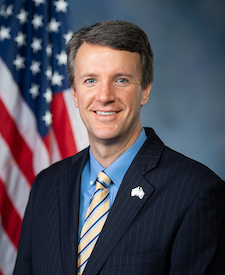
Clay Fuller
87% support rate
Top opponent
Eleanor Holmes Norton
0% support rate
Ranked legislators
10
5 support · 5 oppose
Key legislators

Who's moving budget & taxes in United States

Legislators moving budget & taxes in United States
Legislator Party Stance Support rate Decisive votes
Clay Fuller
Clay Fuller House · District 14
R
Strong +
87% 46
Tina Smith
Tina Smith Senate
D
Strong +
83% 77
Andrew Ogles
Andrew Ogles House · District 5
R
Strong +
83% 65
Aaron Bean
Aaron Bean House · District 4
R
Strong +
83% 69
Ben Cline
Ben Cline House · District 6
R
Strong +
83% 69
Eleanor Holmes Norton
Eleanor Holmes Norton House · District At-Large
D
Strong −
0% 26
Pablo José Hernández
Pablo José Hernández House · District At-Large
D
Strong −
7% 28
Analilia Mejia
Analilia Mejia House · District 11
D
Strong −
13% 45
George Latimer
George Latimer House · District 16
D
Strong −
13% 67
Gregory W. Meeks
Gregory W. Meeks House · District 5
D
Strong −
14% 66
Showing 1,671–1,680 of 2,374 bills

All budget & taxes bills

in committee · United States · Senate Feb 19, 2025

S 639: Clergy Act

S 639, the Clergy Act, allows ordained ministers, members of religious orders, and Christian Science practitioners who currently have a Social Security exemption to revoke it. The bill lets them file an application to pay Social Security taxes, effective for their first or second taxable year after December 31, 2027, with the revocation being permanent. If filed late, they must pay back taxes for the year in question. The IRS must also create an education plan within 90 days to inform clergy about this option. This changes their tax status by making Social Security coverage mandatory once revoked.
in committee · United States · Senate Feb 10, 2025

S 492: Improve and Enhance the Work Opportunity Tax Credit Act

This bill increases the Work Opportunity Tax Credit (WOTC) for employers hiring from targeted groups. It raises the credit rate to 50% for the first $6,000 in wages for most workers, and adds a 50% credit for wages between $6,000 and $12,000 for workers with at least 400 hours of service. For veterans, the wage limits for the credit are doubled (to $12,000 and $24,000), and the bill removes the previous age limit for Supplemental Nutrition Assistance Program (SNAP) recipients. These changes apply to workers hired after December 31, 2024.
in committee · United States · Senate Jan 29, 2025

S 303: Defund the CFPB Act

S 303, the "Defund the CFPB Act," would eliminate all federal funding for the Consumer Financial Protection Bureau (CFPB) by amending the 2010 law that created it. The bill specifically changes the funding provision to state the CFPB's budget must be "not more than $0," effectively cutting all financial support. This would directly prevent the CFPB from operating its consumer protection programs, which regulate financial products like mortgages, credit cards, and loans. As a result, consumers relying on the CFPB's enforcement and education efforts would no longer have this federal oversight mechanism.
in committee · United States · Senate Feb 24, 2025

S 695: Small Business Investment Act of 2025

The Small Business Investment Act of 2025 modifies tax rules to make gains from selling qualified small business stock (QSBS) more favorable for investors. It shortens the required holding period from five years to three years, with a phased exclusion: 50% of gains excluded after three years, 75% after four, and 100% after five years or more. The bill also allows investors to count the time they held convertible debt instruments toward the holding period for the stock they convert into, and removes the prior requirement that businesses must be C corporations, expanding the exclusion to include S corporations. These changes directly affect small business investors by altering the tax benefits available when selling qualifying stock.
Tags Small Business
in committee · United States · Senate May 8, 2025

S 1687: Fair Accounting for Condominium Construction Act

This bill amends the Internal Revenue Code to change how contractors account for tax purposes on certain residential construction projects. It specifically replaces "home construction contract" with "residential construction contract" and extends the allowed accounting period from 2 years to 3 years for non-single-family residential projects like condominiums. The change directly affects contractors building multi-unit residential properties, allowing them to spread income recognition over a longer timeframe for tax calculations. The amendment applies only to new contracts signed after the bill becomes law.
in committee · United States · Senate Feb 27, 2025

S 772: Employer Participation in Repayment Act

This bill permanently removes an expiration date for tax-free treatment of employer-paid student loan repayments under certain educational assistance programs. It affects employers who offer student loan repayment benefits as part of their employee benefits package and the employees who receive this assistance. The key provision amends the tax code to make the exclusion from taxable income permanent, eliminating the previous deadline of January 1, 2026. This change means employers can continue to provide tax-free student loan repayment help to employees without the benefit expiring.
in committee · United States · Senate Feb 6, 2025

S 454: Gambling Addiction Recovery, Investment, and Treatment Act

The Gambling Addiction Recovery, Investment, and Treatment Act establishes federal grants to help states address gambling addiction and funds research on the issue. States will receive grants based on the same allocation method used for existing substance abuse prevention and treatment programs, with unclaimed funds redistributed to applying states. The bill authorizes funding from 37.5% of annual gambling tax revenue for state programs and 12.5% for research through the National Institute on Drug Abuse, covering fiscal years 2025-2034. It requires a congressional report on program effectiveness within three years of enactment.
in committee · United States · Senate Mar 6, 2025

S 876: Pay Our Military Act of 2025

This bill ensures military personnel, including active-duty members, reserve components, and their support staff (such as civilian employees and contractors working with the Department of Defense or Coast Guard) receive pay during fiscal year 2025 if Congress fails to pass a full budget. It sets aside funds from the Treasury to cover pay and allowances for these groups during any gap in regular appropriations. The funding remains available until Congress passes a full budget, the budget deadline passes, or January 1, 2026 - whichever occurs first. The bill directly affects service members, military support staff, and contractors dependent on timely pay during budget transitions.
in committee · United States · Senate Feb 27, 2025

S 786: Public Health Funding Restoration Act

S 786, the Public Health Funding Restoration Act, restores annual funding for the Prevention and Public Health Fund under the Affordable Care Act to $2 billion starting in fiscal year 2026. This bill directly affects federal health programs at the Department of Health and Human Services (HHS), as well as state, local, tribal, and territorial health departments. The key provision amends the Affordable Care Act to set this specific funding level, reversing prior cuts and ensuring resources for evidence-based prevention programs like immunizations, tobacco cessation, chronic disease prevention, and pandemic preparedness. The restored funding aims to support community health initiatives that have demonstrated cost savings - such as $16.50 saved per $1 spent on childhood vaccines - while strengthening public health infrastructure nationwide.
in committee · United States · Senate Feb 6, 2025

S 448: CIRCUIT Act

The CIRCUIT Act (S 448) expands a federal tax credit for advanced manufacturing to include distribution transformers, which are critical components in electrical power distribution systems. It provides a 10% tax credit for the production costs of these transformers, directly benefiting manufacturers that produce them. The bill defines "distribution transformer" using an existing term from the Energy Policy and Conservation Act and sets the credit to apply to transformers produced and sold 90 days after enactment. This policy change creates a new financial incentive for companies manufacturing these essential electrical infrastructure components.
Showing 1,671 to 1,680 of 2,374 bills