

Maddy summaryThe Great American Healthcare Plan is a comprehensive bill that modifies tax rules for Health Savings Accounts, expands access to health insurance through new marketplace pools, and strengthens price transparency for hospitals and medical providers. It allows individuals to use HSAs for wellness expenses like healthy food and gym memberships, lets parents and children access each other's HSA funds, and requires hospitals to publicly list their standard charges and negotiated rates. The legislation also mandates that administrative service providers share detailed pricing data with health plans and creates a mechanism for pharmacists and nurses to dispense certain low-risk prescription drugs under expanded access.
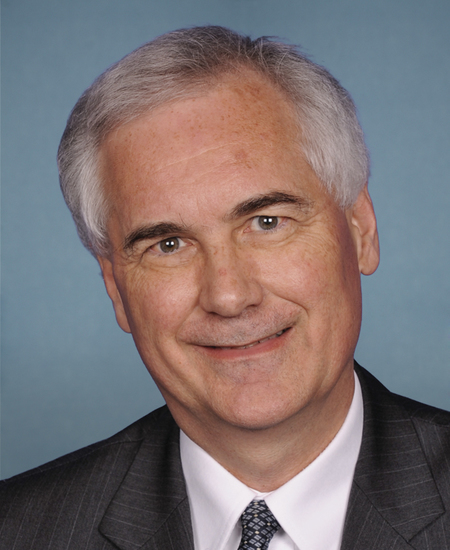
Rep. Tom McClintock
Sponsored bills
Maddy summaryThis bill, the 287(g) Cooperation Act of 2026, requires state and local law enforcement agencies to sign a formal agreement with the Department of Homeland Security to remain eligible for federal Community Oriented Policing Services grants. The law mandates that agencies must have this written memorandum of agreement in place within 180 days of the bill's enactment, or they will be ineligible to receive funding for the program. The Attorney General and Secretary of Homeland Security must establish procedures to verify that agencies have completed this agreement before approving any grant awards. The changes apply to grant applications starting with fiscal year 2027 and all subsequent years.
Maddy summaryThis bill modifies tax rules to provide financial incentives for small oil and gas producers operating in marginal or low-production areas. It changes how the percentage depletion tax deduction is calculated, allowing a higher deduction rate based on oil prices and adjusting that rate annually using an inflation measure called the Producer Price Index. The legislation also removes certain income limits that restrict how much of this tax benefit producers can claim and doubles the minimum oil production threshold from 1,000 to 2,000 barrels to qualify for the deduction. These tax changes would take effect for taxable years beginning after December 31, 2026, primarily affecting independent oil and gas companies and rural communities dependent on these industries.
Maddy summaryThis bill, known as the American Petroleum First Act, modifies U.S. maritime laws to allow foreign vessels to transport crude oil and petroleum products across American coastal waters. It specifically excludes ships owned, operated, or crewed by Russian or Chinese nationals or governments from this exemption. The legislation aims to increase flexibility for domestic energy transport by permitting non-U.S.-flagged vessels to operate in coastal routes, provided they do not have ties to Russia or China. This change affects shipping companies and maritime operators by expanding the pool of eligible vessels for petroleum transport while maintaining restrictions on vessels from sanctioned nations.
Maddy summaryThis bill, the American LNG First Act of 2026, modifies U.S. maritime laws to allow foreign-owned vessels to transport liquefied natural gas (LNG) within U.S. waters, provided they meet specific ownership and crew restrictions. It directly affects ship operators and the LNG industry by creating an exemption from coastwise laws that typically require vessels transporting domestic goods to be U.S.-built and U.S.-flagged. The key provision excludes vessels owned or crewed by Russian or Chinese nationals, as well as those flagged to Russia or China, from this exemption. By allowing eligible foreign vessels to carry LNG while maintaining restrictions on Russian and Chinese entities, the bill aims to increase supply options without opening access to competitors from sanctioned countries.
Bill to Outlaw Wounding of Official Working Animals Act or the BOWOW Act This bill establishes that a non-U.S. national ( alien under federal law) convicted of, or who admits to having committed, an offense related to harming animals used in law enforcement is inadmissible and deportable.
Maddy summaryHR 556, the Protecting Access for Hunters and Anglers Act, prevents federal agencies from banning lead ammunition or tackle on public lands and waters managed for hunting or fishing. It directly affects hunters and anglers using federal lands (like national wildlife refuges, public forests, and BLM lands) by blocking nationwide restrictions on lead products. The bill allows limited exceptions only for specific locations where wildlife decline is directly linked to lead use, and the restriction must align with state law or get approval from the state wildlife agency. This changes how federal land managers can regulate lead, requiring state coordination for any local restrictions.
Save Our Sequoias Act This bill provides for the conservation of giant sequoia trees ( Sequoiadendron giganteum ) in California. Specifically, it provides statutory authority for the Giant Sequoia Lands Coalition and outlines the coalition's duties. The coalition must submit a Giant Sequoia Health and Resiliency Assessment and annually update it. The information from the assessment must be made available so the information can be integrated into certain other plans. The coalition must also create and maintain a website that contains the assessment, educational materials, searchable information about individual giant sequoia groves, and a searchable database to track the status and costs of reforestation and rehabilitation activities. In addition, the bill declares an emergency on certain public lands and allows officials to carry out protection plans during the emergency to respond to the threat of wildfires, insects, and drought. The emergency expires after seven years. The Department of the Interior must develop and implement a Giant Sequoia Reforestation and Rehabilitation Strategy. Finally, the bill establishes a variety of programs and funds to support the conservation of giant sequoias.
Maddy summaryHR 7640, the "Shut Down Sanctuary Policies Act of 2026," requires state and local governments to cooperate with federal immigration enforcement by mandating that law enforcement agencies comply with federal requests to hold individuals for immigration status checks and share related information. It overrides state or local laws that restrict such cooperation, with non-compliant jurisdictions losing eligibility for specific federal law enforcement grants (like Byrne JAG funds) and facing potential lawsuits if released immigrants commit crimes. The bill creates a private right to sue state/local entities that fail to honor federal detainers, allowing victims of crimes committed by such individuals to seek damages. This directly affects state and local governments, law enforcement agencies, and jurisdictions with "sanctuary" policies that previously limited immigration cooperation.
Maddy summaryThis bill would allow individuals who receive wildfire relief payments to exclude those amounts from their taxable income. It directly affects people who suffer financial losses from federally declared forest or range fires after December 31, 2014. The key provision states that relief payments for expenses like additional living costs, lost wages, personal injury, or emotional distress are not taxable, but only to the extent those losses are not already covered by insurance or other compensation. The tax exclusion applies to payments received after December 31, 2025, and ends for payments received after December 31, 2032.