

Maddy summaryHR 5194, the Beautifying Federal Civic Architecture Act of 2025, mandates that certain federal buildings - like courthouses, agency headquarters, and expensive public structures over $50 million - use classical or traditional architecture to reflect national dignity and regional heritage. It requires the General Services Administration (GSA) to prioritize these styles in design reviews, hire experts in classical architecture, and notify Congress if non-compliant designs (like Brutalist or Deconstructivist) are proposed. The bill sets specific aesthetic criteria, including ensuring buildings "command respect" and incorporate regional architectural traditions, while requiring cost comparisons between preferred and alternative designs. This primarily affects federal agencies planning new construction or major renovations of qualifying buildings, shifting design preferences without banning other styles outright.
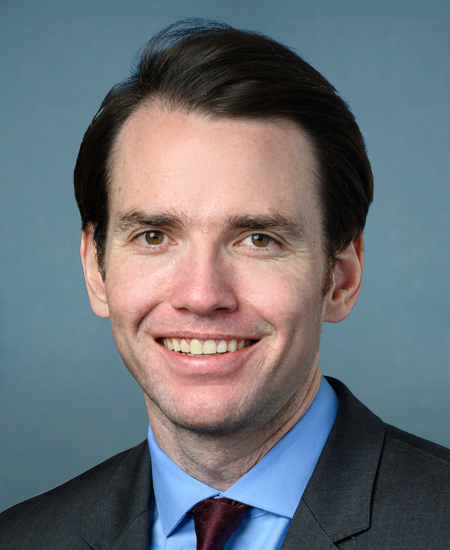
Rep. Kevin Kiley
Sponsored bills
Maddy summaryHR 2808, the Homebuyers Privacy Protection Act, restricts how consumer reporting agencies share credit reports during mortgage applications. It prevents agencies from sending these reports to third parties unless the request is tied to a firm credit offer and the recipient has either the homebuyer’s explicit written consent or is directly involved in the mortgage (like the lender, loan servicer, or the homebuyer’s bank holding an active account). This directly affects homebuyers applying for residential mortgages by limiting unsolicited sharing of their credit information. The law amends the Fair Credit Reporting Act to strengthen privacy protections around mortgage-related credit data.
Maddy summaryThis bill prohibits Members of Congress, their spouses, and dependent children from owning or trading certain investments, including stocks, commodities, and derivatives (referred to as "covered investments"). It requires affected individuals to divest these investments within 90-180 days, with specific exemptions for Treasury bonds, diversified mutual funds, small business interests, and family trusts meeting strict conditions. Violations incur penalties of 10% of the investment's value plus disgorgement of profits, paid directly to the U.S. Treasury. The law applies to all covered individuals during federal service, with exceptions for investments acquired through inheritance or occupational trading (e.g., a spouse’s finance job).
Maddy summaryThe AMERICA DRIVES Act (HR 4661) allows commercial trucks equipped with Level 4 or Level 5 automated driving systems (ADS) to operate interstate without a human driver onboard or a remote operator. It directly affects commercial trucking companies and autonomous vehicle manufacturers by preempting state laws requiring human drivers and mandating the Department of Transportation (DOT) to update regulations by 2027. Key provisions include revising rules around hours of service, drug testing, and driver licensing to apply to driverless vehicles, while defining ADS based on industry standards (SAE J3016). The bill ensures regulatory parity for ADS-equipped trucks and excludes automated technologies from width calculations under safety standards.
Maddy summaryThe SUPPLY Act establishes a federal program to insure second loans (additional financing) for building accessory dwelling units (ADUs) on single-family properties. This insurance, administered by the Department of Housing and Urban Development, covers up to 30% of a standard one-unit home loan amount or 100% of the property value after construction (with potential increases based on 50% of projected rental income). Homeowners seeking to add ADUs - such as backyard cottages, converted basements, or detached units - can use this insurance to secure financing, with a government premium of up to 1% annually. The bill also requires Fannie Mae and Freddie Mac to purchase and securitize these insured loans, potentially expanding access to ADU financing.
Maddy summaryHR 1919, the "Anti-CBDC Surveillance State Act," prohibits the Federal Reserve from developing, testing, or issuing any central bank digital currency (CBDC) or similar digital assets. It specifically bans the Fed from offering direct financial products to individuals, maintaining individual accounts, or issuing CBDCs directly or indirectly through intermediaries like banks. The bill also blocks the Fed from using any digital asset for monetary policy and clarifies that physical currency's privacy protections remain intact. This policy directly affects the Federal Reserve System's ability to create or manage digital monetary tools.
Maddy summaryThis bill requires the Congressional Budget Office (CBO) to identify potential budget savings from preventive health care in its scoring of proposed legislation. Specifically, it directs the CBO Director to describe and estimate reductions in future federal spending resulting from preventive health interventions - such as screenings or vaccinations - when requested by congressional budget committee leaders. These savings would be included as supplementary information in budget projections, but not used to meet budget enforcement rules. The bill does not change actual health programs or funding; it only modifies how the CBO accounts for potential long-term savings from preventive care in budget analysis.
Maddy summaryHR 4382 authorizes the U.S. Mint to produce commemorative coins for the 2028 Los Angeles Olympics/Paralympics and 2034 Salt Lake City Winter Olympics/Paralympics. It specifies gold, silver, and half-dollar coin designs with defined mintage limits (e.g., up to 100,000 $5 gold coins for each event), all bearing inscriptions like "2028" or "2034" and standard coin features. A surcharge ($5-$50 per coin) is added to sales, with all funds directed to the respective Olympic committees to support event hosting and legacy programs like youth sports. The bill ensures no net cost to the government by requiring surcharge revenues to cover all design, production, and marketing expenses before funds are disbursed.
Maddy summaryHRES 516 is a formal resolution condemning the violent riots that occurred in Los Angeles, California, on June 6, 2025. It specifically addresses acts of arson, looting, property destruction, and attacks on law enforcement officers during protests related to federal immigration enforcement actions. The resolution does not create new laws or policies but expresses the House’s condemnation of the violence, calls on local and state leadership to collaborate with federal authorities to restore order, and thanks law enforcement agencies for their response. This is a symbolic statement with no direct impact on affected individuals or new legislative mechanisms.
Maddy summaryHR 4232, "No Tax Dollars for Riots," restricts federal funding for tax-exempt nonprofits if an officer or board member is convicted of violent offenses against officers (18 U.S.C. §111) or rioting (18 U.S.C. §2101) while serving in that role. It directly affects 501(c)(3) nonprofits (like charities, advocacy groups, and community organizations) that receive federal funds, barring future funding and stripping their tax-exempt status upon such a conviction. The bill's key mechanism is automatic loss of federal funding eligibility and tax-exempt status for the nonprofit if a leader is convicted of these specific offenses during their service. It does not impose criminal penalties but alters federal funding access based on the conduct of nonprofit leadership. The policy change is limited to federal funding restrictions for nonprofits meeting the specified criteria.