

Maddy summaryThis House Resolution supports designating August 24 through August 28, 2026, as the fourth annual "National Community Health Worker Awareness Week." It aims to recognize the significant contributions of community health workers to health and social care systems across the United States and encourages efforts to raise public awareness of their important role.
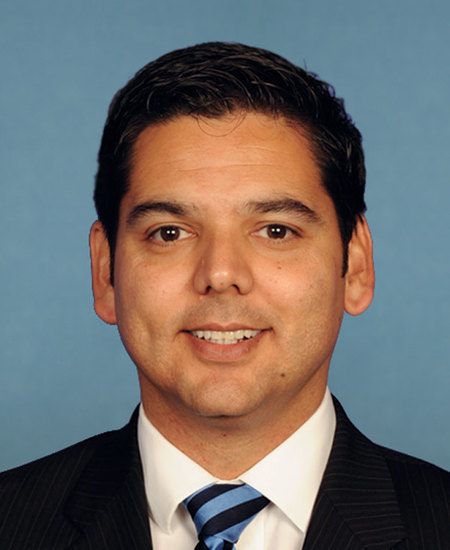
Rep. Raul Ruiz
Sponsored bills
Maddy summaryThis bill modifies the Agricultural Adjustment Act to explicitly include dates for processing under certain marketing orders. It affects agricultural marketing regulations by removing a previous exclusion that separated dates from other processed agricultural products. The change ensures dates are treated consistently with other processed goods in marketing order provisions. This adjustment clarifies how dates are categorized within existing agricultural marketing frameworks without altering other operational details.
Maddy summaryThis concurrent resolution formally recognizes the ongoing disparity between wages paid to men and women in the United States and reaffirms Congress's commitment to supporting equal pay. It highlights statistical data showing that women earn approximately 81 cents for every dollar earned by men, with significant variations across racial and ethnic groups, and notes that the gender wage gap has widened over the past two years. The document also identifies contributing factors such as occupational segregation, lack of family-friendly workplace policies, and workplace harassment, while emphasizing the economic impact on women's retirement security and family incomes.
Love Lives On Act of 2025 This bill extends entitlement for various benefit programs and services for surviving spouses of deceased members of the Armed Forces or veterans. The bill provides that the remarriage of a surviving spouse must not bar the furnishing of dependency and indemnity compensation or special pension benefits to such spouse. Additionally, the Department of Defense may not terminate the payment of an annuity for a surviving spouse under the Survivor Benefit Plan solely because the surviving spouse remarries. The bill also expands the definition of a dependent under TRICARE to include a remarried widow or widower whose subsequent marriage has ended due to death, divorce, or annulment.
Maddy summaryThe Energy Bills Relief Act aims to lower household energy costs and accelerate the development of low-cost, clean energy by modifying federal tax credits, expanding weatherization programs, and streamlining permitting processes. Key provisions include restoring tax incentives for renewable energy projects, increasing funding for low-income heating assistance, and requiring federal agencies to treat wind, solar, and storage projects with the same procedural fairness as oil and gas projects. The bill also establishes new incentives for upgrading the electricity grid, such as tax credits for transmission lines and grants for wildfire prevention measures, while creating mechanisms to ensure utilities serve public interests and protect consumers from price volatility.
Maddy summaryThis bill requires the Department of Veterans Affairs (VA) to cover abortion care, counseling, and related medication as part of standard hospital and medical services for eligible veterans and certain dependents. It amends VA healthcare law to explicitly include these services under existing coverage for veterans qualifying under section 1703 and dependents eligible under section 1781(a). The policy directly affects veterans and their dependents enrolled in VA healthcare programs by expanding covered benefits to include abortion-related care. This is a concrete policy change to VA healthcare benefits, not a broader abortion law.
Maddy summaryThis bill requires federal agencies to clarify how they recognize special districts (like water, fire, or school districts operating separately from cities or counties) as eligible for federal grants. It mandates the OMB Director to issue guidance within 180 days, directing agencies to adopt this standard within one year for all federal financial assistance programs. The bill ensures special districts - defined as state-created entities with budgetary autonomy for specific services - can consistently access existing federal funding they currently face barriers to. A report on agency implementation must be submitted to Congress two years after enactment.
Governing Unaccredited Representatives Defrauding VA Benefits Act or the GUARD VA Benefits Act This bill imposes fines on individuals for soliciting, contracting for, charging, or receiving any unauthorized fee or compensation with respect to the preparation, presentation, or prosecution of any claim for Department of Veterans Affairs benefits. The attempted commission of such offenses is also punishable by fine.
Maddy summaryThis bill, titled the Vote Without Fear Act, would make it a federal crime to knowingly possess or bring a firearm within 100 yards of a Federal election site, such as a polling place or ballot counting location. The law applies to anyone who has reason to believe they are at an election site and carries a weapon there, with exceptions for law enforcement, security personnel on duty, firearms in vehicles that are not removed or brandished, and lawful possession on private property or residences. Penalties include fines and up to one year in prison for unauthorized possession, or up to five years if the firearm is intended for use in a crime, with additional severe penalties for any deaths occurring during such violations.
Maddy summaryThis bill, titled the Promoting Fairness for Medicare Providers Act of 2026, changes how Medicare pays for certain surgical procedures performed in doctors' offices when those procedures involve expensive medical supplies. Starting in 2027, Medicare will pay office-based facilities 80% of the amount it would pay for the same procedures performed in ambulatory surgical centers, with additional rules for device-intensive procedures. The bill defines which procedures qualify based on supply costs exceeding $500 and requires participating doctors' offices to agree to accept these payment amounts as full payment. The list of covered procedures will be reviewed annually beginning in 2028, with the Secretary of Health and Human Services able to add or remove procedures based on supply cost thresholds that adjust for inflation.