

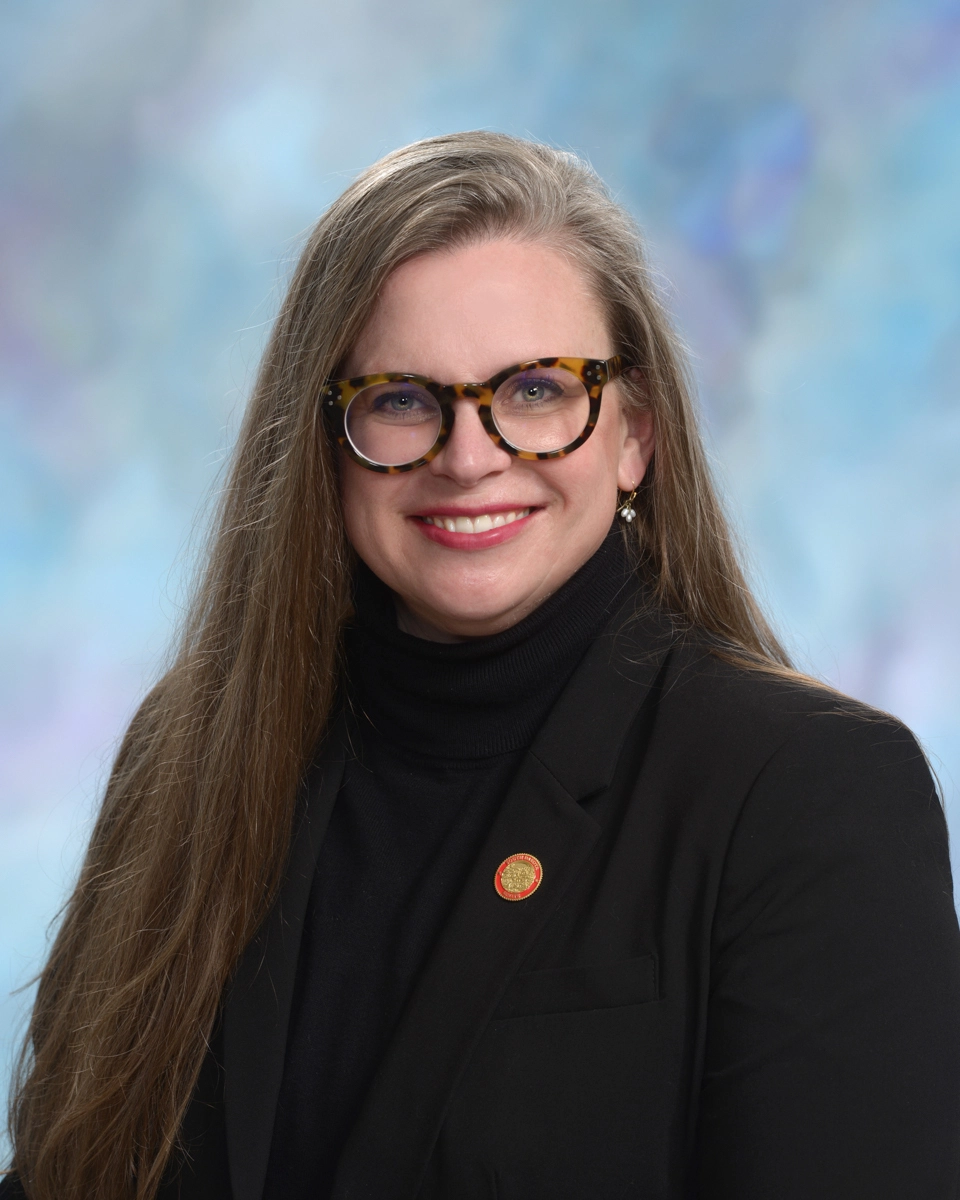
Photo of Liz Larson
D South Dakota Senate · District 10 On the 2026 ballot

Sen. Liz Larson

Compare
Total votes
1,556
all sessions
Attendance
97%
32 missed
Higher than 81% of chamber peers
With party
98%
of cast votes
Higher than 97% of chamber peers
Bipartisan score
3%
crosses aisle rarely
Among the lowest in the chamber
Sponsored
333
bills & resolutions
Higher than 91% of chamber peers
Committees
9
assignments
333 bills and resolutions

Sponsored bills

Total
333
Primary
333
Co-sponsor
0
This page
333
matching current filters
Primary SB 170
Passed · South Dakota Senate · Lead sponsor
require the provision of a notice to consumers, interacting with certain chatbots or other human-simulating computer technologies that could mislead or deceive the consumer.

Maddy summarySB 170 requires businesses to provide a clear, upfront notice when consumers interact with chatbots, AI agents, or other technologies designed to mimic human conversation, preventing deception. It directly affects businesses using such technology in commercial transactions, mandating disclosure before interaction begins. Violations could result in actual damages, $1,000 per violation, or class-action limits of $10 million, with the attorney general able to seek enforcement. The law aims to ensure transparency in digital consumer interactions without restricting legitimate business use.

Passed Feb 17, 2026 0 co-sponsors
Primary SB 169
died · South Dakota Senate · Lead sponsor
place requirements on the use of artificial intelligence systems by health carriers in making determinations about the provision of health care services.

Maddy summarySB 169 requires South Dakota health insurers to follow specific rules when using artificial intelligence (AI) systems to make coverage decisions for health care services. The bill mandates that AI tools must base decisions on individual patient medical history, clinical circumstances, and relevant clinical data - not just group data - and must apply equally to all patients with similar needs. It also prohibits AI from denying or delaying coverage; only licensed doctors or healthcare professionals can make such final decisions after reviewing patient-specific details. Insurers must submit annual reports detailing AI usage and human oversight, and the state insurance division can inspect systems for compliance. This directly affects health insurers and their AI systems used in coverage determinations.

died Feb 17, 2026 0 co-sponsors
Primary SB 182
died · South Dakota Senate · Lead sponsor
address the tax situation in South Dakota.

Maddy summaryThis bill (SB 182) is a procedural resolution with no substantive tax policy details provided in the text. The bill merely states "The Legislature shall address the tax situation in South Dakota" in Section 1, without specifying any tax changes, mechanisms, or affected groups. No concrete provisions, affected entities, or policy mechanisms are described in the provided text. The title and minimal language indicate a directive to the legislature to consider tax matters, but no actual tax policy is outlined. Without additional bill text describing specific tax changes, a substantive summary cannot be created.

died Feb 17, 2026 0 co-sponsors
Primary SB 184
died · South Dakota Senate · Lead sponsor
enhance public education in South Dakota.

Maddy summaryThis bill lacks substantive language or specific provisions. The text only states "The Legislature shall enhance public education in South Dakota" without defining how, what programs would be funded, or who would be affected. There are no key mechanisms, funding details, or concrete policy changes described in the provided text. As a result, no meaningful summary of its policy impact can be generated from the available information.

died Feb 17, 2026 0 co-sponsors
Primary HB 1273
Passed · South Dakota House · Lead sponsor
revise certain mining statutes.

Maddy summaryHB 1273 revises definitions and clarifies rules for "life of the mine permits" in South Dakota's mining law. It specifically defines how mining operators can temporarily pause operations (up to 180 days with notice) and extend pauses up to 10 years total, provided they submit plans for resuming work and maintain reclamation measures. This affects mining companies operating under these permits and the Board of Minerals and Environment, which oversees the process. The bill focuses on procedural clarity for permit management without introducing new environmental or financial requirements.

Passed Feb 12, 2026 0 co-sponsors
Primary HB 1117
died · South Dakota House · Lead sponsor
modify provisions of a report required by the Governor's Office of Economic Development on certain awards and grants.

Maddy summaryHB 1117 modifies the reporting requirements for the Governor's Office of Economic Development regarding certain awards and grants from South Dakota's "Employer's Investment in South Dakota's Future Fund." The bill changes the frequency of the report from "biannual" to "twice each year," requiring the office to submit the same detailed report to specified legislative committees twice yearly instead of less frequently. The report must include recipient names, locations, funding purposes, economic impact measures, job creation numbers, fund balances, and status updates for awards/grants made over the past 20 years. This change affects the Governor's Office of Economic Development by altering how often it must provide these transparency reports to legislative committees. The bill does not alter the content or scope of the required information.

died Feb 12, 2026 0 co-sponsors
Primary SB 168
Passed · South Dakota Senate · Lead sponsor
regulate the use of chatbots by minors.

Maddy summarySB 168 regulates chatbots used by minors in South Dakota. It prohibits deployers (companies or developers) from making AI-companion chatbots - designed to form emotional bonds - available to minors without age verification (e.g., checking ID). Instead, deployers must implement age verification for such chatbots or remove all human-like features to allow minor access. Therapy chatbots may be offered to minors only with clear disclaimers, clinical evidence of safety/efficacy, and oversight by a licensed mental health professional who assesses suitability and monitors use. The bill also requires emergency response systems for crisis situations and limits data collection to necessary purposes.

Passed Feb 12, 2026 0 co-sponsors
Primary SB 148
Passed · South Dakota Senate · Lead sponsor
terminate bounty payments for the control of nest predation.

Maddy summaryThis bill (SB 148) ends state funding for bounties paid to control wildlife that preys on bird nests. Specifically, it amends two laws (§ 40-36-9 and § 41-2-35) to prohibit using state funds from the Game, Fish and Parks department or animal damage control fund for bounties on animals like badgers, raccoons, skunks, or foxes when the purpose is nest predation control. The change directly affects how the Department of Game, Fish and Parks allocates its budget, stopping a specific funding mechanism for wildlife management. It does not alter wildlife management practices or create new programs - only removes authorization for this type of bounty payment.

Passed Feb 12, 2026 0 co-sponsors
Primary HB 1216
Passed · South Dakota House · Lead sponsor
revise the list of mandatory reporters of suspected child abuse or neglect.

Maddy summaryHB 1216 updates South Dakota's list of professionals required to report suspected child abuse or neglect. It adds "religious healing practitioner" and "safety-sensitive position" (as defined in another law) to the existing list, which already includes doctors, teachers, social workers, and clergy. The bill also clarifies that confidentiality protections (like those for medical or therapy records) cannot be used to avoid legal consequences when reporting abuse under these statutes. This directly affects the new categories of professionals and religious practitioners who must now report suspected cases, while removing legal barriers to using such reports in court.

Passed Feb 11, 2026 0 co-sponsors
Primary HB 1283
Passed · South Dakota House · Lead sponsor
exempt nonresident active-duty military personnel and their dependents from payment of motor vehicle license fees.

Maddy summaryHB 1283 exempts nonresident active-duty military personnel and their dependents stationed in South Dakota from paying state motor vehicle license fees on one noncommercial vehicle (car, truck, or van). To qualify, applicants must submit military orders showing their nonresident status and active duty stationing in South Dakota along with their vehicle registration. The exemption covers license fees only and must be renewed annually, but it does not apply to specialty license plates or the excise tax paid when purchasing a vehicle. This policy directly affects military members and families temporarily stationed in South Dakota while maintaining their primary residence elsewhere.

Passed Feb 9, 2026 0 co-sponsors
Showing 51 to 60 of 333 bills
Previous 1 … 5 6 7 … 34 Next