

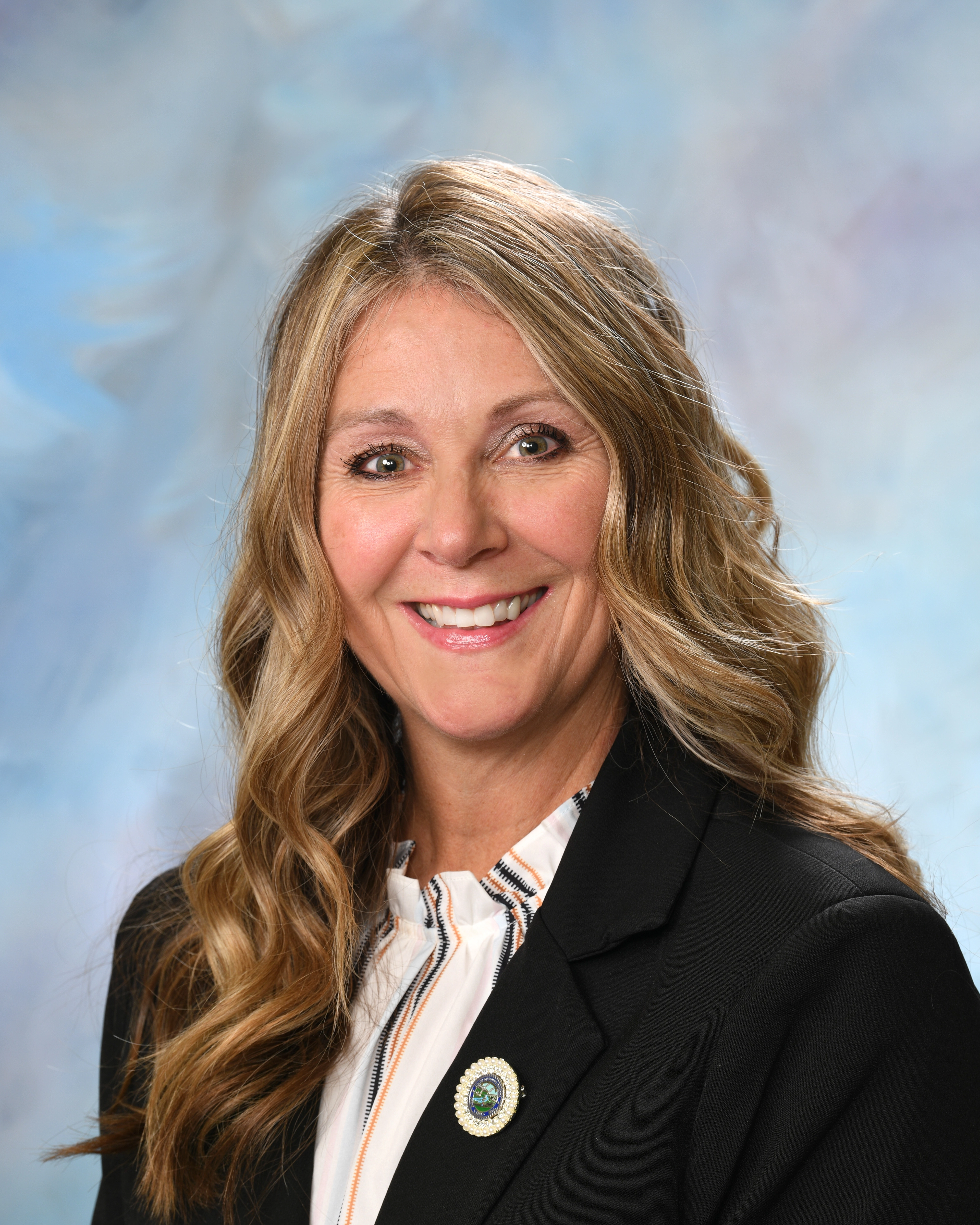
Photo of Tesa Schwans
R South Dakota House · District 9 On the 2026 ballot

Rep. Tesa Schwans

Compare
Total votes
806
all sessions
Attendance
100%
of floor votes
Higher than 80% of chamber peers
With party
83%
of cast votes
Near the chamber average
Bipartisan score
11%
some cross-party votes
Higher than 78% of chamber peers
Sponsored
63
bills & resolutions
Near the chamber average
Committees
2
assignments
63 bills and resolutions

Sponsored bills

Total
63
Primary
63
Co-sponsor
0
This page
63
matching current filters
Primary HJR 5001
In committee · South Dakota House · Lead sponsor
proposing and submitting to the voters at the next general election an amendment to the Constitution of the State of South Dakota, requiring a declaration of necessity and clarifying public use of private property taken or damaged by eminent domain.

Maddy summaryThis bill proposes a constitutional amendment that would prohibit South Dakota governments from using eminent domain to transfer private property to private companies or non-governmental entities solely for economic development or increased tax revenue. It would require any property transfer to serve a clear public purpose, such as infrastructure or public services, rather than benefiting private interests. The amendment would apply to all state and local government actions involving property takings and must be approved by voters at the next general election. If adopted, it would change how governments can acquire property for development projects.

In committee Mar 2, 2026 0 co-sponsors
Primary SCR 606
Passed · South Dakota Senate · Lead sponsor
encouraging the review and approval of water rights applications and future use reservations from the Missouri River.

Maddy summaryThis Senate Concurrent Resolution (SCR) 606 urges the South Dakota Conservancy District to apply for a future use permit to reserve 500,000 acre-feet of Missouri River water annually for the state's long-term needs. It specifically directs the Conservancy District to file this application and report its progress to the Legislative Research Council by November 30, 2026. The resolution does not create new law but emphasizes the importance of securing water rights through existing legal procedures under South Dakota law. It directly affects the Conservancy District as the entity responsible for managing the state's water resources. The focus is on proactive planning for future water availability, not on immediate regulatory changes.

Passed Feb 25, 2026 0 co-sponsors
Primary HC 8013
Introduced · South Dakota House · Lead sponsor
recognizing the Agricultural Issues team of the West Central FFA chapter and celebrating their first-place victory in the state competition and their journey to nationals.

Maddy summaryThis bill (HC 8013) is a legislative commemoration recognizing the West Central FFA chapter's Agricultural Issues team for winning first place at the 2025 South Dakota State Leadership Development Events. It specifically honors the team members - Holly Berg, Kenasyn Johnson, Ganon Lienhard, Teagan Lupkes, Alex Siemonsma, Stella Siemonsma, and Nate Struck - and their advisor, Linda Petersen - for their research on autonomous agricultural systems and their advancement to national competition. As a ceremonial resolution, it has no policy impact or direct effect on any laws or constituents.

Introduced Feb 23, 2026 0 co-sponsors
Primary SB 218
Passed · South Dakota Senate · Lead sponsor
provide for the establishment of charter schools.

Maddy summarySB 218 establishes a legal framework for charter schools in South Dakota. It defines charter schools as public schools operating under contracts with school districts or the state education department, granting them exemptions from most state education laws while requiring compliance with civil rights, health/safety rules, and standardized testing. The bill mandates annual performance reporting to the state, outlines application requirements for nonprofit organizers (including community support and financial plans), and specifies that charter schools must serve grades K-12 nonsectarianly without religious instruction. This directly affects school districts (as authorizing entities), nonprofit organizers seeking to open charter schools, and students enrolled in these schools.

Passed Feb 20, 2026 0 co-sponsors
Primary SB 126
In committee · South Dakota Senate · Lead sponsor
increase the amount of value exempt from property taxes under a tax relief program for disabled veterans and surviving spouses.

Maddy summaryThis bill increases the property tax exemption amount for disabled veterans and surviving spouses in South Dakota. Currently, $350,000 of a home's value is exempt from property taxes under the program; the bill raises this amount but does not specify the new figure in the provided text. It directly affects veterans rated permanently and totally disabled from service-connected disabilities, as well as surviving spouses of such veterans. The change would lower property tax bills for eligible homeowners without altering application requirements or eligibility criteria.

In committee Feb 20, 2026 0 co-sponsors
Primary HB 1217
In committee · South Dakota House · Lead sponsor
limit the use of taxpayer funds and resources by a public education employer to support a labor organization or affiliate and to provide a penalty therefor.

Maddy summaryHB 1217 would restrict public education employers in South Dakota, such as school districts and technical colleges, from using taxpayer funds or resources to support labor unions or their activities. The bill specifically prohibits actions like deducting union dues from employee paychecks, sharing employee personal information with unions without consent, using school facilities for union membership drives, or favoring one union over another. It also bans public education employers from contributing public money to unions or providing paid time off for union-related activities. Violations would be subject to penalties, though the exact penalty details are not provided in the bill text. This bill directly affects how public education employers interact with labor organizations and their employees.

In committee Feb 18, 2026 0 co-sponsors
Primary HB 1171
Failed · South Dakota House · Lead sponsor
establish provisions related to the disclosure of COVID-19 and mRNA vaccination status and blood donations.

Maddy summaryHB 1171 requires blood donation centers in South Dakota to ask donors if they've received a COVID-19 or mRNA vaccination and to label blood bags if they have. It prohibits disclosing the donor's personal information on the label. Patients needing non-emergency blood transfusions can request blood from donors with or without these vaccinations, and healthcare providers must provide that blood if available. The law directly affects blood donors, donation centers, and patients receiving transfusions, creating new disclosure and request mechanisms while banning discrimination based on vaccination status.

Failed Feb 17, 2026 0 co-sponsors
Primary HB 1165
In committee · South Dakota House · Lead sponsor
establish basic and advanced esthetics licenses, and to revise the licensure chapter for cosmetology, nail technology, and esthetics.

Maddy summaryHB 1165 creates two new esthetics licenses (basic and advanced) for skin care professionals in South Dakota, replacing the previous single license. It revises cosmetology and nail technology licensing rules while explicitly exempting natural hair braiders from all licensing requirements. The bill defines specific skin treatments like dermaplaning (using a blade) and microdermabrasion (mechanical exfoliation) as part of the new licensing framework. This directly affects estheticians seeking to perform these treatments, salons offering such services, and natural hair braiders who remain unlicensed under the exemption.

In committee Feb 11, 2026 0 co-sponsors
Primary SB 2
Signed into law · South Dakota Senate · Lead sponsor
provide that a firearm silencer is not a controlled weapon.

Maddy summarySB 2 amends South Dakota law to clarify that firearm silencers (devices reducing gunshot noise) are not classified as "controlled weapons." This change removes silencers from the category of weapons subject to strict state regulations, such as special permits or licensing requirements. The bill directly affects gun owners, manufacturers, and sellers of silencers in South Dakota by eliminating these regulatory barriers. The key mechanism is an amendment to the definitions section of the state's criminal code (§ 22-1-2), specifically excluding silencers from the definition of "controlled weapon."

Signed into law Feb 11, 2026 0 co-sponsors
Primary HB 1170
Passed · South Dakota House · Lead sponsor
allow online access to verify registry status for organ donation.

Maddy summaryHB 1170 requires South Dakota's Department of Public Safety to make the state's organ donation registry accessible online 24/7, allowing registered donors or authorized individuals to verify their status anytime. It directly affects South Dakotans who are organ donors or considering donation, as well as organ procurement organizations and donation agencies that need to access registry information. The bill mandates that the registry must allow online registration, amendment, revocation, and verification of donor status, while ensuring personally identifiable information is protected and only used for determining donation status near death. This change streamlines access to the registry without altering the underlying donation process or eligibility rules.

Passed Feb 10, 2026 0 co-sponsors
Showing 11 to 20 of 63 bills
Previous 1 2 3 7 Next