

Maddy summaryHB 1094 (South Dakota House Bill 1094) clarifies that consent for organ donation does not automatically cover the donation of ovum (eggs) or sperm. The bill requires individuals to give explicit, separate consent specifically for ovum or sperm donation - distinct from organ donation consent. This directly affects potential donors and medical facilities handling reproductive tissue donations. The key provision amends state law to ensure clear, affirmative permission is obtained for gamete donation before any retrieval occurs.
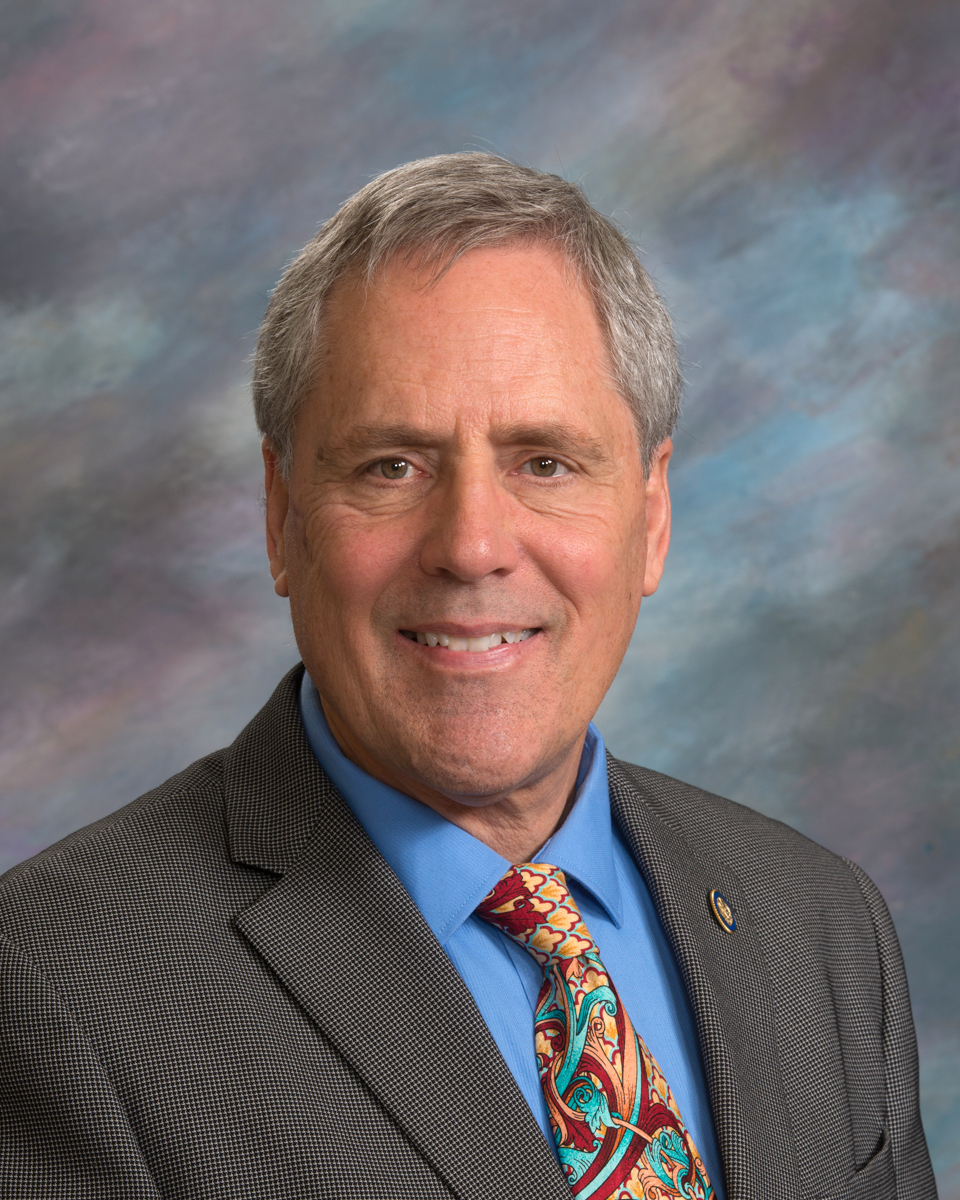
Rep. Phil Jensen
Sponsored bills
Maddy summaryHB 1181 prohibits the injection, release, or dispersal of specific chemicals (including aluminum barium, strontium, sulfur dioxide, and other substances known to cause health issues) into the atmosphere for weather or climate modification. It directly affects individuals and businesses engaging in such activities, imposing a minimum $100,000 civil penalty plus $10,000 per day for ongoing violations. The bill creates a monitoring fund to cover enforcement costs (funded by fines), requires airports to report on aircraft equipped for such dispersal, and establishes an online public reporting system for suspected violations. Key mechanisms include mandatory airport reporting, public submission of details (e.g., chemicals used), and departmental rules for investigations and compliance.
Maddy summaryHB 1129 allows certain school district employees to carry concealed firearms on school grounds under specific conditions. It amends South Dakota law to create an exception for employees who are 21 or older, hold an enhanced concealed carry permit (per Chapter 23-7), and have written permission from the school principal. These employees must also notify the local law enforcement agency about their intent to carry, with notifications valid until June 30 annually. The bill explicitly states school districts are not liable for damages resulting from such employees using firearms. This policy change directly affects eligible school staff members seeking to carry concealed weapons within school buildings, grounds, or vehicles.
Maddy summaryHB 1133 removes the requirement for an "enhanced permit" to carry a concealed pistol on campuses of South Dakota's public colleges and universities. Currently, the law (in sections 13-39A-43 and 13-53-56) mandates that only individuals with an enhanced, restricted enhanced, or reciprocal permit may carry concealed weapons on these campuses. This bill would allow anyone with a standard concealed carry permit (or equivalent) to carry on campus without needing the enhanced permit. It directly affects students, faculty, and visitors carrying concealed weapons at public higher education institutions across South Dakota.
Maddy summarySB 59 requires South Dakota state agencies to use "Judea and Samaria," "Judea," or "Samaria" instead of "West Bank" when referring to land adjacent to Jordan acquired by Israel in the 1967 Six-Day War. This applies to all official written materials produced by state agencies, including press releases, administrative rules, and guidance documents. The bill explicitly prohibits using "West Bank" in these materials but excludes teaching and research materials created by state university instructors. The law aims to standardize geographic terminology in state communications regarding this specific region.
Maddy summarySB 108 requires South Dakota's Legislative Research Council to post all recorded votes made by each legislator on the Council's website. This includes votes on bills and resolutions in both chambers and committees during each legislative session, along with records of absences or excusals. The voting records must be prominently displayed as a tab on each legislator's online profile page for public access. The bill applies to all legislators starting after July 1, 2026.
Maddy summarySB 103 states that individuals present at shooting ranges assume all inherent risks that are obvious, including injuries from noise, discharges, equipment malfunctions (not owned by the range), terrain variations, weather conditions, or natural obstacles like rocks or debris. It directly affects anyone visiting public or private shooting ranges, including those operated by law enforcement. The bill defines "shooting range" broadly to cover all facilities using firearms or archery for activities like skeet or trap shooting. This legal assumption of risk limits liability for range operators regarding these specific, inherent dangers.
Maddy summaryThis bill proposes a constitutional amendment to remove South Dakota's legal requirement to provide expanded Medicaid coverage. It specifically targets Section 10 of Article XXI, which currently mandates that the state provide Medicaid benefits to adults aged 18-65 with incomes at or below 133% of the federal poverty level. If approved by voters, the amendment would eliminate this constitutional obligation, allowing the state to potentially modify or discontinue the expanded eligibility rules. The change directly affects low-income South Dakota adults who currently qualify under the existing Medicaid expansion.
Maddy summaryThis ceremonial resolution (SCR 602) celebrates South Dakota's 42-year sister-state relationship with Taiwan, established in 1984. It highlights specific trade ties, including a 2025 agricultural mission visit and a wheat purchase agreement between South Dakota and Taiwan. The resolution expresses support for strengthening trade relations, academic exchanges, the U.S.-Taiwan tax agreement, and Taiwan's participation in international organizations. As a symbolic gesture, it does not create new laws or policies but formally recognizes the partnership.
Maddy summaryThis is a symbolic concurrent resolution (not a bill with enforceable provisions), introduced by Senator Voita. It urges South Dakotans to observe July as a time of prayer and fasting to seek divine healing and mercy for the state, referencing Judeo-Christian values and historical religious appeals. The resolution does not create new laws, alter policies, or impose requirements on citizens or government. It is purely a ceremonial expression of religious sentiment, based on the state's constitutional motto ("Under God, the People Rule") and historical references to faith in governance.