

Maddy summarySB 58 establishes the Medicaid Care Transition Program to address delays in moving Medicaid patients from emergency departments to appropriate post-acute care settings. It directly affects Medicaid enrollees stuck in emergency departments, hospitals, and county Medicaid managed care plans (as "responsible entities"). Key provisions require responsible entities to create care transition units that work with hospitals to secure placements within 24 hours (or seek out-of-network options if needed), and notify the Department of Human Services if placement fails after 48 hours. The Department must then convene teams to resolve barriers, collect data, and submit annual reports to legislative committees on program effectiveness.
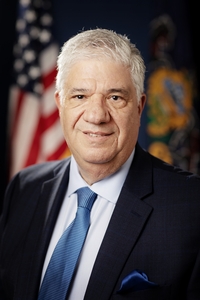
Sen. Wayne Fontana
Sponsored bills
Maddy summarySB 145 amends Pennsylvania's Public Official Compensation Law to adjust how state legislators' salaries are calculated. It establishes that members of the General Assembly and their officers/leaders receive annual cost-of-living adjustments (COLA) based on the Consumer Price Index for the Pennsylvania-New Jersey-Delaware-Maryland area. The bill specifically blocks COLA increases for the 2020-2021 period and allows legislators to opt out of receiving a COLA by notifying the Chief Clerk 10 days before the adjustment date. This directly affects all current and future Pennsylvania legislators by altering their salary adjustment mechanism.
Maddy summarySB 66 amends Pennsylvania's ethics laws to clarify restrictions on cash gifts for public officials and employees. It defines "cash gift" broadly to include money, gift cards, prepaid cards, and virtual currency, while excluding certain common transactions like family gifts or public contests. The bill prohibits officials from accepting cash gifts from lobbyists or people seeking official action, with penalties of up to $1,000 for gifts under $250 (misdemeanor) or $10,000 plus potential imprisonment for $250+ gifts (felony). These changes directly affect Pennsylvania public officials and employees who may receive such gifts.
Maddy summaryThis bill raises the annual spending cap for Pennsylvania's entertainment production tax credits from $100 million to $125 million. It directly affects film and television producers who claim these tax credits by increasing the total amount the state can award each year. The key change is a new annual limit ($125 million) for credits under Section 1716-D, effective July 1, 2025. The bill does not create new credits or alter eligibility rules - only adjusts the spending ceiling. It applies to all entertainment production tax credits awarded in fiscal years beginning on or after July 1, 2025.
Maddy summaryThis is a ceremonial resolution (SR 9), not a substantive bill. It formally honors Virginia "Ginny" Thornburgh on her 85th birthday and recognizes her decades of advocacy work supporting people with disabilities. The resolution highlights her roles as a former Pennsylvania First Lady, her leadership with disability-focused organizations, her co-authorship of advocacy publications, and her personal connection to disability advocacy through her son. It has no policy impact or direct effect on residents or laws.
Maddy summarySB 39 creates a new misdemeanor offense for knowingly possessing a firearm or dangerous weapon in a public recreation area (like a city park or public pool), with penalties ranging from a third-degree misdemeanor (for simple possession) to a first-degree misdemeanor (if intended for criminal use). It specifically excludes law enforcement officers, Pennsylvania Game Commission instructors, and veterans groups during ceremonial duties from this rule. The bill defines "dangerous weapon" to include items like knives with automatic blades or explosives, and clarifies that private recreation areas (e.g., privately owned parks) are not affected by this law. This bill directly impacts individuals entering public recreational spaces with weapons, while maintaining existing rights for private property owners.
Maddy summarySB 43 amends Pennsylvania's firearms laws by adding a clear definition for "frame or receiver" in Title 18. This definition covers both completed firearm parts housing critical components (like the hammer or firing pin) and partially manufactured parts intended to become such components. The bill directly affects firearm manufacturers, sellers, and law enforcement by clarifying what constitutes a firearm part under state law. It does not change existing restrictions but provides specific terminology for enforcement and legal interpretation.
Maddy summarySB 107 requires restaurants and similar public eating/drinking establishments in Pennsylvania to implement a food allergy awareness program. The bill mandates that each establishment designate a manager knowledgeable about food allergies and ensure all food employees review Department of Health-provided materials on food allergy issues. It also adds a requirement for food service license applicants to demonstrate minimum knowledge of food allergy concerns as part of their licensure process. The Department of Health will develop and distribute the required written and video educational materials. This law directly affects restaurants and food service businesses operating under Pennsylvania's food protection regulations.
Maddy summarySB 77 amends Pennsylvania's Public School Code to allow school districts to excuse students from attendance for up to two days per school year without requiring a formal excuse. This directly affects students and school districts across Pennsylvania, providing flexibility for minor absences. The key provision adds a new subsection (f) to Section 1329, specifying that districts may grant these two days of unexcused absence annually. The change simplifies administrative requirements for short, non-medical absences but does not alter standards for longer or frequent absences. The bill takes effect 60 days after enactment.
Maddy summarySB 139 allows parents of children diagnosed with autism spectrum disorder to request a one-year waiver from Pennsylvania's compulsory school attendance requirements for the 2025-2026 school year. To qualify, the child must have a recent clinical diagnosis, a medical assessment recommending intensive early intervention, and proof the services will continue during the waiver. If approved, the child remains eligible for early intervention services under state law, and parents retain the right to enroll them in school anytime during the waiver period. The waiver does not provide compensatory education for the time the child is not in school.