

Maddy summarySB 84 requires Pennsylvania school entities (including districts, charter schools, and career centers) to conduct detailed facility condition assessments every seven years, starting in 2026. These assessments must cover building structural components, mechanical systems, safety features (like secure vestibules and escape routes), environmental hazards (asbestos, lead), and projected maintenance costs for seven years and facility improvements for five years. Schools that complete the assessments receive a 2% funding boost for grants, while those that fail to comply lose eligibility for certain state funding under the Fiscal Code and school construction programs. The bill defines key terms like "maintenance costs" and "total project costs" to standardize reporting requirements for facility management.
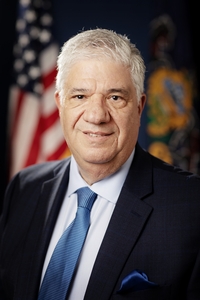
Sen. Wayne Fontana
Sponsored bills
Maddy summaryThis resolution (SR 8) urges the Governor to create a comprehensive plan to improve public school funding and education quality in the Commonwealth. It specifically calls for establishing an advisory commission composed of parents, teachers, school administrators, business leaders, higher education representatives, and legislators. The commission would study key issues like equitable funding sources, necessary educational programs and teacher-student ratios, the Department of Education's role in financially struggling districts, and potential changes to school code. The resolution does not create new laws but requests the Governor take these steps to address current budget challenges affecting public schools.
Maddy summarySB 98 establishes rules for museums in Pennsylvania handling property loaned to them but not claimed by lenders for extended periods. It requires museums to maintain detailed records of loans (including lender contact info and property descriptions) and mandates lenders to update their contact details. If a lender hasn’t contacted a museum for 20 years (for indefinite loans) or five years after a fixed loan period ends, museums may terminate the loan and, after following specific notice procedures, claim title to the property. The law aims to resolve ownership disputes, reduce museum storage costs for unclaimed items, and ensure fair responsibility between museums and lenders.
Maddy summaryThis bill bans health insurers in Pennsylvania from setting annual or lifetime dollar limits on essential medical services (like hospital care, surgery, and emergency treatment), affecting both in-network and out-of-network providers. It applies to individual and group health insurance policies, directly protecting enrollees from coverage caps on core benefits. Insurers must comply with these limits, with enforcement including fines up to $5,000 per violation. The law takes effect for policies filed with the Insurance Department after its effective date.
Maddy summarySB 63 amends Pennsylvania's DUI law to clarify that non-commercial drivers using medical marijuana lawfully under the 2016 Medical Marijuana Act are exempt from the prohibition against having Schedule I controlled substances (including medical marijuana) in their blood. However, driving under the influence of medical marijuana or any impairing drug remains illegal, and possessing a medical marijuana card does not by itself justify a chemical test or arrest. The bill defines "medical marijuana" as per the state's Medical Marijuana Act and specifies that legal use of medical marijuana is not a defense against DUI charges. This change directly affects non-commercial drivers with medical marijuana cards and modifies law enforcement procedures for DUI cases involving medical marijuana.
Maddy summarySB 51, the Health Insurance Core Benefits Coverage Act, requires Pennsylvania health insurance companies to cover specific core health benefits in both individual and group plans. It mandates coverage for 10 essential categories, including emergency services, mental health care, prescription drugs, hospitalization, preventive care, and pediatric services (like dental/vision for children). The law ensures plans are at least as comprehensive as those offered in 2018, with the Insurance Department allowed to adjust requirements through regulations. This directly affects insurers and policyholders by standardizing minimum coverage across the state.
Maddy summaryThis bill proposes a constitutional amendment to change how Pennsylvania's Lieutenant Governor is elected. It would require voters to cast a single ballot for both Governor and Lieutenant Governor in the same election, with the Governor candidate selecting their Lieutenant Governor running mate before the election. The Lieutenant Governor would serve as Senate President with a tie-breaking vote (except on final bill passages). As a constitutional amendment, this change would need voter approval at the next general election following its passage by the legislature.
Maddy summarySB 50, the Health Insurance Access Protection Act, prohibits Pennsylvania insurers from denying coverage, charging higher premiums, or excluding benefits based on pre-existing conditions or health factors for individuals and small groups (2-50 people). It limits premium variations to age (max 3:1 ratio), location, family size, and tobacco use (max 1.5:1 ratio), requiring insurers to pool all enrollees in the individual and small group markets. The law also mandates that insurers cannot use health status to set rates or deny coverage, directly protecting people with chronic illnesses or past medical issues.
Maddy summarySB 117 amends Pennsylvania's Tax Reform Code to clarify who qualifies for historic preservation tax credits. It expands the definition of "qualified taxpayer" to explicitly include tax-exempt organizations (like 501(c)(3) nonprofits) that own historic properties, in addition to standard business entities. This change directly affects owners of historic structures seeking to claim existing tax credits under the code. The bill makes no new funding commitments but adjusts eligibility rules for current tax credit programs. It becomes effective 60 days after enactment.
Maddy summarySB 103 updates Pennsylvania's domestic violence protection order process to better involve noncustodial parents in custody decisions. It adds a definition clarifying "noncustodial parent" as a biological parent not living with or sharing custody of a minor child. Key provisions require courts to consider risks to children when awarding temporary custody or visitation, and allow courts to award custody to noncustodial parents if abuse is proven. The bill also mandates law enforcement to maintain a statewide registry of protection orders and ensures noncustodial parents receive notices about hearings, orders, and offender releases. These changes directly affect abuse victims, noncustodial parents, and courts handling domestic violence cases.