

Maddy summarySB 210 creates a new offense for interfering with public transit operators (like bus drivers or conductors) while they are performing their duties. It prohibits actions that cause serious injury or death to operators (felony first degree), lesser injury (felony third degree), or create fear of harm. The law applies to any public transit vehicle, including buses, trains, and streetcars, and covers both direct harm to operators and harm to passengers caused by the interference. Penalties range from serious felony charges for severe cases to lesser felonies for less severe violations.
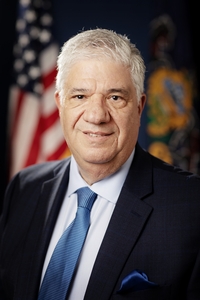
Sen. Wayne Fontana
Sponsored bills
Maddy summaryThis resolution formally recognizes February 2025 as "Black History Month" in Pennsylvania. It does not create new laws or affect specific groups directly, but encourages statewide observance of African American contributions to the Commonwealth. The Senate adopted the resolution on February 5, 2025, aligning with the national observance established through historical efforts like Dr. Carter Godwin Woodson's founding of Negro History Week. The resolution acknowledges the annual theme "African Americans and Labor" as designated by the Association for the Study of African American Life and History (ASALH).
Maddy summaryThis resolution (SR 20) is a ceremonial statement honoring the 50th anniversary of the Philip Jaisohn Memorial Foundation on January 15, 2025. It recognizes the foundation’s 50-year work serving Philadelphia’s Korean immigrant community and expanding to support broader Asian American and Pacific Islander (AAPI) communities through health services, senior employment training, advocacy, and cultural programs. The resolution also commemorates Dr. Philip Jaisohn, a pioneering Korean-American who became the first Korean immigrant to gain U.S. citizenship in 1890 and championed Korean independence efforts in the U.S. This is a symbolic gesture with no policy changes or direct impact on legislation.
Maddy summarySB 233, the Kratom Consumer Protection Act, prohibits the sale and distribution of unsafe kratom products and bans sales to anyone under 21. It defines unsafe products as those containing harmful additives, controlled substances, excessive solvents, synthetic compounds, or lacking proper labeling, while requiring clear ingredient disclosure. Retailers cannot sell kratom to minors, and processors must comply with safety standards. The Department of Health enforces these rules, imposing fines up to $5,000 for violations, with penalties increasing for repeat offenses.
Maddy summarySB 234 amends Pennsylvania's domestic relations law to clarify procedures for emergency protection orders in domestic violence cases. It specifies that emergency orders issued by local courts expire no later than 10 business days (or when a court hearing occurs, per local rules), requiring courts to schedule hearings promptly and enter orders into a statewide registry. The bill mandates that hearing officers provide victims with clear instructions on next steps, including how to seek a permanent order, report violations, access free legal aid, and connect with domestic violence support services. This directly affects domestic violence victims, local courts, and hearing officers handling emergency protection cases. The changes aim to streamline safety protections while ensuring victims receive timely, actionable guidance.
Maddy summarySB 237 amends Pennsylvania's Equal Pay Law to clarify that "wages" include all compensation (salaries, benefits, and supplements) and define "comparable work" as requiring similar skill, effort, and working conditions - not just matching job titles. It strengthens protections by requiring employers to prove pay differences are based on job-related factors (like experience or performance), not sex, and prohibits lowering wages to comply with the law. The bill also allows the Attorney General to sue for unpaid wages with no filing fees and extends the statute of limitations to three years for willful violations. It directly affects all employers in Pennsylvania, including state and local government, and workers experiencing pay discrimination.
Maddy summarySB 154 creates new rules to protect residential utility customers in Pennsylvania from unfair billing practices. It requires utilities to offer flexible payment arrangements when customers experience a significant income drop (20% for households above 200% of the federal poverty level), prohibits charging surcharges for unpaid bills, and mandates medical certificates for service continuation during health crises. The bill directly affects residential customers - especially those in low-income assistance programs like LIHEAP - and utilities, by limiting cash deposits, banning termination for non-payment without notice, and requiring transparent reporting of delinquent accounts. Key provisions include banning late-fee waivers for those who qualify for assistance programs and ensuring service remains available on reasonable terms.
Maddy summarySB 229 establishes a pilot program in Pennsylvania schools to fund secure, lockable bags for students to store cell phones during school hours. Participating schools must adopt policies banning phone use (with medical exemptions for conditions like diabetes) and track mental health, bullying, violence, and academic metrics over two years. The program provides grants for bag purchases, requires geographic funding distribution, and mandates a final report to lawmakers by 2026. It directly affects public and private schools across Pennsylvania, excluding staff phone use during work. The pilot expires December 1, 2026.
Maddy summarySB 214 establishes a Municipal Codes Enforcement Grant Program to help municipalities without existing code enforcement programs hire staff and create new programs, with grants up to $100,000 awarded competitively based on financial need and property conditions. It also creates Municipal Neighborhood Mitigation Funds, funded by penalties for serious property violations (e.g., unsafe structures), which must be used for cleanup, repairs, or demolition of blighted properties. Municipalities must match grant funds and follow specific guidelines, while penalties for repeated violations range from $25 to $1,000. The bill additionally allows counties to adopt property maintenance codes through ordinances, with requirements for public notice and accessibility.
Maddy summaryThis resolution designates February 3, 2025, as "Four Chaplains Day" in Pennsylvania to commemorate the sacrifice of four Army chaplains (George Fox, Alexander Goode, John Washington, and Clark Poling) during WWII. It honors their selfless actions when the ship Dorchester was torpedoed in 1943, as they gave up life jackets to save others. The resolution has no policy impact - it is purely ceremonial recognition of historical events. It does not affect any laws, rights, or government programs.