

Maddy summarySB 237 amends Pennsylvania's Equal Pay Law to clarify that "wages" include all compensation (salaries, benefits, and supplements) and define "comparable work" as requiring similar skill, effort, and working conditions - not just matching job titles. It strengthens protections by requiring employers to prove pay differences are based on job-related factors (like experience or performance), not sex, and prohibits lowering wages to comply with the law. The bill also allows the Attorney General to sue for unpaid wages with no filing fees and extends the statute of limitations to three years for willful violations. It directly affects all employers in Pennsylvania, including state and local government, and workers experiencing pay discrimination.
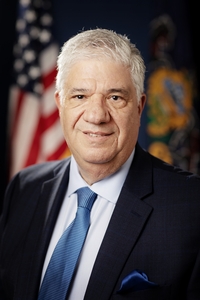
Sen. Wayne Fontana
Sponsored bills
Maddy summarySB 154 creates new rules to protect residential utility customers in Pennsylvania from unfair billing practices. It requires utilities to offer flexible payment arrangements when customers experience a significant income drop (20% for households above 200% of the federal poverty level), prohibits charging surcharges for unpaid bills, and mandates medical certificates for service continuation during health crises. The bill directly affects residential customers - especially those in low-income assistance programs like LIHEAP - and utilities, by limiting cash deposits, banning termination for non-payment without notice, and requiring transparent reporting of delinquent accounts. Key provisions include banning late-fee waivers for those who qualify for assistance programs and ensuring service remains available on reasonable terms.
Maddy summarySB 229 establishes a pilot program in Pennsylvania schools to fund secure, lockable bags for students to store cell phones during school hours. Participating schools must adopt policies banning phone use (with medical exemptions for conditions like diabetes) and track mental health, bullying, violence, and academic metrics over two years. The program provides grants for bag purchases, requires geographic funding distribution, and mandates a final report to lawmakers by 2026. It directly affects public and private schools across Pennsylvania, excluding staff phone use during work. The pilot expires December 1, 2026.
Maddy summarySB 214 establishes a Municipal Codes Enforcement Grant Program to help municipalities without existing code enforcement programs hire staff and create new programs, with grants up to $100,000 awarded competitively based on financial need and property conditions. It also creates Municipal Neighborhood Mitigation Funds, funded by penalties for serious property violations (e.g., unsafe structures), which must be used for cleanup, repairs, or demolition of blighted properties. Municipalities must match grant funds and follow specific guidelines, while penalties for repeated violations range from $25 to $1,000. The bill additionally allows counties to adopt property maintenance codes through ordinances, with requirements for public notice and accessibility.
Maddy summaryThis resolution designates February 3, 2025, as "Four Chaplains Day" in Pennsylvania to commemorate the sacrifice of four Army chaplains (George Fox, Alexander Goode, John Washington, and Clark Poling) during WWII. It honors their selfless actions when the ship Dorchester was torpedoed in 1943, as they gave up life jackets to save others. The resolution has no policy impact - it is purely ceremonial recognition of historical events. It does not affect any laws, rights, or government programs.
Maddy summaryThis resolution designates January 26-February 1, 2025, as "Catholic Schools Week" in Pennsylvania. It expresses the state Senate's formal congratulations and appreciation to Catholic elementary and secondary schools across the Commonwealth. The resolution acknowledges these schools educate over 100,000 students and highlights their low dropout rate and high college enrollment. As a ceremonial resolution, it does not create new laws or affect funding or regulations.
Maddy summarySB 217 establishes Pennsylvania's Fresh Food Financing Initiative to fund projects improving access to fresh food in underserved communities. It creates a grant program within the Department of Agriculture that provides up to 15% of project costs for eligible grocery stores, farmers markets, regional supermarkets, and retail food establishments operating in USDA-designated food deserts. Applicants must serve underserved communities, derive at least 50% of revenue from food sales, and prioritize Pennsylvania-grown products or diverse business partnerships. Grants require matching private funds for supermarket projects and reserve no more than 10% of funding for program administration.
Maddy summarySB 228 amends Pennsylvania's pesticide law to clarify that state regulations on pesticide use, sale, and distribution override conflicting local rules, affecting all municipalities and pesticide applicators statewide. The bill allows high-density municipalities (over 300 people per square mile) to create restricted outdoor pesticide application zones on private property, but prohibits restrictions on agricultural use, public property, aerial applications, or public applicators. It requires the state department to provide a sample ordinance for municipalities seeking to implement these local restrictions within 120 days. The law takes effect 60 days after enactment, reinforcing statewide uniformity in pesticide regulation while permitting limited local control under specific conditions.
Maddy summarySB 219 establishes Pennsylvania's School-Based Youth Court Pilot Program, creating a three-year initiative to replace traditional disciplinary actions with restorative justice approaches in schools. The bill provides grants of up to $250,000 per school to help schools develop youth courts staffed by students under 21, using trauma-informed methods to address minor misconduct through restorative sanctions like community service, workshops, or mediated conversations. It requires the Department of Education to create an Education and Justice Resource Center to train participants, collect data, and oversee program implementation. The program directly affects schools, students under 21 involved in disciplinary cases, and local education agencies seeking to reduce suspensions through restorative practices.
Maddy summarySR 18 is a procedural resolution recognizing February 2025 as "Black History Month" in Pennsylvania. It formally honors the contributions of African Americans throughout Pennsylvania's history and aligns with the national observance established by the Association for the Study of African American Life and History. The resolution does not create new laws or affect specific groups, but rather serves as an official acknowledgment by the Pennsylvania Senate. It follows the annual tradition of designating February for this observance, as established by the ASALH.