

Maddy summarySB 266 strengthens Pennsylvania's gaming regulations by requiring licensed casinos and online gaming operators to enforce voluntary self-exclusion programs. It prohibits direct marketing (including email, texts, and social media) to self-excluded individuals, mandates real-time updates to exclusion lists every 48 hours, and bans access to rewards, credit, winnings, and promotional benefits for excluded persons. Violations could result in fines up to $1.2 million for gaming entities, with misdemeanor or felony penalties for repeated offenses. The bill directly affects gaming businesses and supports individuals seeking to avoid gambling activities through formal self-exclusion.
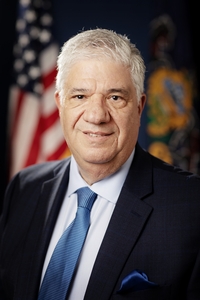
Sen. Wayne Fontana
Sponsored bills
Maddy summaryThis resolution designates February 9-15, 2025, as "Cardiac Rehabilitation Week" in Pennsylvania. It symbolically recognizes cardiac rehabilitation efforts and the work of professionals in preventing and treating heart disease, which is a leading cause of death in the state. The resolution does not create new laws or policies but formally acknowledges the American Association of Cardiovascular and Pulmonary Rehabilitation's role in promoting heart health awareness.
Maddy summarySB 259 requires all public and nonpublic schools in Pennsylvania that use fossil fuel-based heating (like gas or oil) or have attached garages to install and maintain safety-approved carbon monoxide alarms in every classroom on the same level as those heat sources. Schools must meet specific safety standards for the alarms, such as being certified to ANSI/UL standards or clearly distinguishing CO alerts from smoke alarms. The bill mandates installation within 18 months of the law’s effective date and requires schools to cover maintenance, battery replacements, or repairs. Failure to comply results in a $50 fine for willful non-compliance.
Maddy summarySB 268 amends Pennsylvania's Insurance Company Law to establish rules for calculating health insurance cost-sharing. It requires insurers and pharmacy benefits managers (PBMs) to include all out-of-pocket payments made by insured individuals (or others on their behalf) when determining cost-sharing amounts like deductibles or copays. The law applies to health insurance policies issued, renewed, or entered into after its effective date, but excludes dental, vision, workers' compensation, and similar coverage types. This change directly affects health insurers, PBMs, and policyholders by standardizing how cost-sharing is calculated under health plans.
Maddy summarySB 260 adds a new exemption category for caregivers from Pennsylvania jury duty. It allows caregivers who request excusal, do not work outside the home, and live with a child under seven or a person with a permanent disability requiring active care during court hours (and lack affordable or available alternative care) to be excused permanently or for a limited period. Courts must require a notarized affidavit confirming these conditions, and caregivers excused for a limited time will be reassigned to the next jury array after their period ends. This bill directly affects caregivers meeting these specific criteria, modifying existing jury duty exemptions under Title 42.
Maddy summaryPennsylvania's SB 262 creates a legal process for courts to temporarily remove firearms from individuals who pose a significant risk of harming themselves or others with a firearm. Family members, household members, or law enforcement can petition a court if they reasonably believe a person has firearms and is at risk of violence, requiring specific evidence like recent threats or acts. The court must hold a hearing within 14 days, and if it finds the risk is "more likely than not," it issues a one-year order requiring the person to surrender all firearms. The bill prohibits fees or bonds for petitioners and mandates law enforcement to enforce firearm surrender, with clear procedures for service, notice, and reporting.
Maddy summaryThis resolution designates February 2025 as "Career and Technical Education Month" in Pennsylvania. It formally recognizes the importance of career and technical education programs for students and the workforce, without creating new laws or altering existing policies. The resolution aims to raise public awareness about these programs, which serve over 68,000 students statewide and connect them to in-demand careers.
Maddy summarySB 249, nicknamed "Tara's Law," amends Pennsylvania's Crime Victims Act to require state and local law enforcement agencies to make a reasonable effort to contact surviving family members of murder victims or intervenors (those who helped during a crime) before publicly releasing the victim's identity. The bill creates an exception allowing immediate public release if needed for an ongoing murder investigation. This change directly affects law enforcement agencies' protocols when handling sensitive victim information. The law takes effect 60 days after enactment.
Maddy summarySB 251 proposes a constitutional amendment to Pennsylvania's Constitution, creating a two-year window for victims of childhood sexual abuse to file lawsuits against the Commonwealth. It directly affects individuals who experienced abuse as children and were previously barred by expired statutes of limitations, damage caps, or government immunity. The amendment overrides these legal barriers, allowing such cases to be filed within two years of the amendment's effective date, without being blocked by standard time limits or immunity protections. This change applies only to childhood sexual abuse claims arising before the amendment takes effect.
Maddy summarySB 254 establishes a new STEM Grant Program under Pennsylvania's Public School Code, enabling eligible public school educators to teach science, technology, engineering, and mathematics (STEM) subjects at nonpublic schools (including private and charter schools) during times when they are not teaching at their public school. Participating nonpublic schools will be reimbursed for the educators' compensation, calculated as the educator's hourly wage multiplied by hours taught and then multiplied by 1.25 to account for preparation time. The program is funded by a $1,000,000 state appropriation, with the Department of Education selecting an administrator to manage applications and distribute funds. Nonpublic schools must submit annual reports on program implementation, including student participation and outcomes.