

Maddy summarySB 316 amends Pennsylvania's Human Relations Act by clarifying key definitions related to employment protections. It explicitly excludes domestic workers employed casually in private homes and family members (parents, spouses, children) working for relatives from being classified as "employees" under the law. The bill also expands the definition of "independent contractor" to include licensed professionals (e.g., doctors, lawyers) and individuals covered by federal fair housing laws. These changes directly affect which workers are subject to the Act's anti-discrimination protections, particularly impacting domestic workers and family-based employment arrangements.
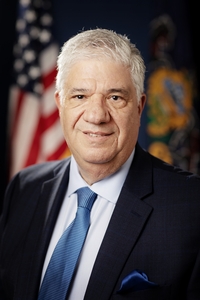
Sen. Wayne Fontana
Sponsored bills
Maddy summarySB 318 requires most health insurance policies in Pennsylvania to cover postacute neurorehabilitation services for individuals with acquired brain injuries. This includes specific therapies like cognitive rehabilitation, neurobehavioral treatment, community reintegration, and day rehabilitation programs, as determined medically necessary by a patient's doctor. Insurers cannot impose arbitrary limits on the number of covered days or apply stricter deductibles/copays for these services than for other covered benefits. The law applies to group/individual health plans but excludes accident-only, dental, vision, Medicare supplements, and certain other limited policies.
Maddy summarySB 335 increases the annual funding limit for county tire collection events under Pennsylvania's waste tire program from $100,000 to $250,000 per county. This amendment affects local governments organizing tire collection events by allowing them to access more state funds for these activities. The bill modifies Section 209(d) of the 1996 waste tire law, specifically adjusting the spending cap without creating new programs or changing eligibility rules. It directly impacts counties conducting tire collection events as part of the existing Small Business and Household Pollution Prevention Program.
Maddy summarySB 348 requires firearm owners or lawful possessors in Pennsylvania to report a lost or stolen firearm to local police within 24 hours, providing specific details like the serial number, model, and caliber. Police must then forward this information to the Pennsylvania State Police, who will share it with all law enforcement agencies to aid in locating the firearm. Violating this reporting requirement is a minor offense punishable by a fine of up to $500. The bill directly affects individuals who own or legally possess firearms, creating a new administrative duty to report losses or thefts.
Maddy summarySB 257 requires hotels, motels, inns, and similar lodging establishments that use fossil-fuel heaters, fireplaces, or have attached garages to install and maintain operational carbon monoxide alarms near those hazards in all affected units. Owners must ensure alarms are centrally located, approved per existing standards, and properly maintained, including battery replacement. Failure to comply is a summary offense punishable by a fine of up to $50. The law applies immediately to all qualifying lodging establishments, excluding college dorms but covering most short-term rental properties.
Maddy summaryThis bill requires Pennsylvania colleges and universities to install approved carbon monoxide alarms in student dormitories that use fossil fuel heaters (like gas or wood) or have attached garages. Specifically, alarms must be placed near heating sources and in every housing unit on the same floor, meeting national safety standards (ANSI/UL2034 or similar). Dormitory operators must maintain these alarms and replace batteries, with willful failure to comply punishable by a $50 fine. The law applies to all institutions of higher education in Pennsylvania, including public universities, community colleges, and private schools.
Maddy summarySB 263 updates Pennsylvania's Clean Indoor Air Act by explicitly including electronic cigarettes in the definition of "smoking." It modifies restrictions for licensed gaming facilities, allowing them to increase smoking areas on gaming floors (up to a 50% maximum) if revenue per slot machine in smoking areas equals or exceeds that in non-smoking areas. Facilities must request quarterly revenue reports from the Department of Revenue to justify such increases and ensure compliance. This directly affects casinos and gaming venues operating under Pennsylvania's licensing rules.
Maddy summarySB 264 extends the maximum duration for tax breaks on qualifying properties in economically depressed areas from 10 to 20 years under Pennsylvania's Local Economic Revitalization Tax Assistance Act. It directly affects businesses seeking tax exemptions for deteriorated industrial, commercial, or new construction in designated depressed communities. The key change modifies Section 5(b)(1) to allow local taxing authorities to provide longer tax exemption schedules, while maintaining existing eligibility criteria. This applies to new exemption applications submitted after the law's effective date, which takes effect 60 days after enactment.
Maddy summaryThis resolution amends Senate Rule 14 to require standing committees to hold a public hearing or schedule a committee meeting to consider any bill referred to them within 60 calendar days of referral. It directly affects Senate standing committees by setting a specific timeline for handling bills. The change aims to streamline the committee process without altering substantive policy. (Procedural resolution; no direct impact on citizens or policy outcomes.)
Maddy summarySB 265 prohibits credit card payments for gambling-related services in Pennsylvania. It bans operators of fantasy contests, iLottery, interactive gaming, and sports wagering from accepting credit cards to fund accounts, make deposits, or place wagers. The bill directly affects licensed gambling operators by requiring them to use alternative payment methods for all transactions. Key provisions include adding specific restrictions to existing statutes (Sections 326, 503, 13B23, and 13C11) to enforce the credit card ban. The law takes effect 60 days after enactment.