

Maddy summaryHB 2109 prohibits Pennsylvania local governments (like cities, towns, and counties) from setting household size limits based on familial relationships (such as parents with children or roommates). It allows occupancy limits only for verified health/safety standards (like building codes) or to comply with federal/state affordable housing program rules. The bill directly affects renters, homeowners, and local officials who previously enforced such restrictions. Key definitions clarify that "familial relationship" includes blood, marriage, adoption, or foster care ties, and "local government unit" covers all Pennsylvania municipalities. This bill takes effect 60 days after enactment.
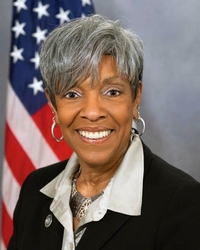
Rep. Carol Hill-Evans
Sponsored bills
Maddy summaryHB 916 amends Pennsylvania's Childhood Blood Lead Test Act to update requirements for lead screening and testing of children under 72 months and pregnant women. It defines key terms like "blood lead level" (measured in micrograms per deciliter) and establishes that lead poisoning is confirmed at 20 µg/dL or two tests showing 15 µg/dL over 90 days. The bill repeals older testing protocols and mandates healthcare providers to test children by age 2, follow up on elevated results within 12 weeks, and assess lead exposure risks for pregnant women. It clarifies that "screening" identifies risk in asymptomatic patients, while "diagnostic" testing confirms poisoning. The changes directly affect pediatric and prenatal care providers, insurers, and families in Pennsylvania.
Maddy summaryThis Pennsylvania House Resolution directs the Joint State Government Commission to study how driverless vehicles and delivery robots affect public safety and the workforce. The study will examine specific issues such as potential job losses in transportation sectors, necessary infrastructure upgrades, and the technology's impact on diverse communities and people with disabilities. The commission is required to submit its findings to state legislative committees within one year of the resolution's adoption.
Maddy summaryThis bill updates Pennsylvania's Public School Code to establish stricter attendance and safety rules specifically for cyber charter schools. It requires these schools to define clear policies for counting student presence during live online classes and completing weekly assignments for independent study, with penalties including funding withholding or charter revocation for non-compliance. Additionally, the legislation mandates that cyber charter schools implement wellness checks and create child protection plans to ensure student safety. The state education department will also develop standardized forms to help schools submit and approve these new attendance policies by a set deadline.
Maddy summaryHB 2554 establishes formal executive leadership roles for both the Pennsylvania Fish and Boat Commission and the Pennsylvania Game Commission by creating positions for an executive director and a director, respectively. The bill mandates that these leaders be appointed with the Senate's approval and requires a competitive national search process, including a detailed job description and public notice, whenever a vacancy occurs. Additionally, the legislation sets specific qualifications for these roles, such as executive experience and knowledge in areas like budgeting and conservation, while also defining procedures for temporary acting appointments.
Maddy summaryThis bill establishes a new Firefighter Cancer Screening Program and a dedicated Fund to provide cancer screening exams for eligible firefighters in Pennsylvania. The program defines eligible participants as firefighters from municipal, volunteer, or airport fire companies that meet specific criteria, such as having mutual aid agreements and responding to a minimum number of emergency calls. The Department of Health will issue benefits cards to these eligible individuals, allowing them to access medically necessary screenings using MRI or ultrasound at no cost to them. Additionally, the legislation outlines how the Budget Stabilization Reserve Fund should be managed and disposed of within special funds.
Maddy summaryThis bill designates the week of June 7 through 13, 2026, as "Chesapeake Bay Awareness Week" throughout Pennsylvania. It directly affects state residents and officials by encouraging them to hold events and educational programs to highlight the bay's environmental and economic significance. The resolution does not change laws or allocate funds but serves as a symbolic gesture to promote awareness of the Chesapeake Bay watershed.
Maddy summaryThis House Resolution designates September 18, 2026, as "Fútbol Day" in Pennsylvania to honor Christian Pulisic, a prominent soccer player born in Hershey. The resolution highlights Pulisic's connection to the state, including his youth development in Lancaster County and his role as captain of the U.S. Men's National Team. It also notes Pennsylvania's upcoming hosting of six 2026 FIFA World Cup matches, linking the date to both the athlete's birthday and the state's participation in the global sporting event. The measure does not create new laws or funding but serves as a symbolic recognition of Pulisic's achievements and the state's role in the 2026 World Cup.
Maddy summaryThis House Resolution designates May 2026 as Osteoporosis Awareness Month in Pennsylvania to highlight the importance of bone health and fracture prevention. The measure does not create new laws or funding but serves to raise public awareness about osteoporosis, a condition that weakens bones and increases fracture risk, particularly among older adults. By recognizing this month, the resolution encourages health professionals, policymakers, and the public to focus on preventive measures such as proper nutrition, exercise, and screening. The text includes background information on the prevalence and costs of osteoporosis in Pennsylvania and the nation to underscore the significance of the awareness campaign.
Maddy summaryThis bill designates the week of April 19 through 25, 2026, as "National Infertility Awareness Week" in Pennsylvania. It does not change laws or policies but serves as a symbolic resolution to raise public awareness about infertility issues and reduce associated stigma. The measure is sponsored by multiple state representatives and referred to the Health Committee for consideration. It highlights statistics about infertility prevalence and treatment costs to underscore the importance of awareness, but does not mandate any specific actions or funding.