

Maddy summaryThis bill directs the Department of Human Services to create a plan for maternal home visiting programs that are voluntary and subject to available funding. The legislation removes language mandating universal access and eliminates references to impact bonds, instead focusing on assessing the potential to expand these services. It also requires the department to submit an annual report to the General Assembly by December 31 of each year, which must include recommendations for future legislative action.
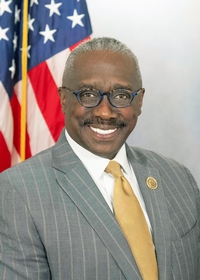
Rep. Dan Williams
Sponsored bills
Maddy summaryThis bill expands the authority of Pennsylvania's intermediate units to acquire and lease property for school facilities and establishes a funding mechanism for these capital projects. It creates a program that allows nonpublic schools to receive grants for safety and security enhancements, which can be used for violence prevention, mental health initiatives, and hiring security personnel. Additionally, the legislation sets a minimum funding level for these targeted grants and clarifies that intermediate units can only use a small percentage of the funds for administrative costs.
Maddy summaryThis bill updates Pennsylvania's laws regarding abandoned and unclaimed property to improve how the state finds original owners. It requires the Treasury Department to work with state agencies like the Department of Revenue and the Department of State to share data and verify owner information at least once a year. These changes aim to make the process of locating owners more efficient by formalizing cooperation between different government departments. The legislation also includes provisions for handling income earned after property is paid out and establishes penalties for non-compliance.
Maddy summaryThis bill establishes a School Meal Debt Fund and creates new rules to ensure all students in Pennsylvania public schools can access meals regardless of their ability to pay. It requires schools to provide meals to any student who requests one unless a parent has explicitly asked for them to be withheld, and it mandates that schools help families apply for free or reduced-price meal programs if a student owes money. The legislation strictly prohibits schools from stigmatizing students with debt by using wristbands, denying participation in activities, or threatening legal action, while also banning the use of collections agencies or credit reporting to recover unpaid meal costs. Additionally, the bill directs the Department of Revenue to share confidential household income data with schools to better determine eligibility for federal assistance and to identify students who need help paying off meal debts.
Maddy summaryThis bill updates Pennsylvania laws to clarify how medical records can be obtained and the fees associated with them. It directly affects patients, their attorneys, and healthcare providers by setting specific prices for copying and retrieving medical charts. Under the new rules, patients and their representatives can access their own records without needing a subpoena, while other parties must pay a set fee for search, retrieval, and copying services. The act also establishes different rates for paper copies versus electronic records and requires these fees to be adjusted annually based on inflation.
Maddy summaryThis bill amends the Administrative Code to update definitions and powers for Pennsylvania's Energy Development Authority. It clarifies what counts as a "project" and "cost" for energy initiatives, specifically including expenses for energy audits, environmental surveys, and infrastructure resilience. The legislation also changes how the Authority's board is structured, reducing the number of governor-appointed members from nine to five and adjusting the voting requirements for board decisions. These changes aim to streamline the Authority's governance while expanding its scope to support various energy-related activities.
Maddy summaryThis bill amends Pennsylvania's motorcycle laws to require a small nominal fee for motorcycle safety education courses. Any money collected from this fee that is not refunded will be placed into a specific state account designated for motorcycle safety programs. The change directly affects individuals taking these courses and the state's funding for the education initiative.
Maddy summaryThis Pennsylvania bill creates a new Alzheimer's, Dementia and Related Disorders Office within the Department of Aging to coordinate state efforts for people affected by these conditions. The office will oversee existing programs, identify service gaps, manage grants, and update the state's strategic plan every five years based on expert advice. To support this work, the law also establishes a large advisory committee made up of government officials, healthcare providers, researchers, and individuals with personal experience caring for those with dementia. This committee will guide the office's activities, review progress, and ensure that the state's approach remains current and effective.
Maddy summaryThis bill creates the Keystone Fresh Program to increase the amount of locally grown food served in Pennsylvania school meals. It establishes a grant system administered by the Departments of Education and Agriculture to reimburse school districts for purchasing local fruits, vegetables, grains, and other minimally processed foods. The program prioritizes funding for schools that source from veteran farmers, socially disadvantaged groups, new farmers, or those using sustainable agriculture techniques. A separate fund is also created to support the administration of these initiatives, aiming to improve child nutrition and provide economic benefits to local producers.
Maddy summaryThis bill amends Pennsylvania's Human Services Code to update how medical assistance is handled for individuals who are incarcerated. It requires the state to temporarily suspend health coverage when a recipient is sent to a correctional facility and to automatically restore it upon their release, provided they still meet standard eligibility rules. Starting in January 2026, the law allows counties to voluntarily join a new reentry program that offers substance use disorder treatment before release and a 30-day medication supply after release. Counties must formally apply and demonstrate the capacity to support these services before participating, while the state department retains the authority to approve or deny requests based on program readiness.