

Maddy summaryHB 1911 amends Pennsylvania's criminal code to require individuals who commit "swatting" to pay for the costs incurred by law enforcement responding to their false emergency reports. It directly affects people who intentionally make false reports to trigger a police SWAT response at someone else's home. The key provision establishes that perpetrators must reimburse law enforcement agencies for the actual expenses of the response, including officer time and equipment. This bill focuses on holding swatting offenders financially accountable for the resources they waste.
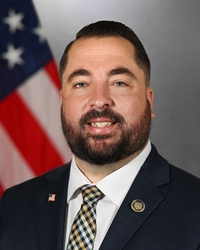
Rep. Dan Goughnour
Sponsored bills
Maddy summaryHB 1912 would create a new criminal offense in Pennsylvania for "swatting," defined as making a false emergency report to law enforcement to provoke a high-risk police response (like sending a SWAT team) at a victim's location. The bill directly affects individuals who intentionally submit false reports for the purpose of causing fear, harm, or disruption to others. It amends Pennsylvania’s criminal code (Title 18) to specifically address swatting under the section on falsification and intimidation. This would provide a clear legal standard for prosecuting such acts, which currently may not be adequately covered under existing laws.
Maddy summaryThe context provided does not include the specific provisions, definitions, or policy changes of HB 1496. The bill title indicates it amends Pennsylvania's Price Gouging Act (2006) regarding definitions and prohibited price gouging, but no concrete details about the amendments are given. Without additional information on what the bill changes or how it affects consumers or businesses, a substantive summary cannot be created. The bill remains pending in committee with no further legislative action described.
Maddy summaryHB 1416 would create a new criminal offense for interfering with the operation or movement of public transit vehicles, such as buses or trains. It directly affects individuals who physically block doors, assault drivers or passengers, or otherwise disrupt transit service. The bill establishes specific penalties for these actions under Pennsylvania's vehicle laws, treating interference as a criminal violation. This change aims to clarify legal consequences for behaviors that endanger transit operations and passenger safety. The bill is currently stalled, having been "laid on the table" in September 2025.
Maddy summaryHB 1858 amends Pennsylvania's Emergency and Law Enforcement Personnel Death Benefits Act to extend death benefits to surviving spouses, children, or parents of corrections officers. Currently, the law provides benefits to families of certain emergency and law enforcement personnel, but corrections officers were excluded from coverage. This bill explicitly adds corrections officers to the eligible group, ensuring their families receive financial support if a corrections officer dies while on duty. The bill also includes minor editorial changes to update the law's language.
Maddy summaryHB 1580 requires employers to implement specific heat safety measures, including providing cooling breaks and access to water, to protect employees working in conditions causing heat stress. It directly affects workers in outdoor and high-heat environments, such as construction, agriculture, and manufacturing. The bill establishes a new Heat Protection Enforcement Fund to support Department of Labor and Industry oversight and imposes penalties for non-compliance. Key provisions mandate employer action plans, define heat illness prevention protocols, and assign enforcement duties to the Department of Labor and Industry.
Maddy summaryHB 1749 amends Pennsylvania's 1971 Tax Reform Code to modify sales and use tax exclusions and create a new tax credit specifically for the steel industry. The bill establishes a "fueling opportunities" tax credit aimed at supporting steel businesses engaged in revitalization, growth, and operational efficiency. This credit directly affects steel manufacturers and related businesses by potentially reducing their tax burden for qualifying activities. The bill focuses on concrete tax code changes rather than broader policy shifts, with its key mechanism being the new credit program within the existing tax framework.
Maddy summaryHB 1710 updates Pennsylvania's vehicle registration and title system under Title 75. It repeals temporary registration cards and permits, requiring standard registration instead, and updates procedures for transferring registration and issuing plates. The bill also adds a road user charge for electric vehicles and clarifies fees for electronic registration plates. These changes directly affect vehicle owners, dealers, and state agencies handling registrations. The bill focuses on modernizing administrative processes and adding new fee structures for electric vehicles.
Maddy summaryHB 1572 modifies Pennsylvania's historic preservation tax credit program by setting new annual spending limits and allocation rules. It caps total annual tax credits at $20 million (excluding unused prior-year credits), limits credits to $1.5 million per project owner annually (up from $500,000), and requires equitable regional distribution of credits - reallocating unclaimed funds to other regions. The bill directly affects historic preservation project owners seeking tax credits for rehabilitation work. These changes apply to fiscal years starting July 1, 2025, and aim to manage program funding more systematically.
Maddy summaryHR 268 is a ceremonial resolution honoring the late Representative Matthew R. Gergely of Pennsylvania's 35th District, who died on January 19, 2025. The resolution formally mourns his passing, recognizes his service in the House from 2023 to 2025, and acknowledges his legislative work - including enacted bills on plasma supply and liquor licensing. It directs the Pennsylvania flag to fly at half-staff until his interment and commends his dedication to his district and constituents. This procedural resolution has no policy impact and was adopted unanimously on June 23, 2025.