

Maddy summaryThis bill increases the annual funding cap for Pennsylvania's Entertainment Economic Enhancement Program from $24 million to $26 million. The change directly affects the state's entertainment industry by allowing a larger pool of tax credits to be distributed each fiscal year. These credits are designed to help businesses in the entertainment sector by reducing their tax liability. The new limit will apply to fiscal years starting on or after July 1, 2026.

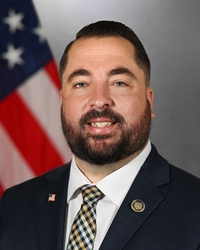
Rep. Dan Goughnour
Sponsored bills
Maddy summaryHB 2190 amends Pennsylvania's Public Employe Relations Act to change how collective bargaining impasses are resolved for specific public safety and court staff. It requires binding arbitration for disputes involving prison guards, mental hospital staff, peace officers, and court employees when mediation fails - meaning the arbitrator's decision becomes final and enforceable. However, if an arbitration decision would require new legislation (e.g., changing pay rates or benefits), that part would only be advisory, not binding. The bill directly affects these public employee groups whose work is critical to security and court operations. This change streamlines dispute resolution while maintaining legislative oversight for policy changes.
Maddy summaryThis bill grants school administrators in Pennsylvania's first-class cities and school districts the right to engage in collective bargaining with their employers. It allows these administrators to negotiate terms regarding pay, working hours, benefits, and dispute resolution through designated representatives. The Pennsylvania Labor Relations Board will handle any disagreements about these bargaining items using the same process applied to other public employees. The changes apply immediately upon the bill's enactment.
Maddy summaryThis bill requires Pennsylvania schools to offer optional hunting and trapping education courses to students in grades six through twelve by July 1, 2027. The program must include firearm safety instruction taught by certified instructors, covering topics like safe handling and maintenance, while strictly prohibiting actual firearms or ammunition from entering school buildings. Parents can request to excuse their children from these classes without penalty, and completing the course satisfies the state's basic hunter-trapper education requirement for obtaining a hunting license.
Maddy summaryThis resolution directs the Joint State Government Commission to study suicide prevention and data collection efforts in Pennsylvania and provide recommendations for improvement. The study will specifically examine how well the state has met eight existing suicide prevention goals and analyze the Pennsylvania Violent Death Reporting System to identify barriers like lack of mandatory reporting and insufficient funding. The commission is tasked with proposing legislative actions to ensure medical examiners, coroners, and law enforcement agencies consistently report violent death data to the Department of Health.
Maddy summaryThis bill amends Pennsylvania's tax code to create a new economic development tax credit designed to support business growth and infrastructure improvements within the state. To receive this credit, entities must hire only Pennsylvania residents, use 100% materials sourced from within the state or the United States, and comply with prevailing wage laws. The Department of Community and Economic Development is tasked with auditing recipients annually to ensure they meet these requirements, and any entity found non-compliant must repay the full amount of the tax credit.
Maddy summaryThis bill updates legal definitions related to wiretapping and electronic surveillance in Pennsylvania, specifically clarifying what counts as an "oral communication" and who qualifies as a "law enforcement officer." It directly affects law enforcement agencies and individuals involved in electronic surveillance activities by expanding the list of recognized law enforcement personnel who can legally intercept communications during official duties. The key provision adds nine new categories of law enforcement officers to the existing definition, including state police, municipal officers, waterways conservation officers, and correctional facility investigators, while also specifying that communications made in the presence of uniformed officers using approved devices are not protected from interception. The changes apply to both state and local law enforcement and will take effect 60 days after passage.
Maddy summaryHB 1877 creates a Pennsylvania Seal of Biliteracy to recognize high school students who achieve proficiency in English and another language. The bill requires public school districts to establish a process for awarding this seal to eligible students who meet specific language proficiency standards. It directly affects Pennsylvania public high school students who demonstrate biliteracy skills, providing a formal credential for their language abilities. The key mechanism is the addition of this seal program to the Public School Code, mandating school districts to implement it.
Maddy summaryHB 2234 creates a tax credit for Pennsylvania breweries that donate spent grain byproduct (leftover grain from brewing) to local farms. Breweries can claim a credit of $0.16 per pound of dry weight donated, up to $30,000 annually or their total tax liability, if the grain is delivered to farms within 100 miles. The credit applies to donations made to "eligible agricultural operations" engaged in normal farming activities under Pennsylvania law. Applications must be submitted by February 1 each year for the prior year's donations, with the Department of Revenue reviewing eligibility and coordinating with the Liquor Control Board. This directly benefits breweries and farms participating in the program by reducing brewery tax bills while repurposing brewing waste.
Maddy summaryThis Pennsylvania House Resolution designates September 11, 2026, as "25th Anniversary of the Terrorist Attacks of September 11, 2001, Day" in the state. The measure formally recognizes the victims of the 2001 attacks, including civilians, military personnel, and first responders who lost their lives. It serves as a commemorative acknowledgment rather than establishing new laws or funding. The resolution aims to honor the memory of those affected and reaffirm the state's commitment to remembering the events and their legacy.