

Maddy summaryHB 1098 establishes a new program under Pennsylvania's Commission on Crime and Delinquency to combat internet crimes against children. It directs the Commission to provide grants to law enforcement task forces for investigating and prosecuting internet-related crimes against minors under 18, specifically violations of Pennsylvania laws covering sexual offenses, human trafficking, and child exploitation (18 Pa.C.S. §§ 30, 31, 6312, 6318, 6320). The grants will support local police teams, supplement federal child exploitation grants, and fund specialized training for investigators. This program operates alongside existing federal and state funding without replacing it, directly affecting law enforcement agencies working on these cases.
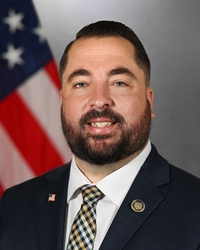
Rep. Dan Goughnour
Sponsored bills
Maddy summaryThis bill creates the Newly Employed Teacher Grant Program to help teachers in their first two years of employment in Pennsylvania by providing funds for classroom supplies. The Department of Education will partner with an online platform to let eligible teachers apply for and purchase approved materials directly. The program requires detailed reporting on how the money is used across different school types and regions to ensure transparency and track its impact.
Maddy summaryThis Pennsylvania House resolution designates the week of May 17 through 23, 2026, as Public Works Week to honor the contributions of public works professionals in the state. The bill directly affects engineers, contractors, inspectors, and other workers who maintain essential community services like streets, water systems, and waste collection. By officially recognizing this time period, the resolution aims to raise public awareness about the critical role these workers play in keeping communities safe and functional, especially during emergencies.
Maddy summaryHB 2210 updates Pennsylvania's vehicle registration rules to allow electronic registration cards displayed on personal devices like phones or tablets. It defines key terms like "electronic registration card" (a digital version viewable on devices) and "electronic product device" (phones/tablets used to display it). The bill requires vehicle owners to sign physical cards or display digital versions when asked by police, but prohibits police from demanding device surrender and protects against liability for accidental damage or viewing unrelated phone data. It also prevents unrelated digital information viewed during a traffic stop from being used as evidence in court. The law takes effect 60 days after passage.
Maddy summaryThis Pennsylvania House Resolution officially designates the week of May 10 through 16, 2026, as "National Police Week" and May 15, 2026, as "Peace Officers Memorial Day" within the state. The measure serves to honor law enforcement officers who have died in the line of duty and aligns with the federal observances established by the U.S. Congress. It does not create new laws or funding but rather establishes a symbolic recognition to acknowledge the service and sacrifices of police officers in Pennsylvania.
Maddy summaryThis House Resolution honors the memory of five law enforcement officers who died in the line of duty in 2025. It specifically names Patrolman Andrew Duarte and Police Officers Mark Baker, Cody Becker, Isaiah Emenheiser, and Andy Chan, listing their departments and dates of death. The measure directs the Pennsylvania House of Representatives to express sympathy to the families and friends of these fallen officers. As a commemorative resolution, it does not create new laws or change existing policies.
Maddy summaryThis bill expands death benefit eligibility in Pennsylvania for firefighters who die from cancer linked to their work. To qualify, a firefighter must have served at least four years, had direct exposure to a carcinogen, and passed a pre-service physical exam showing no signs of cancer. The law presumes these deaths occurred while performing official duties, allowing their families to receive financial support under the existing Emergency and Law Enforcement Personnel Death Benefits Act. The changes will take effect 60 days after the bill is signed into law.
Maddy summaryThis bill requires emergency medical services providers in Pennsylvania, including paramedics and nurses, to complete specific training on caring for individuals with dementia. The Department of Health must create a program covering how to communicate effectively with these patients, manage behavioral symptoms, and identify signs of abuse. New providers will need three hours of initial training, while all providers must complete one hour of continuing education annually. Those who already finished similar training within the last 18 months will be exempt from the initial requirement but must still take the annual course.
Maddy summaryThis bill amends Pennsylvania's Price Gouging Act to specifically target price increases for petroleum products like gasoline, diesel, and heating oil during market emergencies. It defines a market emergency as disruptions caused by severe weather, supply shortages, strikes, or other extraordinary events and gives the governor authority to declare such emergencies for up to 30 days, with possible extensions. Under the new rules, businesses selling petroleum products cannot change prices more than once every 24 hours, and during a declared emergency, they are prohibited from charging prices that are grossly higher than those offered seven days prior. These measures apply to producers, wholesalers, distributors, and retailers of fuel and take effect 60 days after the bill is passed.
Maddy summaryThis resolution designates April 2026 as "Pennsylvania 8-1-1 Safe Digging Month" to raise awareness about the state's utility notification system. It directly encourages excavators and homeowners to call 8-1-1 (or 1-800-242-1776) before digging to locate underground utility lines, preventing damage, injuries, and service interruptions. The resolution emphasizes the existing legal requirement for three business days' notice before excavation and promotes the Pennsylvania One Call System, which handles over 1 million annual requests to protect infrastructure and the environment. As a ceremonial resolution, it does not create new laws but aims to reinforce public safety practices through recognition.